
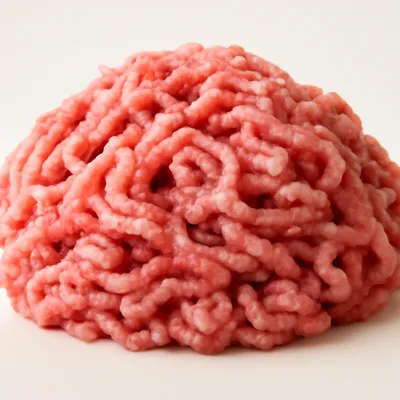
A stuffed-tofu dish from Huangyao Ancient Town in Hezhou, Guangxi, and one of the signature 酿 (stuffed) dishes of the local Hakka kitchen. It is built on two famous Huangyao products: water tofu coagulated with the town's old-well water, and Huangyao douchi (fermented black beans). The tofu is either mashed, bound with a little egg white and flour and pressed back into flat rounds, or sliced about half a centimeter thick and made into sandwich pockets; either way it is filled with a seasoned ground-pork mixture studded with Huangyao douchi. The pieces are pan-fried slowly on both sides until golden, then finished with a light braise in a sauce of soy, fermented bean curd, and the salty liquor of the douchi. It is served hot as a main.



Stuffed tofu of this kind belongs to the 酿菜 (stuffing) tradition of the Hakka who settled around Hezhou in eastern Guangxi. Hezhou is one of Guangxi's main Hakka districts — local accounts put the Hakka population in the range of several hundred thousand, roughly a quarter of the prefecture — and most trace their migration from Fujian and Guangdong, carrying the Hakka cuisine with them. There the practice of stuffing food was pushed to an extreme local form called 百菜酿 ("a hundred stuffed dishes"), with the saying 无菜不酿 ("nothing is not stuffed"): flowers, melons, peppers, mushrooms, tofu, even blood and offal are hollowed or split and filled with seasoned meat. The exact date of the Huangyao version is unrecorded. By folk tradition the broader Hakka stuffed tofu is said to descend from the northern habit of wrapping dumplings — migrants who reached the south, where wheat was scarce, are said to have stuffed meat into tofu in place of dough — but this is a popular legend rather than a documented origin. What is specific to Huangyao is the use of its old-well water tofu and its douchi: Huangyao douchi, made from a local black soybean by a process summarized as "two steamings, one sun-drying, two fermentations" and praised as far back as the Bencao Gangmu, is a recognized Hezhou specialty whose craft is listed as local intangible heritage.
A good piece has two textures at once. The pan-fried face is a thin golden skin, lightly crisp and chewy where the tofu met the oil, and under it the tofu stays soft and just-set, almost custardy because it is the town's tender water tofu rather than a hard pressed block. The pork filling is loose and juicy, and through it run the Huangyao douchi — small, jet-black, glossy beans that carry a deep salty-savory, faintly winey funk and a soft bite, very different from a dry salted bean. The braising liquid soaks into the soft interior so the inside tastes of soy and ferment while the crust holds its color. Done badly, the patty breaks apart in the pan because the tofu was too wet or under-bound, or the douchi is left whole and raw-salty in pockets instead of seasoning the whole filling.
The dish works because Huangyao tofu is a soft water tofu, not a firm block, so the technique compensates for its fragility. Soft tofu is a loose gel of soy proteins set by a coagulant and is full of water with little structure, which is why mashing it and beating in a little egg white and flour is needed: the egg-white proteins coagulate on heating and the starch gelatinizes, knitting the crumb into a patty that can hold the filling and survive the pan. Pan-frying is done slowly over low heat, both to drive off surface moisture and brown the face — Maillard reactions between proteins and the trace sugars in the tofu give the golden, lightly crisp skin — and because high heat would set the outside before the loose center firmed and could crack the piece. The Huangyao douchi is the flavor engine: in fermenting the black soybeans, mold and bacterial enzymes break the bean protein down into free amino acids, above all glutamate, the source of the deep savory taste, so the beans season the pork from the inside. The final braise in soy, fermented bean curd, and douchi liquor lets the porous, water-rich tofu draw the salty, glutamate-rich sauce inward, carrying flavor into a center that has almost none of its own.
Variations
Within Hezhou's 百菜酿 the closest siblings carry the same filling in different shells: 酿苦瓜 (stuffed bitter melon), 酿辣椒 (stuffed chili), 酿香菇 (stuffed shiitake), 酿茄子 (stuffed eggplant), 豆腐泡酿 (stuffed fried tofu puffs), and many more — local count runs to nearly two hundred. The tofu version itself splits between the mashed-and-pressed patty and the half-centimeter sandwich-pocket cut; fillings beyond pork may add Chinese chives, mushroom, dried tangerine peel, or a little peanut powder, and some cooks finish with more sauce as a braise, others keep it drier as a pan-fry. The wider Hakka kin is 东江酿豆腐 of eastern Guangdong, which uses a firmer tofu cut into triangles or blocks pocketed with pork and fish paste and is often served in a clay pot; the same stuffed-tofu idea recurs across the Hakka regions of Guangdong, Fujian, and Jiangxi.
On the Palate
Where Huangyao Stuffed Tofu sits in the Chinese flavor cloud
Ingredients
Serves 4



How it's made
7 steps · 35 min active + 5 min waiting
- 15 min
Soften Huangyao douchi in a little warm water for a few minutes, then drain, keeping the soaking liquid; lightly chop about half the beans and leave the rest whole.
- 26 min
Make the filling: mix ground pork with the chopped douchi, minced ginger and garlic, chopped scallion, a splash of light soy, a pinch of sugar and white pepper, and a little cornstarch; stir until sticky.
- 36 min
Prepare the tofu one of two ways — either mash the water tofu and beat in a little egg white and flour until it holds, or cut it into slices about 0.5 cm thick for sandwiching.
Watch outBeat egg white and flour into the mashed soft tofu until it just holds together — this binder is what lets the fragile water-tofu survive the pan instead of crumbling apart.
- 46 min
Form the pieces: press the mashed tofu into flat rounds with a pocket of filling in the center, or sandwich a layer of filling between two tofu slices, sealing the edges gently.
- 58 min
Heat oil in a flat pan to about 60% hot and lay in the pieces; pan-fry slowly over low-to-medium heat until the underside is golden and set, then turn and fry the other side.
Watch outPan-fry slowly over low-to-medium heat until the underside is golden and set before turning — flip too soon and the soft patty breaks apart.
- 62 min
Scatter in the whole douchi to bloom in the oil for half a minute, then pour in a sauce of light soy, a spoon of mashed fermented bean curd, the reserved douchi liquid, and a little water.
- 76 min
Braise gently, spooning the sauce over the pieces, until the liquid reduces and soaks in; thicken with a thin cornstarch slurry, finish with chopped scallion, and serve hot.


