
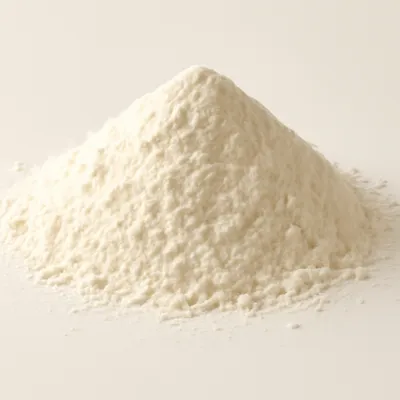
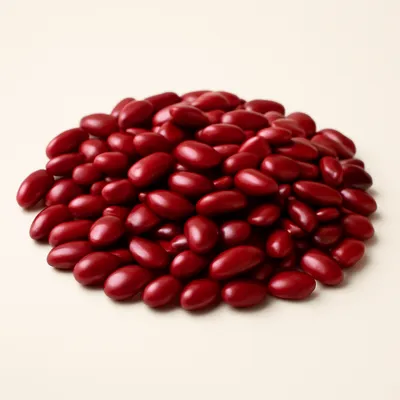
A small steamed rice cake set in an individual little bowl (砵仔), unmoulded and eaten off a bamboo skewer — one of Hong Kong's signature street sweets. The batter is a slurry of rice flour with wheat starch (the older Hong Kong style) or tapioca starch (the modern crystal style), sweetened with brown slab sugar for the amber version or white sugar for the pale one, with cooked red beans studded through. It is poured into oiled porcelain bowls, steamed over high heat for about 20 minutes until set, then loosened with a thin pick and turned out as a single dense, springy disc. Old-style cakes are opaque and glutinous; the crystal versions are semi-translucent and bouncy. Eaten warm and fresh from the steamer, or at room temperature.




Put chai ko originates in Taishan (台山), an emigrant county of Guangdong, and is said to be recorded in the Qing-dynasty Taishan county gazetteer of the Xianfeng reign (1851–1861), with an account of a maker who washed his sugar in clear spring water seeping from a riverbed stone before steaming the batter in bowls (钵), though this is hard to verify. The Taishan original used only rice flour and came in plain brown-sugar and white-sugar forms. The exact inventor is unrecorded. It was Hong Kong, however, that turned the cake into a famous street snack and multiplied its flavours, with its peak popularity in the 1980s and 1990s; the 1993 film 《新不了情》, which featured a put chai ko hawker, is widely credited with fixing it in the city's memory. The name simply means 'little-bowl cake' (砵仔 = a small bowl); the stone-radical 砵 is the more fitting character since the cake is set in an earthenware or porcelain vessel, though the metal-radical 钵仔糕 is the commoner spelling and 缽仔糕 the Hong Kong traditional-character form.
Turned out of the bowl, it is a squat disc that the bamboo skewer lifts cleanly. The crystal version is glassy and semi-translucent with red beans suspended in it; the old style is opaque, ivory or amber. The mouthfeel is the whole point: smooth and springy with a real chew, yet — done right — it does not stick to the teeth (不粘牙), and warm from the steamer it eats soft, slick and fragrant. The brown-sugar cake carries the slight molasses depth of slab sugar; the red beans break the sweetness with their soft, mealy bite. A bad one is either gummy and tooth-clinging, or hard with a sunken dimple in the middle from raw starch that never properly set.
Texture comes from how the starches gelatinize. Rice flour is relatively high in amylose, which gives a firm, opaque, glutinous body — the old-style cake; tapioca starch and wheat starch (澄面) are higher in amylopectin and set up clear and springy, which is why the crystal versions are translucent and bouncy. The signature trick is the part-cooked slurry: rather than pouring boiling sugar-water straight onto raw starch (which leaves a hard centre and a sunken navel), cooks pre-cook a portion of the batter into a translucent paste, then fold the hot cooked slurry into the raw one before steaming. This seeds an even gel network so the cake sets smooth, springy and hole-free. The ratio runs around one part flour to two parts liquid, steamed hard for about 20 minutes; the bowl is oiled so the set disc releases. Red beans are pre-soaked and steamed soft, then scattered into the bowl or mixed through so they sit suspended rather than sinking into a lump.
Variations
The two great families are the old-style cake (老式砵仔糕) — opaque, rice-flour-based, denser and heartier — and the now-dominant crystal cake (水晶砵仔糕), translucent and built on tapioca and sometimes water-chestnut starch. The original flavours are brown sugar (黄糖) and white sugar (白糖); red bean (红豆) and mung bean (绿豆) are the classic studdings, with red bean now the canonical version. Hong Kong added a vast modern range — matcha, taro and purple sweet potato, pumpkin, coconut, strawberry, corn, chocolate (sometimes molten), mango — and varies the sweetener among slab sugar, rock sugar and dark brown sugar. The Taishan original differs from the Hong Kong style in keeping rice flour alone (no wheat starch) and only the two plain sugar flavours. The related Cantonese steamed rice sweet 白糖糕 is a fermented sponge cousin from the same family of bowl-and-griddle rice cakes.
On the Palate
Where Put Chai Ko sits in the Chinese flavor cloud
Ingredients
Serves 6How it's made
7 steps · 25 min active + 25 min waiting
- 110 min
Soak red beans for several hours, then steam them until soft but still whole; set aside.
- 25 min
Whisk rice flour (and wheat starch, or tapioca starch for the crystal version) with cold water into a smooth raw slurry, lump-free.
Watch outWhisk the raw slurry until dead smooth with no lumps — any grit of dry starch bakes into a hard, gritty patch in the finished cake.
- 33 min
Dissolve brown slab sugar (or white sugar) in hot water to make a sugar syrup.
- 46 min
Pour part of the syrup into a portion of the slurry and cook it over the heat, stirring, into a translucent cooked paste; fold this hot paste back into the rest of the raw slurry with the remaining syrup until evenly combined.
Watch outFold the hot cooked paste back into the raw slurry before steaming — skip this half-cook trick and you get a hard center and a sunken navel.
- 54 min
Brush small porcelain bowls lightly with oil; drop in a spoon of red beans, then ladle in the batter to near the rim.
- 620 min
Steam over high heat for about 20 minutes until fully set and springy when pressed.
Watch outSteam until it's fully set and springs back when pressed, about twenty minutes — underdone and it stays sticky-wet in the middle.
- 72 min
Let the cakes cool slightly, run a thin bamboo pick around the inside of each bowl, turn out the disc, and skewer it on a bamboo stick to eat warm.
Archive tool suggestions — not reviewed
These legacy suggestions have not been evidence-reviewed and are not presented as required tools.


