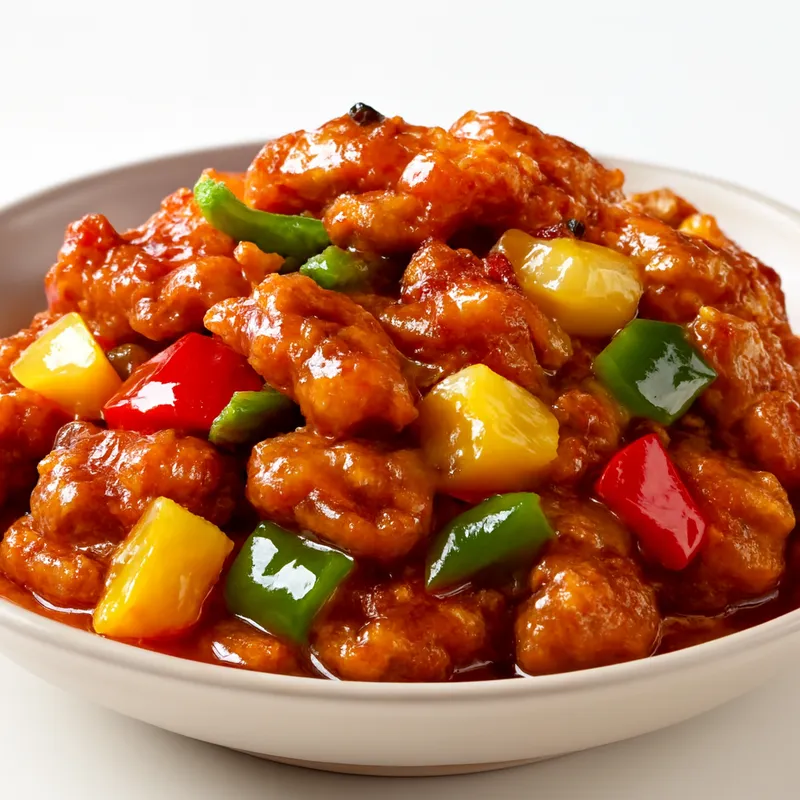
A cool, crystal-clear jelly-cake from Guilin made by flash-gelatinizing water chestnut starch with boiling sugar syrup—the chong jiang step—then steaming until the batter sets into translucent amber slabs. The texture is bouncy, clean, and lightly crisp; its glassy clarity is a mark of craftsmanship.

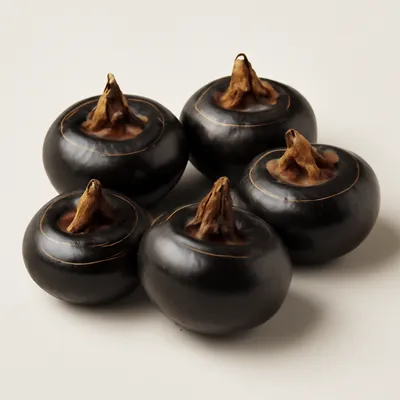


Water chestnuts thrive in the alluvial wetlands of the Lijiang basin around Guilin, producing tubers that are large, thin-skinned, and exceptionally starch-rich. Local confectioners ground the dried starchy tubers into fine flour and developed a steamed jelly-cake prized for its crystal-clear appearance. Guilin's distinctive technique—flash-gelatinizing the raw starch slurry by pouring boiling sugar syrup directly into it (chong jiang)—produces a more uniformly transparent result than the slow-cooked Cantonese method. The 2024 Guangxi Commerce Department evaluation of Famous Guicai Dishes and Snacks officially recognized Guilin Water Chestnut Cake as a named Guangxi snack.
A trembling block of amber jelly that yields to the bite with a clean snap; cool and silky on the palate, lightly sweet with the faint grassiness of water chestnut, punctuated by occasional crisp fragments of fresh chestnut.
Water chestnut starch has an exceptionally high proportion of amylopectin—the highly branched form of starch—whose branching structure resists retrogradation on cooling, so the cake stays soft and bouncy rather than turning hard. The chong jiang step pours 100°C sugar syrup into the raw slurry, instantly pre-gelatinizing a portion of the starch granules into a stable semi-cooked paste; residual uncooked granules then gelatinize fully during steaming at 65–70°C, forming a uniform, transparent gel network that gives the cake its signature crystal clarity.
Variations
A dried osmanthus blossom version (桂花马蹄糕) layers floral fragrance over the chestnut sweetness and is associated with Guilin's famous osmanthus season. A two-tone mandarin-duck version (鸳鸯马蹄糕) alternates the clear chestnut layer with a coconut-milk layer for contrasting color and tropical richness. Fried slices (炸马蹄糕), crisp outside and molten within, are a popular night-market variant.
On the Palate
Where Guilin Water Chestnut Cake sits in the Chinese flavor cloud
Ingredients
Serves 6How it's made
8 steps · 15 min
- 110 min
Peel fresh water chestnuts and finely dice into 4-mm pieces; set aside. In a large bowl, combine water chestnut flour with 400 ml cold water and whisk vigorously until completely smooth with no lumps—this is the raw starch slurry.
Watch outWhisk the flour and cold water until there's not a single lump — any grain left won't dissolve and shows as gritty spots in the finished cake.
- 25 min
Combine rock sugar with 400 ml water in a saucepan; heat over medium heat, stirring, until dissolved. Raise heat and bring to a full rolling boil.
- 33 min
Immediately pour the boiling sugar water in a thin, steady stream into the raw starch slurry, whisking constantly—the mixture shifts from opaque white to a translucent pale-gold semi-cooked paste. This is the chong jiang flash-gelatinization step.
Watch outThe sugar water must be at a full rolling boil when you pour it in a thin stream while whisking hard — the slurry should turn from milky-white to pale translucent gold; too cool and it won't half-cook (chong jiang) and the cake won't set clear.
- 42 min
Stir the diced fresh water chestnuts and dried osmanthus blossoms evenly into the semi-cooked paste.
- 52 min
Lightly grease a 20 × 20 cm shallow square mold with neutral oil; pour in the batter and smooth the surface with a spatula.
- 625 min
Place the mold in a steamer basket over rapidly boiling water; steam on high heat for 20–25 minutes until fully set, uniformly amber-translucent, and a skewer inserted in the center comes out clean.
Watch outSteam until a skewer comes out clean and the whole slab turns evenly amber-translucent — patchy white spots mean the center is still raw slurry.
- 760 min
Remove from the steamer; cool to room temperature, then cover and refrigerate for at least 1 hour until firm enough to unmold cleanly.
- 85 min
Unmold and cut into rectangular or diamond-shaped pieces; serve chilled as a refreshing sweet, or pan-fry slices in a lightly oiled pan until golden-crisp on both sides.
Archive tool suggestions — not reviewed
These legacy suggestions have not been evidence-reviewed and are not presented as required tools.