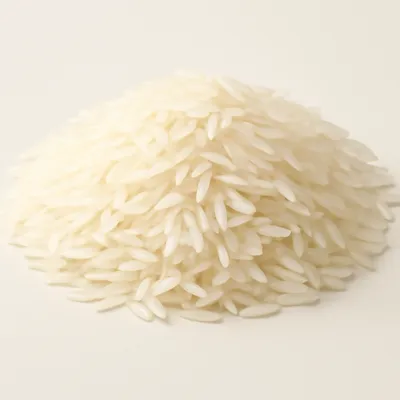
A celebrated snack from Qinzhen, a town on the west bank of the Feng River in Xi'an's Huyi District. Local long-grain indica rice is soaked, stone-ground to a slurry, scalded, and steamed on cloth-lined trays into thin sheets, which are then sliced by a heavy cleaver into fine, narrow strips — hence its other name, "knife-cut skin." It is served cool and dressed with vinegar water, salt, garlic, and above all a deep-red rendered chili oil that is the dish's signature. Cooler and a touch firmer than Hanzhong mianpi, with a tender body that still gives a slight bite, it is distinct from wheat-gluten Liangpi entirely. Its craft was listed as Shaanxi provincial intangible cultural heritage in 2007.




Qinzhen — Qindu town — has long stood among the Feng River paddies southwest of Xi'an, and its rice skin shares the table with two other Guanzhong staples in the local saying, "Qianzhou's flatbread, Qishan's noodles, and Qinzhen's skin that wraps all of Chang'an." A widely told legend places its origin in the Qin dynasty: in a drought year when the Feng ran low and the village could not deliver its tribute rice, a farmer named Li the Twelfth milled the grain to flour, steamed it, and cut it into strips, which so pleased the First Emperor that he ordered the rice skin sent as tribute thereafter. This is folklore, not record; what is documented is the modern recognition of the craft, listed as Shaanxi provincial intangible cultural heritage in 2007.
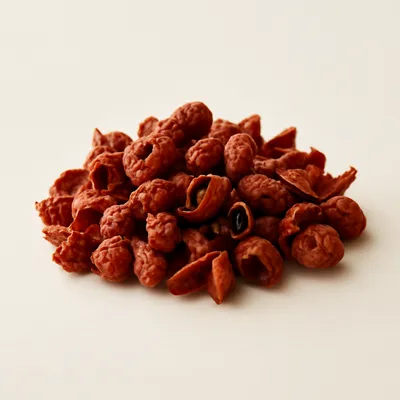
Cool and clean off the plate, the strips are tender yet hold a faint, satisfying bite — softer than wheat Liangpi but firmer and chewier than Hanzhong's warm, melting ribbons. Cut fine, they catch the dressing along every edge. The flavor leads with sour-savory vinegar water and raw garlic, then the rendered chili oil arrives — deep red, glossy, fragrant with Sichuan pepper and fennel before the warmth of the heat. A scatter of celery dice and bean sprouts adds fresh crunch.
The firm-yet-tender body comes from the rice and the scald. Indica (long-grain) rice is high in amylose, the straight-chain starch that sets into a more resilient, less sticky gel — which is why Qinzhen skin carries a bite that soft japonica-style batters do not. After grinding, the slurry is scalded with boiling water and stirred to about 45°C, pre-gelatinizing some starch for an even, crack-free set, then balanced back with cool water. A thin layer is spread on a wet cloth in the tray, tilted to even it, and steamed over a hard boil for one to two minutes until it domes — a clear sign it is cooked. The chili oil, the dish's whole reputation, is built by pouring hot oil over Shaanxi chili in stages with Sichuan pepper and fennel and rendering it slowly, so each round deepens both color and aroma.
Variations
Because the sheets are knife-cut into fine strips, the dish is also called "knife-cut skin" (qie-mianpi). Qinzhen makers are known for keeping the dressing to rendered chili oil alone, without loose chili flakes settling at the bottom, prizing a clean red sheen; some add mustard for a sharper edge. Beyond the classic salt-water-and-vinegar dressing, garnishes vary among bean sprouts, celery, and cucumber. It stands apart from Hanzhong mianpi (softer, wider, often warm) and from wheat-based Liangpi, with which it is frequently confused.
On the Palate
Where Qinzhen Rice Skin sits in the Chinese flavor cloud
Ingredients
Serves 4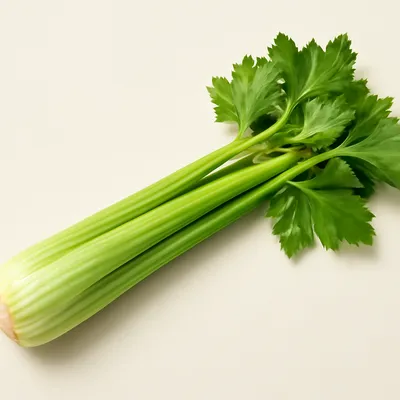

How it's made
8 steps · 35 min
- 1630 min
Rinse long-grain indica rice until clear, then soak: 30 minutes in fresh water, then rest about 10 hours until fully softened.
- 215 min
Stone-grind the soaked rice with water into a smooth slurry; season lightly with salt.
- 310 min
Scald the slurry, pouring boiling water in slowly while stirring until it stabilizes near 45°C, then thin with cool water to a thin-cream consistency.
Watch outPour the boiling water in slowly while stirring and pull it up to about forty-five degrees — you want just part of the starch pre-set so the sheet steams even and crack-free, not a thick cooked lump.
- 45 min
Line a steamer tray with a soaked, tightly woven cloth; ladle on a thin layer of slurry and tilt the tray to spread it into an even round.
- 54 min
Steam over a hard boil 1–2 minutes until the center domes; lift out, peel off the sheet, and brush with oil to prevent sticking.
Watch outSteam over a hard boil and watch the center — when it domes up into a big blister, it's cooked; that puff is your done-signal, usually a minute or two.
- 68 min
Stack the cooled sheets and slice with a heavy cleaver into fine, narrow strips.
- 712 min
Render the signature chili oil: pour hot oil over ground Shaanxi chili in stages with Sichuan pepper and fennel, and let it steep deep red.
Watch outPour the hot oil over the chili powder in stages until it steeps a deep glossy red — too hot in one go scorches the flakes black and turns the oil bitter.
- 86 min
Simmer vinegar with water and seasonings into a dressing water; toss the strips cool with salt water, vinegar water, garlic, and chili oil, topped with celery and bean sprouts.
Archive tool suggestions — not reviewed
These legacy suggestions have not been evidence-reviewed and are not presented as required tools.


