A traditional Zhanjiang street snack from the Ming-Qing era: rice slurry poured in three or more successive layers into bamboo-woven winnowing baskets and steamed, then grid-cut and dressed with sesame oil, toasted sesame seeds, and garlic-infused oil. The bamboo basket is part of the flavor.




Bojichui takes its name from the bamboo-woven winnowing basket (簸箕, boji) used as the steaming vessel — a distinctly rustic, practical choice that reflects its origins in Guangdong's rural west. The snack has been made across Zhanjiang's prefectural-level area since at least the Ming-Qing period, particularly thriving in Lianjiang, Huazhou, Suixi, and Wuchuan counties. Different localities maintain their own names: coastal western Suixi calls it 白籺 (Bai He) while Zhanjiang city proper and Lianjiang use 簸箕炊. Lianjiang's version is considered the most celebrated.
Smooth and yielding with a subtle elastic resistance — not quite the give of steamed rice cake, not quite the slipperiness of rice noodles, but something between the two. The sesame oil and garlic-infused oil give it a savory, nutty fragrance; the toasted sesame seeds provide the only textural interruption in the soft expanse.
The layered steaming technique is the structural key: each layer is poured thin and steamed until fully set before the next is added. This creates a laminated starch gel — individual layers bond at their interfaces during the second and third steam, but the layered structure remains detectable as a subtle springiness that a single-pour cake cannot achieve. The bamboo basket, being slightly porous, allows minimal steam to escape through the weave, creating a slightly drier steaming environment compared to metal trays; this helps the surface set firmly without condensation pooling.
Variations
The Lianjiang version is considered the benchmark. Some households add a small amount of pickled olive greens (咸橄榄菜) as a finishing condiment for a tangy contrast. A sweeter variant dressed with only sesame oil and white sugar is popular with children. In Huazhou, the cake is sometimes cut into long strips rather than a grid, and eaten as a breakfast staple.
On the Palate
Where Bojichui Steamed Rice Sheets sits in the Chinese flavor cloud
Ingredients
Serves 4How it's made
7 steps · 45 min active + 2 hours 10 min waiting
- 1130 min
Rinse long-grain rice and soak in cold water for at least 2 hours. Drain and blend with water in a 1-to-1.5 ratio (by weight) into a thin, smooth slurry. Season lightly with salt.
- 210 min
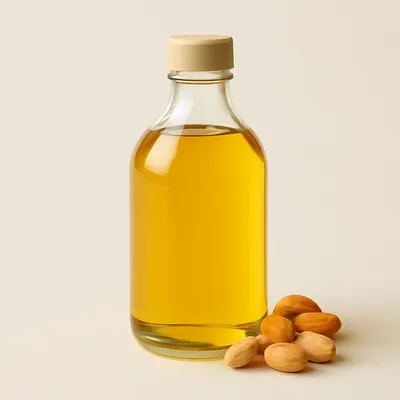
Prepare the garlic oil: slowly infuse sliced garlic in peanut oil over low heat until golden; strain and reserve the infused oil.
- 33 min
Brush the bamboo steaming basket lightly with peanut oil. Pour enough slurry to coat the base in a 3–4 mm layer.
- 45 min
Steam over vigorously boiling water, covered, for 4–5 minutes until the first layer is fully set and opaque.
Watch outSteam the first layer until it's fully set and opaque before pouring the next — pour onto a wet layer and the sheets won't bond, they'll slip apart.
- 514 min
Without removing from the steamer, carefully pour a second thin layer of slurry directly over the set first layer. Steam a further 4 minutes. Repeat for a third layer. Total layers: 3 or more.
Watch outPour each new layer thin and even right over the set one — a thick uneven pour steams up gluey in the middle.
- 65 min
Lift the basket from the steamer. Allow to cool for 5 minutes, then use a flat knife to score a grid pattern of 4 cm squares through all layers.
Watch outLet it cool a few minutes before you score it — cut it screaming-hot and the soft layers tear and drag.
- 73 min
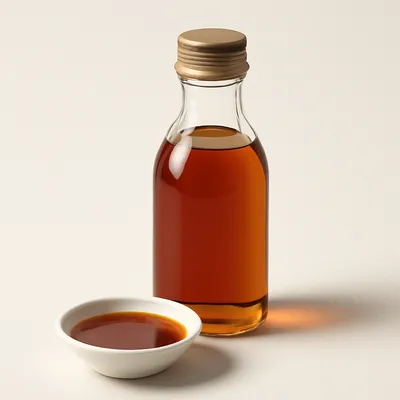
Drizzle generously with garlic-infused oil and sesame oil; scatter toasted sesame seeds over the top. Serve warm directly from the basket.
Archive tool suggestions — not reviewed
These legacy suggestions have not been evidence-reviewed and are not presented as required tools.


