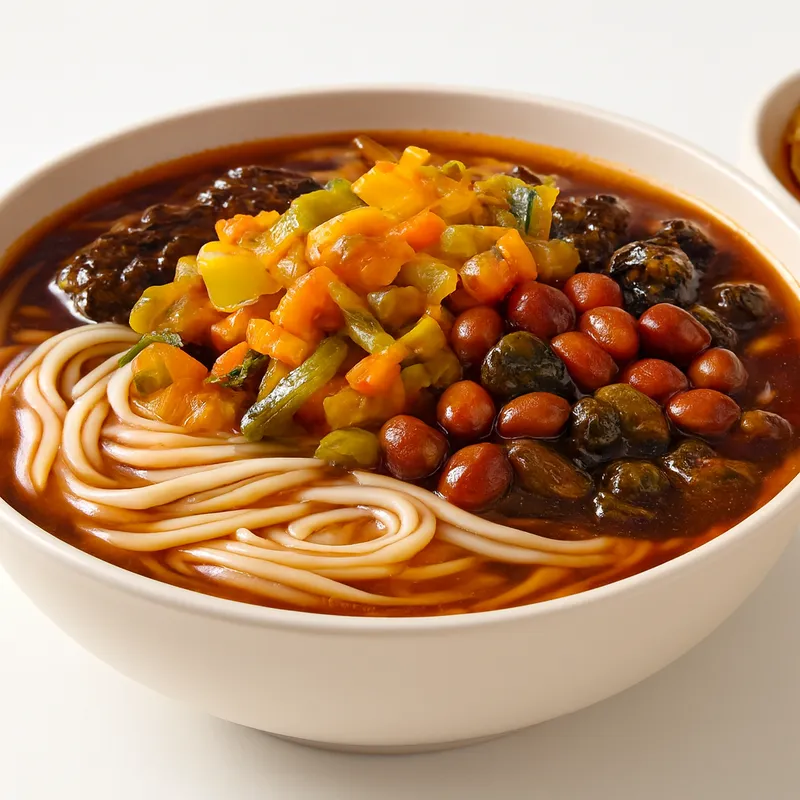
A silken steamed egg custard from Tianjin's elite 细八大碗 banquet tradition, crowned with the dense, orange-red roe of the city's prized winter 紫蟹 — mitten crabs so roe-rich their shell appears purple.
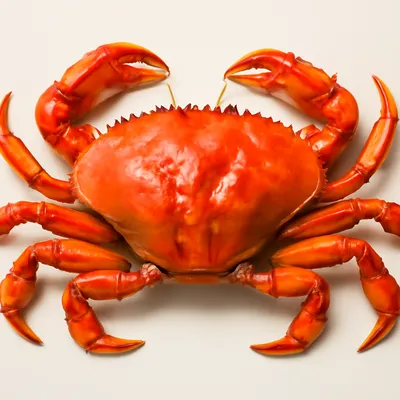


Crab roe egg custard belongs to the 细八大碗 tier of Tianjin's banquet hierarchy, historically sold as matched sets by the city's major restaurants and distinguished from the coarser 粗八大碗 by premium ingredients and refined technique. Its star ingredient — the 紫蟹 — is a tiny Chinese mitten crab unique to Tianjin's winter rivers: its roe is so dense it shows purple through the thin shell, and from the Ming and Qing dynasties onward the crab served as an imperial tribute. The classic preparation, 七星紫蟹, layers egg custard and crab roe in stages, reconstituting the whole crab atop the custard so each bowl resembles a constellation; 蟹黄蛋羹 is its simpler banquet variant, blanketing the custard with a full layer of roe for more immediate impact.
The custard is barely set — silkenly smooth, trembling on the spoon — while the crab roe on top is firm, briny, and intensely sweet with the mineral character particular to winter river crab. Each spoonful carries both textures: cool softness below and warm, concentrated sweetness above.
The custard texture depends on the liquid-to-egg ratio: at 1:1.5–1.8 (egg to stock), proteins denature slowly at 75–80°C steam temperature, forming a fine, even gel without honeycomb bubbles — which appear above 85°C when steam entraps air pockets. Straining the beaten egg removes the chalaza for a smoother gel matrix. The crab roe's color shift from blue-gray (raw) to orange-red (cooked) is caused by the heat-denaturation of the protein that binds astaxanthin in its raw state: once freed, the pigment oxidizes to its characteristic orange-red form.
Variations
The elaborate 七星紫蟹 version reconstructs whole crabs in full form atop the custard — roe, meat, and shell all reassembled. In autumn, hairy crab (大闸蟹) roe substitutes for winter 紫蟹. A richer variant separately stir-fries the crab roe in rendered lard before laying it over the custard for a more opulent, oily finish.
On the Palate
Where Crab Roe Egg Custard sits in the Chinese flavor cloud
Ingredients
Serves 4
How it's made
7 steps · 20 min
- 115 min
Brush crabs clean under running water; steam over high heat for 12 minutes; allow to cool slightly, then carefully extract all roe and flaked meat, keeping roe separate
- 25 min
Crack eggs into a bowl; add warm (not hot) chicken stock in a 1:1.5 ratio by volume; season with a pinch of salt; beat gently without creating foam; strain through a fine-mesh sieve to remove chalaza
Watch outBeat the egg gently and strain out the chalaza — foam and stringy bits leave a coarse, holey custard instead of a mirror-smooth one.
- 32 min
Pour the strained egg mixture into a wide, shallow ceramic serving bowl to a depth of about 3 cm; use a spoon to carefully skim any bubbles from the surface
- 412 min
Place the bowl in a steamer over gently simmering water — water must not boil vigorously; cover with the lid left slightly ajar; steam for 12 minutes until the custard is just set and trembles but does not slosh
Watch outSteam over gently simmering water with the lid ajar until it just trembles but doesn't slosh — a hard boil steams it full of holes.
- 53 min
Distribute the reserved crab roe evenly across the entire surface of the set custard; arrange any picked crab meat decoratively around the edges
- 63 min
Steam again over the gentlest possible heat for a further 3 minutes to warm the roe through and allow it to lightly meld with the custard surface
- 72 min
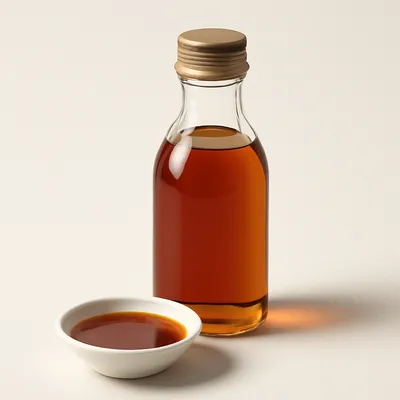
Remove from the steamer; drizzle a small amount of light soy sauce and a few drops of sesame oil around the edge; scatter minced scallion over the top; serve immediately
Archive tool suggestions — not reviewed
These legacy suggestions have not been evidence-reviewed and are not presented as required tools.