Ultra-thin, translucent sheets of steamed rice — less than one millimeter thick, stone-ground from aged long-grain rice in Shunde's Chencun town — dressed in sesame oil and light soy sauce, so delicate they melt before they reach the back of the mouth.




In 1927, Chencun native Huang Dan, who had spent years apprenticing in rice-noodle shops across the Pearl River Delta, developed an ultra-thin variant of rice sheet in Chencun, Shunde. Locals called it 黄但粉 ('Huang Dan noodle'); outsiders, noting its origin, called it 陈村粉. Huang Dan's two sons carried on the craft — the elder continued the original shop while the younger founded Huang Jun Ji in December 1979. The name 陈村粉 was formally standardized in 1993–94 when a Foshan hotel buyer requested the noodle by its place of origin. In 2013, the production technique was listed in Shunde's fourth batch of district-level intangible cultural heritage.
The noodle is barely there — silky and cool against the tongue, with the faint sweetness of aged rice and the ghost of sesame oil dissolving almost before you register the texture, leaving nothing but a clean, neutral satisfaction.
Aging the long-grain rice for six months before processing allows the amylose chains to retrograde — partially crystallizing into stable double-helix structures that, when steamed, form a firmer, more elastic gel than fresh-milled rice would produce. Stone-grinding preserves the starch granule size distribution better than steel roller milling, giving the slurry a smoother, more uniform texture. At sub-millimeter thickness, the slurry gelatinizes almost instantaneously in steam, creating the characteristic translucency and silkiness.
Variations
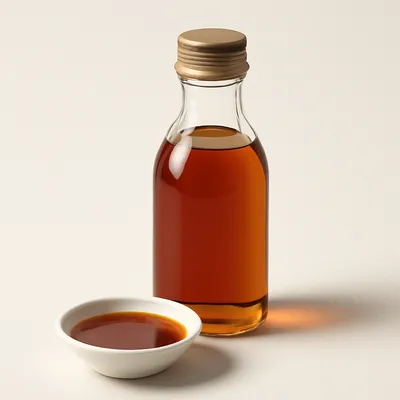
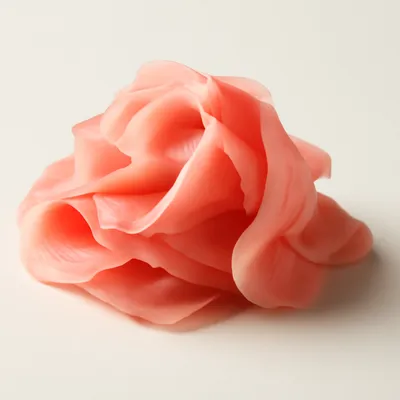
The classic presentation is plain with sesame oil, light soy sauce, pickled ginger julienne, and scallions. Beef brisket braised in spiced broth is the most popular topping. Restaurants also drape the noodles over steamed shrimp, or fold them around barbecued pork (char siu) for a dim-sum style bite. A stir-fried version exists but is considered a step down from the benchmark cold-dressed preparation.
On the Palate
Where Chencun Rice Noodles sits in the Chinese flavor cloud
Ingredients
Serves 4How it's made
7 steps · 50 min active + 3 hours 50 min waiting
- 1240 min
Rinse aged long-grain rice twice, then soak in cold water for 4 hours. The rice should absorb water until the grains are swollen and slightly opaque.
- 210 min
Drain and blend with just enough fresh water to produce a smooth, pourable slurry the consistency of thin cream. Season with a pinch of salt.
- 310 min
Grease a flat metal steaming tray lightly with oil. Ladle in enough slurry to coat the surface in a layer approximately 1 mm thick; tilt to spread evenly.
Watch outLadle the slurry only about one millimeter thin — any thicker and it steams up gummy instead of silky-translucent.
- 415 min
Steam over vigorously boiling water for 90 seconds until the sheet turns translucent and pulls away from the edges. Slide a flat spatula underneath and transfer to an oiled board to cool. Repeat with remaining slurry.
Watch outPull the sheet the moment it turns translucent and lifts at the edges — around ninety seconds; oversteaming makes it tough and sticky.
- 55 min
Stack cooled sheets and slice into 2 cm wide strips.
- 63 min
Make the dressing: combine sesame oil, light soy sauce, a pinch of sugar, and finely julienned pickled ginger.
- 72 min
Toss the noodle strips gently with the dressing, plate, scatter toasted sesame seeds and sliced scallions on top, and serve immediately.
Archive tool suggestions — not reviewed
These legacy suggestions have not been evidence-reviewed and are not presented as required tools.


