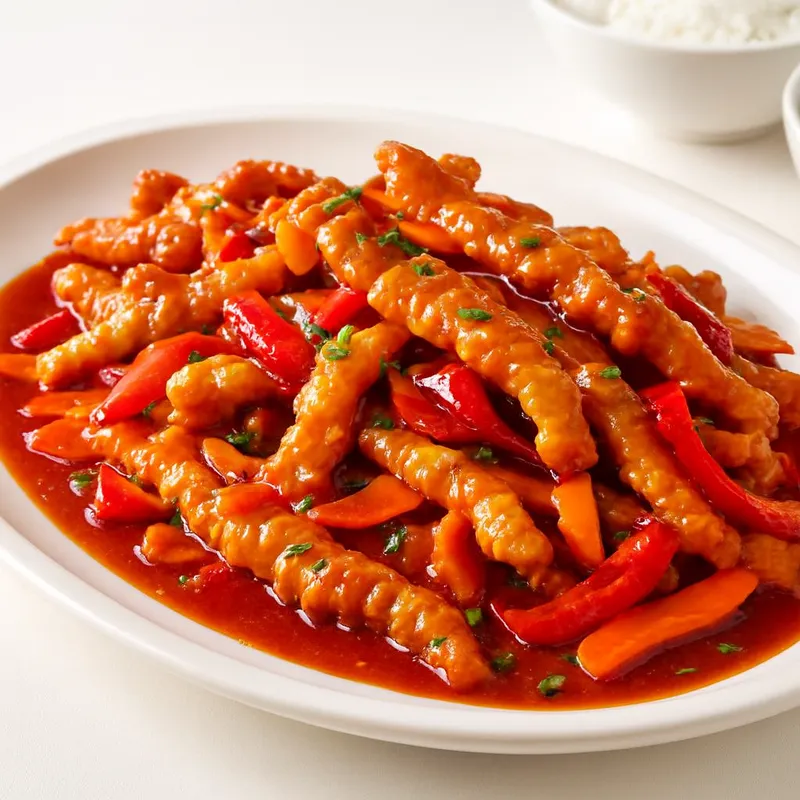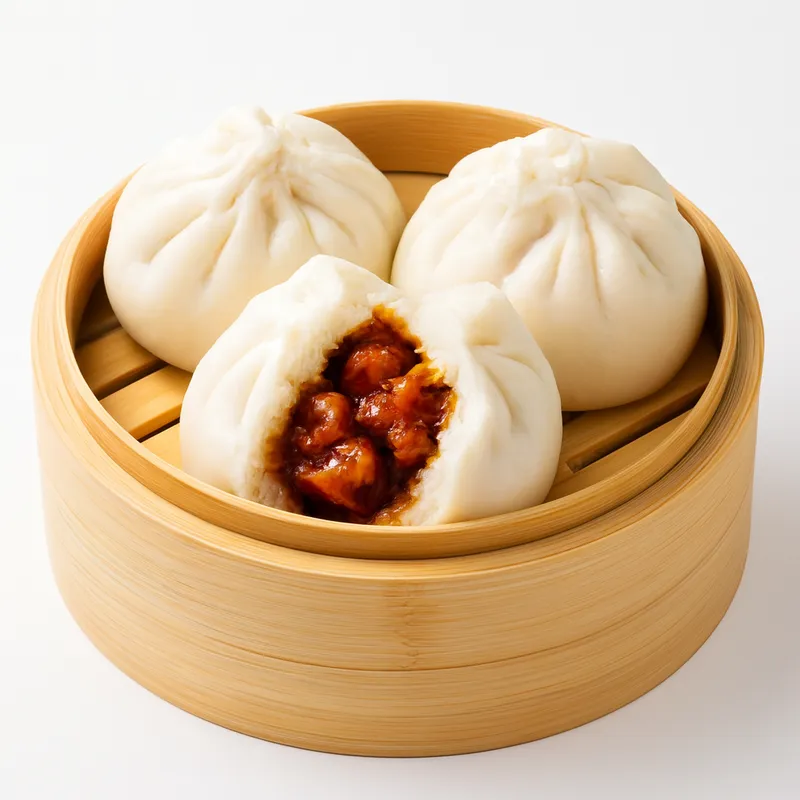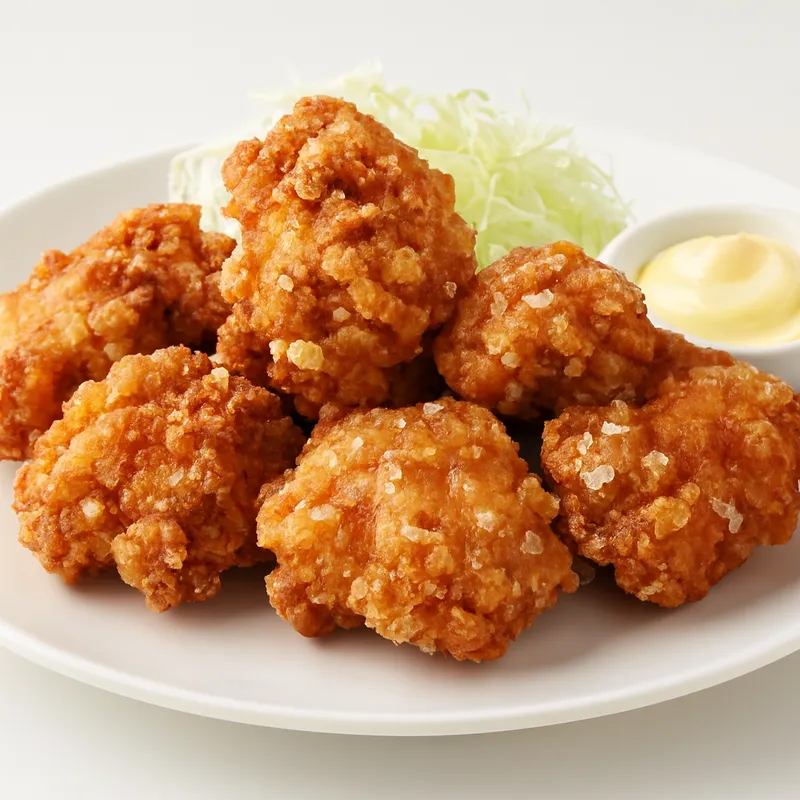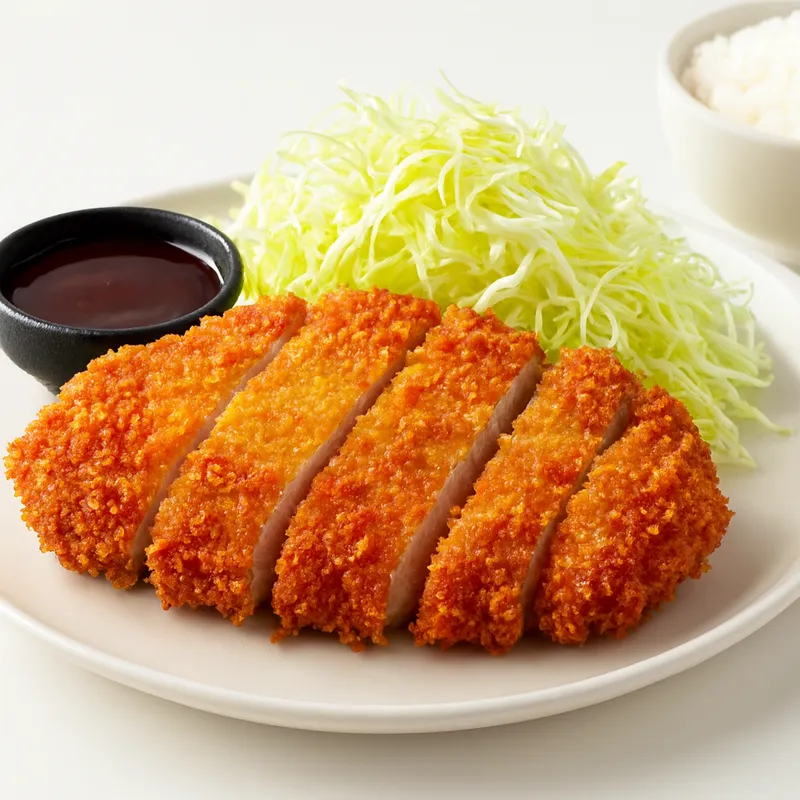





From Cantonese咕噜肉 (gū lōu yuhk), traced to 18th-century Guangdong taverns that reworked the older 糖醋排骨 (sweet-and-sour spareribs) into boneless fried cubes so Western diners, who disliked spitting out bones, could eat it more easily — the pineapple was added in the 19th century, after Hawaiian and Southeast Asian pineapple became commercially available. The version exported to America in the 20th century via Cantonese diaspora is heavier on sugar; the Hong Kong original keeps more vinegar bite.
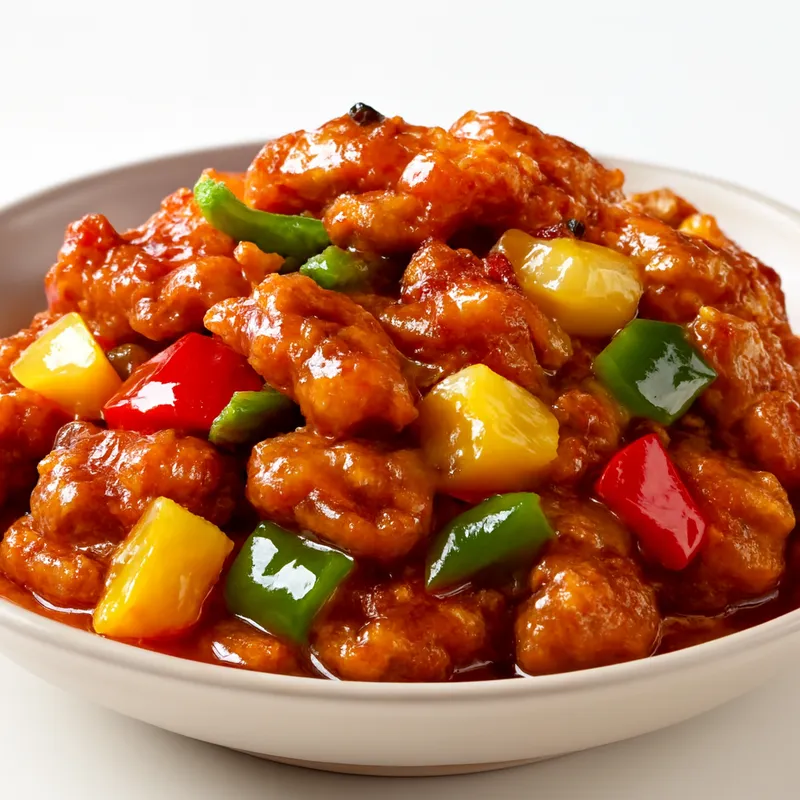
Cantonese gulao yuk — pineapple chunks, bell pepper, and a syrupy glaze that arrived in Western Chinese restaurants via 1950s migration. The pork must be twice-fried; once-fried turns soggy in the sauce.
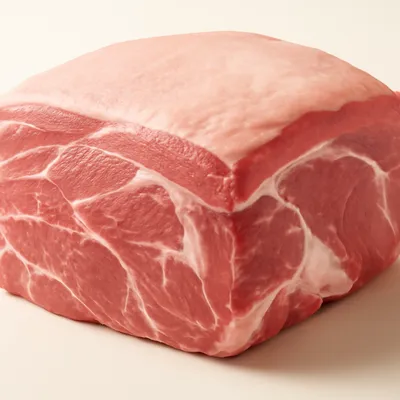
Pork shoulder cubes, double-fried to a craggy gold shell, tossed with pineapple chunks and green pepper in a glossy red-orange sauce. The first bite cracks; the meat inside is still juicy. Sauce balances vinegar and sugar evenly — neither side wins. If the coating goes soft within five minutes of plating, the sauce was added too early or the second fry was skipped.
The double fry is non-negotiable: first at 160°C to cook the pork through, rest 2 minutes off heat, then 190°C for 30 seconds to set the shell. Skip the rest and the crust steams instead of crisps. The sauce thickener is potato starch, not cornstarch — gives a clearer, glossier coat that doesn't cloud as it cools. Authentic Cantonese 咕噜肉 uses white vinegar with tomato paste — the white vinegar keeps the sauce bright red and clear; dark Chinkiang/aged vinegar belongs to the northern 糖醋里脊 tradition, not this dish.
Variations
Gulao rou (Cantonese, with pineapple); Suzhou tang cu li ji is closer to the original; British Chinese version is darker and uses ketchup; Hawaiian sweet-and-sour uses canned crushed pineapple.
On the Palate
Where Sweet and Sour Pork sits in the Chinese flavor cloud
The double fry is the whole dish: fry at 160°C to cook the pork through, rest it 2 minutes off the heat so the surface dries, then blast it at 190°C for 30 seconds to set a glass-crisp shell — skip the rest and the crust steams soft instead of crisping.
Ingredients







How it's made
6 steps · 19 min active + 10 min waiting
- 12 min
Marinate the pork pieces with a mixture of soy sauce, garlic, and ginger for at least 10 minutes. The aroma should be savory and inviting.
- 23 min
Coat the marinated pork in a light batter made from flour and egg. The batter should cling to the pork without dripping off.
Watch outThe batter should cling in a thin even coat and not run off — too wet and it slides, too dry and it flakes bare in the oil.
- 35 min
Heat oil in a deep pan to 160°C and fry the pork until cooked through and lightly golden. Remove and set aside.
Watch outFirst fry at 160°C: the pork should bubble steadily and come out pale gold, cooked through but not yet deeply colored.
- 43 min
Increase the oil temperature to 190°C and fry the pork a second time until crisp and golden brown. This step ensures a crunchy exterior.
- 54 min
In a separate pan, combine sugar, tomato, and pineapple to create the sweet and sour sauce, simmering until thickened and glossy.
Watch outCook the sauce until it turns glossy and thick enough to coat a spoon — thin and watery and it won't cling, over-reduced and it goes sticky-sweet.
- 62 min
Toss the fried pork in the sauce quickly to coat evenly, ensuring the pork remains crisp.
Watch outToss fast and serve at once — the longer the fried pork sits in the sauce, the faster that crisp shell drinks it in and softens.