
In Practice
Classic ratio is 2 parts vinegar to 1 part sugar by volume — red wine vinegar for game, white for fish, saba or vincotto for richer depth. Reduce uncovered in a non-reactive pan (stainless or enamel; aluminum pits and turns the syrup grey) until it coats a spoon and runs in slow ribbons (~108-112°C, soft-thread). Failure modes: reducing too far past the thread stage crashes it into bitter taffy as fructose burns; adding it to a still-screaming pan re-evaporates the acid and leaves only sweetness.
Background
In the sun-baked kitchens of 9th-century Sicily, agrodolce was born from the island's fertile union of Greek and Arab influences. These were times of rich trade routes, where the sweetness of local honey and the tang of imported vinegar came together in a harmonious balance, reflecting the cultural tapestry of the Mediterranean. This technique emerged as a way to preserve and enhance the island's bounty, capturing the essence of Sicily in its duality.
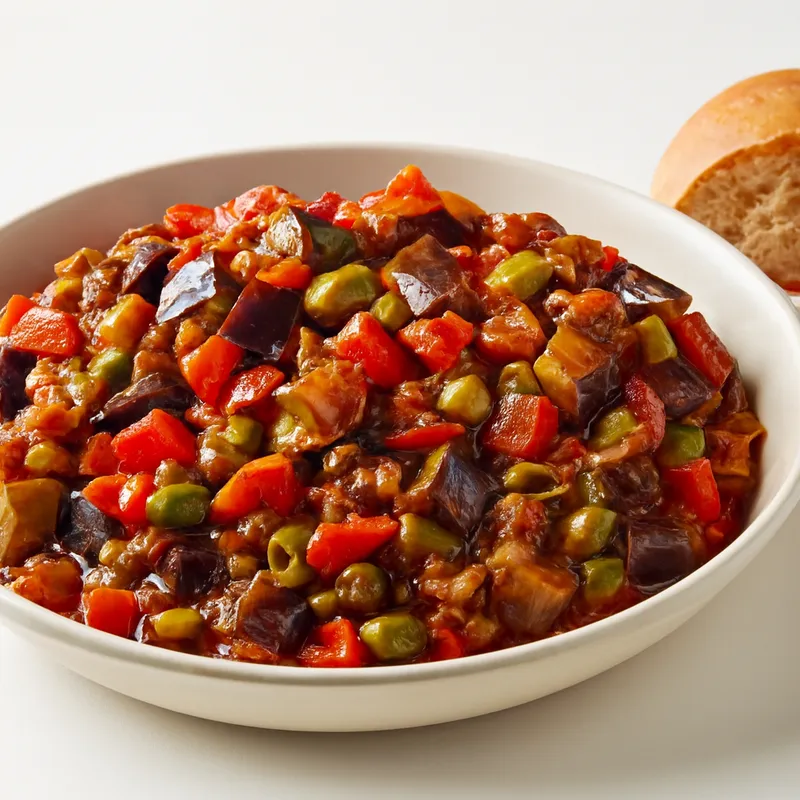
As centuries rolled on, agrodolce traveled across Italy, adapting to regional tastes and ingredients. In the northern regions, the balance shifted with the use of different vinegars and sweeteners, but the core remained unchanged. This sweet-sour contrast found its way into various Mediterranean dishes, but nowhere does it resonate like in Sicilian classics such as swordfish steak with caponata and arancini, where the agrodolce acts as a bridge between the sea's bounty and the land's produce.
How It Works
Acetic acid (4-7% in wine vinegar) and sucrose are co-reduced. Above 160°C the sugar caramelizes into furans and diacetyl while volatile acetic acid partly boils off; what remains is a higher-Brix syrup where the perceived sourness is buffered by sweetness near pH 3.5-4, producing the glossy, lip-coating finish.





Through Time
Codified in Sicily under Arab rule (827-1091 CE) when sugarcane reached Palermo and met Roman defrutum (must syrup) traditions. Pellegrino Artusi's 1891 *La Scienza in Cucina* fixed the modern Italian formula; Mary Taylor Simeti's 1989 *Pomp and Sustenance* brought it into the English-speaking canon. Sicilian chef Ciccio Sultano's revisions at Duomo since the 2000s drive the current restaurant idiom.
Related cooking knowledge
Saor is the Venetian cousin — same vinegar-sugar logic plus onions and raisins, used as a fish marinade rather than a glaze. Gastrique is the French sibling, leaning on caramel-first then deglaze. Mostarda compounds the same acid-sugar axis with mustard oil. Hong Shao trades vinegar for soy and rock sugar but uses identical reduction physics.

