




Char siu (叉烧) — meaning "fork-roast" — is a Cantonese roast-pork technique from at least the Tang dynasty (7th–10th century); stuffing it into a bao came later, codified in Guangzhou tea houses by the late Qing (19th century) as part of the dim sum repertoire. The split-top crackle is intentional: a baking-soda kick in the dough makes it open in the steamer like a flower, telling guests at a glance the bao is fresh.
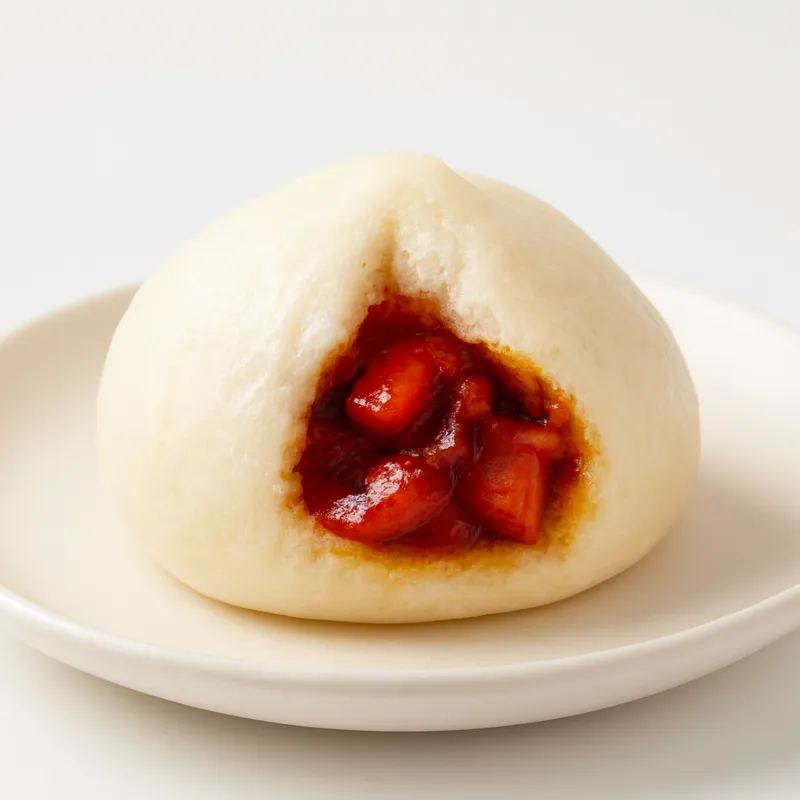
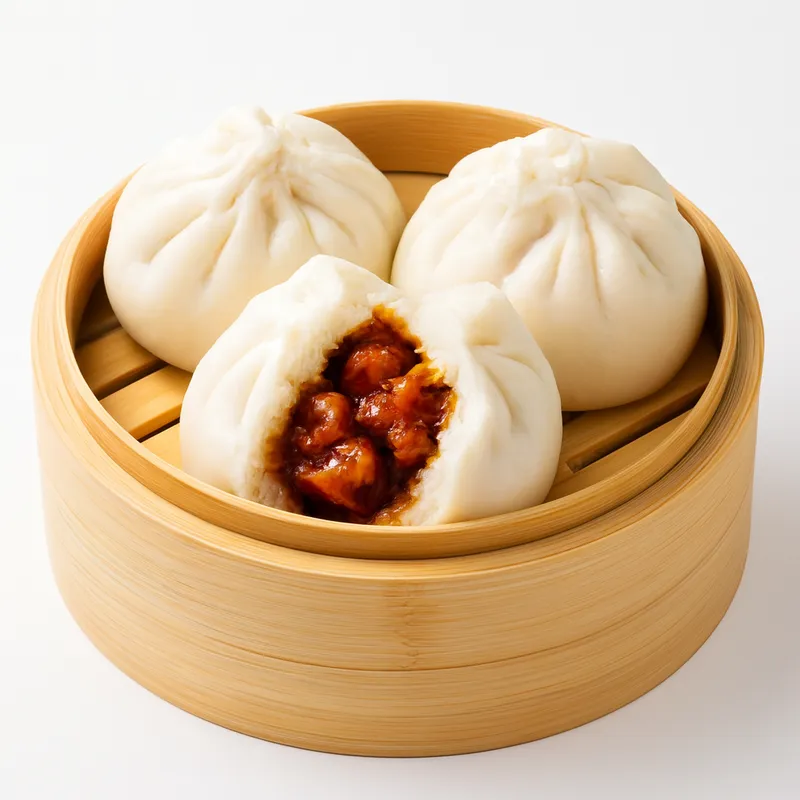
Cantonese steamed BBQ-pork bun — the tear-line cracks at the top come from baking soda and ammonium bicarbonate in the dough. Filling is char siu cubes in oyster-sauce-thickened gravy, sweet-savory at 60:40.
Snow-white domed buns with a crackled split on top, the seam revealing a flash of red filling inside. The bread is cloud-soft, slightly sweet; the filling is diced char siu pork in a sticky brown sauce — sweet, salty, a little smoky. Eat hot from the steamer; cooled, the bun goes dense. Two bites for a small one, four for the dai bao (large) version.
The dough uses both yeast and a touch of baking powder/soda — yeast for flavor, chemical leavener for the dramatic split-top. The filling needs the diced pork to be cool when wrapped; warm filling melts the lard in the dough and the bao collapses. Roast the char siu separately first to a glaze, then chop and bind in cornstarch slurry — using raw pork in the filling gives a stewed-meat texture, not the lacquered char siu bite.
Variations
Cantonese steamed (zheng) version is the classic; baked (cha siu so or cha siu bao guk) has a flaky pastry crust; Tim Ho Wan's pineapple-bun-style baked char siu bao earned a Michelin star.
On the Palate
Where Char Siu Bao sits in the Chinese flavor cloud
Ingredients


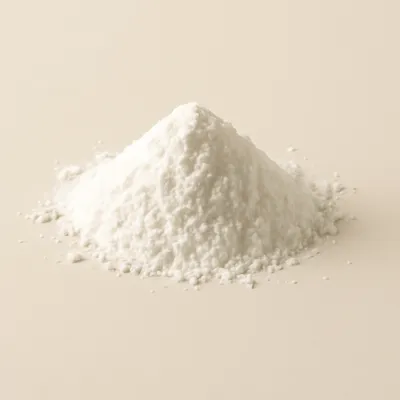
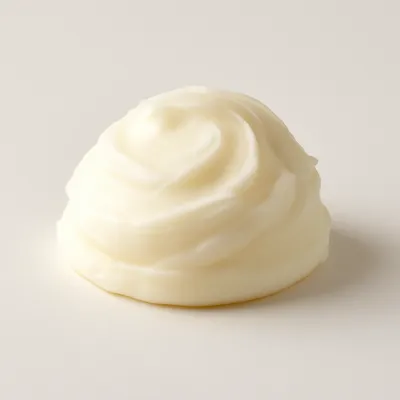
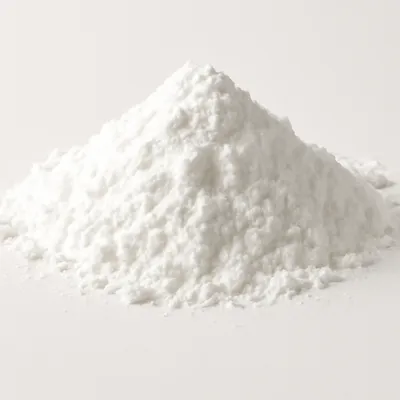



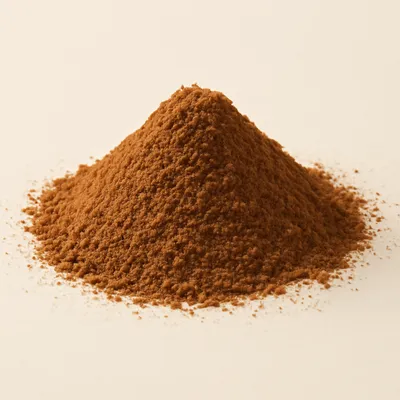

How it's made
5 steps · 45 min active + 1 hour waiting
- 110 min
In a large mixing bowl, combine flour with sugar and a pinch of salt. Gradually add water while stirring until the dough comes together. Knead the dough on a lightly floured surface until smooth and elastic, about 10 minutes.
Watch outThe dough should be smooth and elastic, not sticky. If it's too sticky, add a little more flour.
- 20 min
Cover the dough with a damp cloth and let it rest in a warm place until it doubles in size. This will take approximately 1 hour.
- 35 min
While the dough is resting, prepare the filling. In a pan over medium heat, cook diced pork with soy sauce until the sauce is reduced and coats the pork, about 5 minutes. The pork should be tender and flavorful.
Watch outCook the char siu until the sauce reduces to a glossy, sticky glaze that clings to each piece — runny sauce won't lacquer the meat or set firm when chilled.
- 415 min
Once the dough has risen, punch it down and divide it into equal-sized pieces. Roll each piece into a ball, then flatten into a disc. Place a spoonful of the pork filling in the center and gather the edges to seal the bun.
Watch outGather and pleat the edges tightly and leave a small opening at the very top — a well-sealed base with a thin crown is what splits into petals.
- 515 min
Place the buns on parchment paper squares and steam them in a bamboo steamer over boiling water for about 15 minutes. The buns should be fluffy and the filling hot.
Watch outSteam over a hard rolling boil with plenty of steam the whole time — weak, wavering heat means the tops never crack and the crumb turns dense.
Archive tool suggestions — not reviewed
These legacy suggestions have not been evidence-reviewed and are not presented as required tools.