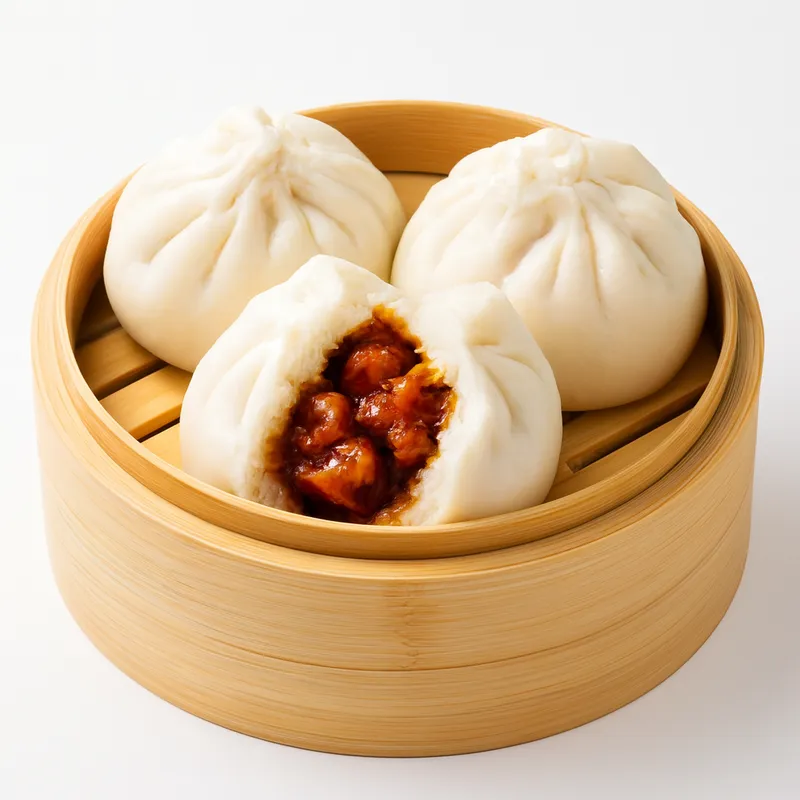
A Hawaiian steamed bun filled with sweet and savory char siu pork.



Descended from Cantonese char siu bao, brought to Hawaii by Chinese plantation workers in the mid-to-late 1800s — "manapua" is a contraction of the Hawaiian phrase "mea ʻono puaʻa" (literally something like "pork pastry," often glossed "delicious pork thing"). Local bakers scaled the bun up well past its dim sum size and sweetened the dough to match island taste, and baking became as common as steaming; by the mid-20th century it had become a standalone snack, first hawked from the trucks of the "manapua man" and now a convenience-store staple.
Cantonese plantation imports from the late 1800s — 'manapua' contracts the Hawaiian 'mea ʻono puaʻa' (delicious pork thing). Local bakers scaled up the bun and sweetened the dough; by the 1950s it was sold from coolers on Oahu beaches.
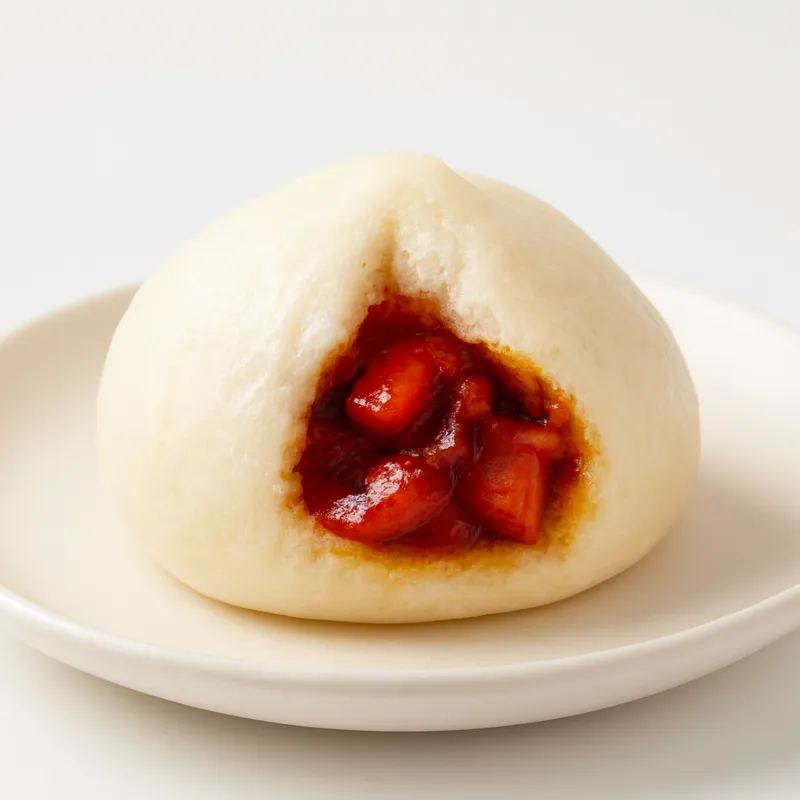
A white steamed bun the size of a fist, soft and slightly sweet, split open to reveal red-edged char siu in a sticky brown glaze. Eaten warm out of a paper bag at lunch counters and 7-Eleven warmers across the islands. Heavier and sweeter than its Cantonese cousin; the dough should pull, not crumble.
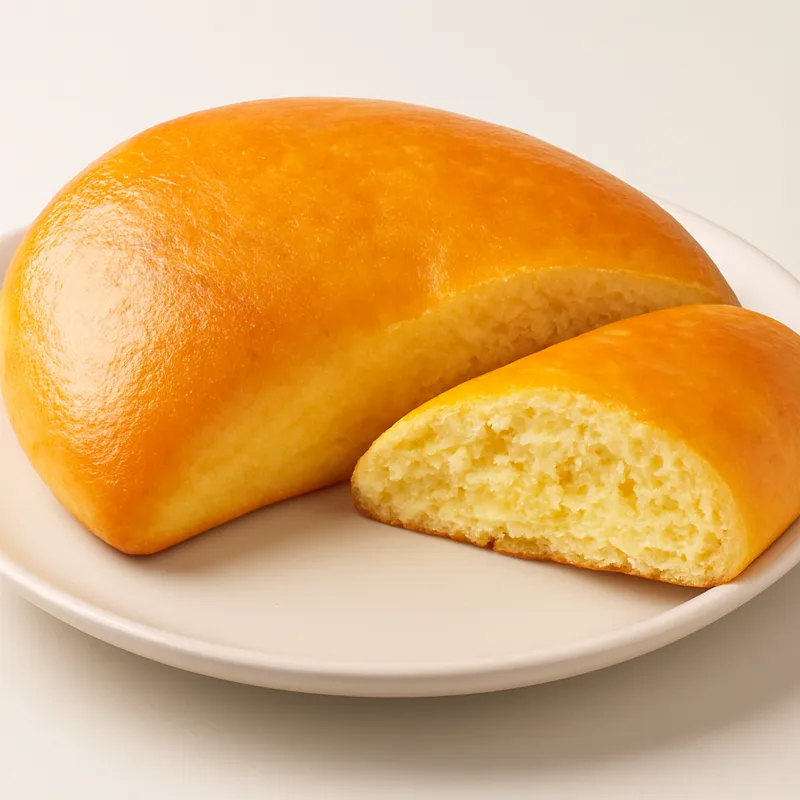
The dough uses more sugar and often shortening or lard where Cantonese bakers use just flour, water, and a touch of fat — that's why a manapua keeps its pillow softness even cold. Filling is char siu chopped, not minced, then bound with oyster sauce and a cornstarch slurry that sets glossy when steamed. Baked manapua exists too; the bottom should be brown, the top still pale.
Variations
Steamed (the Honolulu standard, white and pillowy); baked manapua (browner top, denser crumb); Char Hung Sut on Pauahi Street (1946, the gold-standard); Royal Kitchen's curry-chicken manapua at Chinatown Cultural Plaza.
On the Palate
Where Manapua sits in the Hawaiian flavor cloud
Ingredients




How it's made
6 steps · 45 min active + 1 hour waiting
- 15 min
In a large bowl, dissolve sugar in warm water and sprinkle yeast over the top. Let it sit until the mixture becomes frothy and fragrant, about 5 minutes.
Watch outEnsure the water is warm, not hot, to activate the yeast without killing it.
- 210 min
Gradually add flour to the yeast mixture, stirring until a soft, elastic dough forms. Knead the dough on a floured surface until smooth and pliable, about 10 minutes.
Watch outKnead until the dough is smooth and elastic; under-kneading can result in dense buns.
- 30 min
Cover the dough with a damp cloth and let it rise in a warm place until doubled in size, about 1 hour.
Watch outEnsure the dough is in a warm place; too cool will slow the rise.
- 45 min
Meanwhile, prepare the filling by mixing char siu pork with hoisin sauce until well combined. The aroma should be sweet and savory.
- 510 min
Punch down the dough and divide it into even pieces. Flatten each piece into a round, place a spoonful of filling in the center, and pinch the edges to seal.
Watch outEnsure the edges are sealed well to prevent the filling from leaking during steaming.
- 615 min
Place the filled buns on parchment paper squares in a steamer basket. Steam over boiling water until the buns are puffy and the filling is hot, about 15 minutes.
Watch outEnsure the water does not touch the buns while steaming to avoid soggy bottoms.
Archive tool suggestions — not reviewed
These legacy suggestions have not been evidence-reviewed and are not presented as required tools.