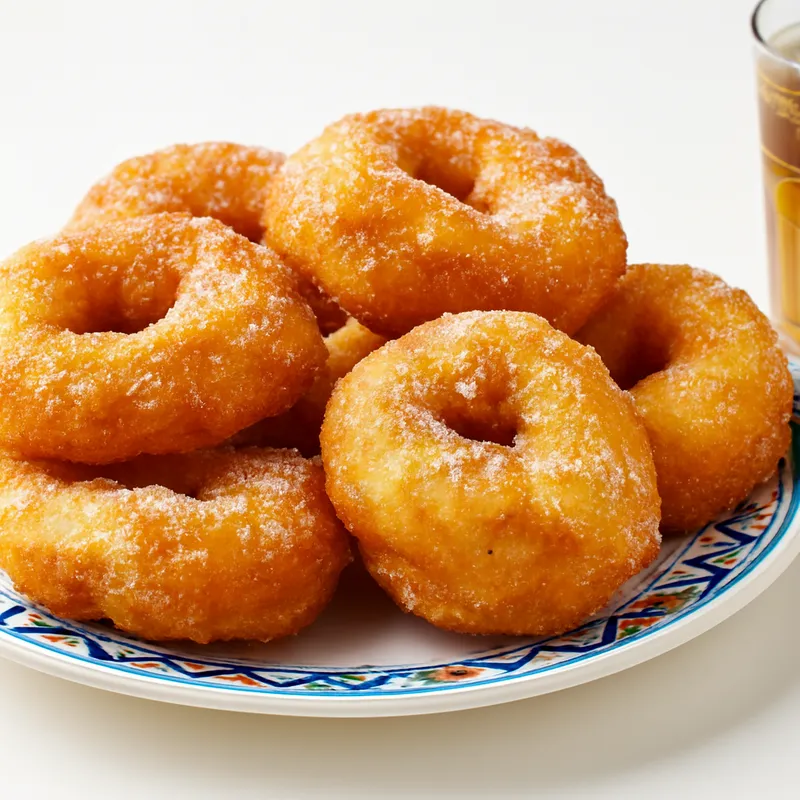
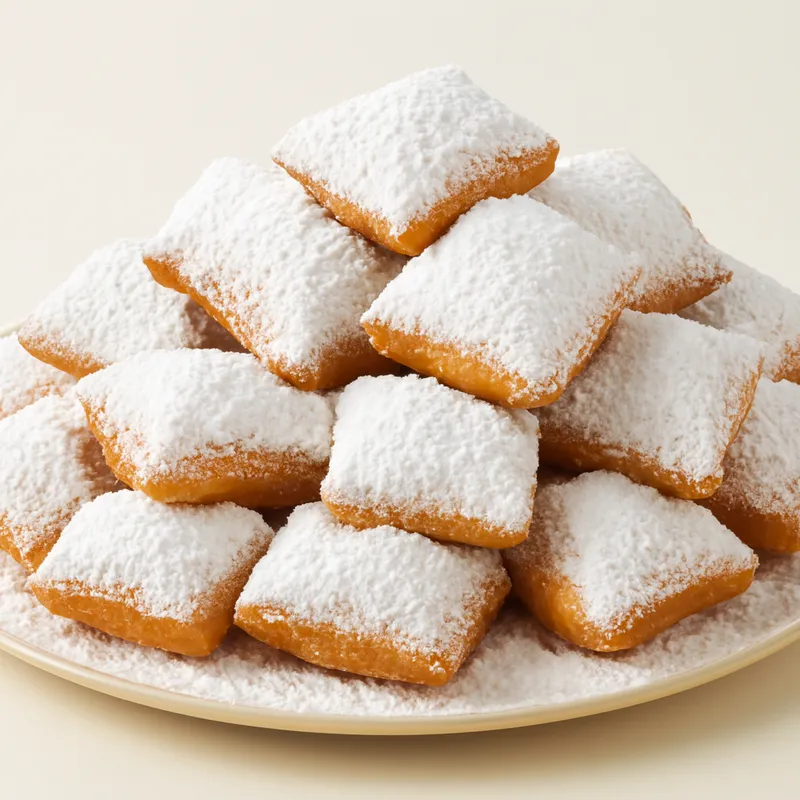
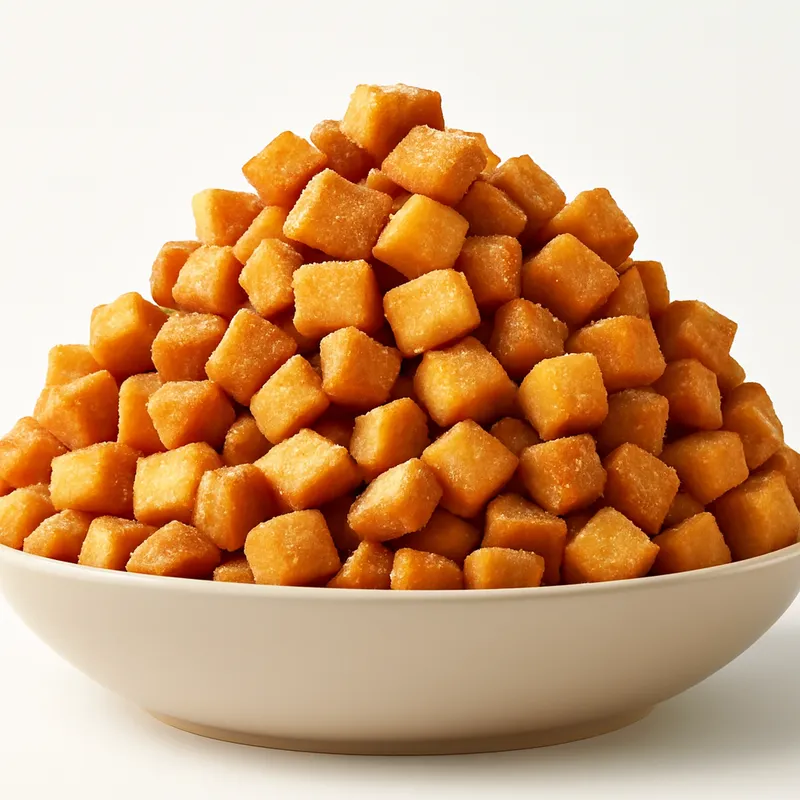
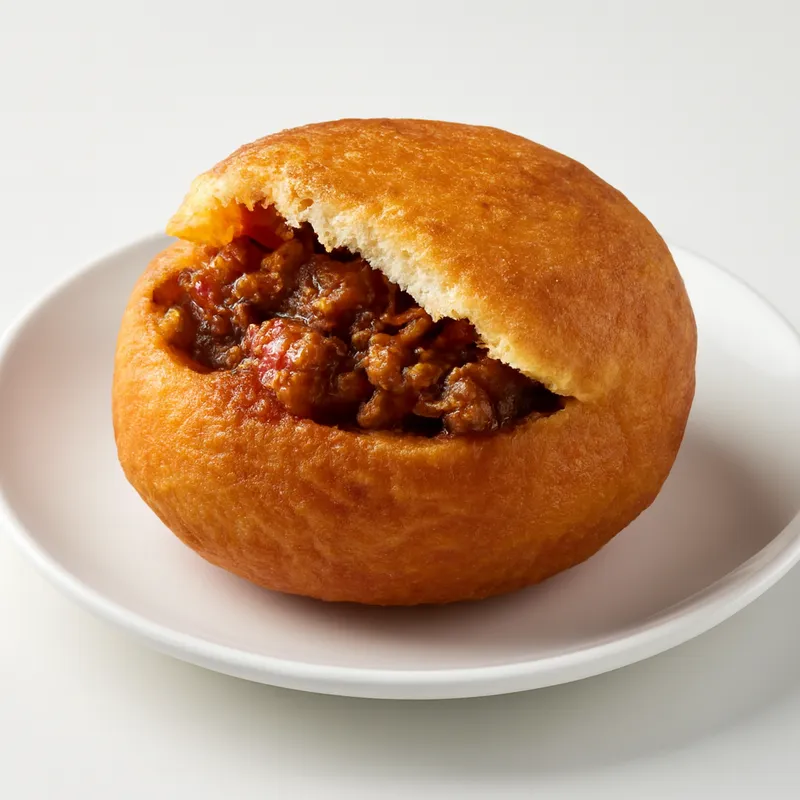
A pan-West African fritter found across the region — known as puff puff in Nigeria and Cameroon, and as bofrot or togbei in Ghana, among other local names. Unlike the bean-based Sahelian fritters (the Hausa kosai), puff puff is made from wheat flour and yeast. Its origins are not firmly documented; one account links it to the spread of European wheat baking through Lagos and other coastal ports in the late 19th century, though this is uncertain. It belongs to a wider family of African fried-dough snacks that includes East and Southern Africa's mandazi, which is often enriched with coconut and egg.
Wheat-and-yeast fritter that travelled with European baking through the 19th-century Lagos ports. The fist-squeeze technique — batter pushed through a closed fist into 170°C oil — is what gives the teardrop shape; too stiff a batter and it fries dense.
Golf-ball-sized rounds of yeasted dough, deep-fried until mahogany outside and pale yellow inside, served warm in a paper cone with sugar dusted on top or a side of chili-sugar mix. Crisp shell, soft chewy crumb with visible holes from the rise. Eaten by hand at parties between savory courses; should squeak slightly between the teeth.
The batter must be wet — closer to thick pancake batter than dough, so the fingers can scoop a portion and squeeze it through the fist into the oil (the fist-squeeze technique is what gives puff puff its rounded teardrop shape). Too stiff and it fries dense; too loose and it spreads. Oil at 170–175°C: hotter and the outside browns before the yeast pockets cook through, leaving raw centers.
Variations
Puff puff (sugar-dusted, Nigerian standard); Cameroonian beignets soufflés (same technique, often eaten with bean stew); Ghanaian bofrot or togbei (denser, often spiced with nutmeg); Brazilian bolinho de chuva is the trans-Atlantic cousin from Yoruba returnees.
On the Palate
Where Puff Puff sits in the Nigerian flavor cloud
Get the batter wet like thick pancake batter — not a kneadable dough — and hold the oil at 170–175°C so the yeasty inside cooks through before the outside over-browns.
Ingredients
How it's made
5 steps · 35 min active + 45 min waiting
- 110 min
In a large bowl, combine flour, sugar, and yeast. Gradually add warm water, mixing until a smooth, elastic dough forms. The dough should be sticky and slightly wet.
Watch outEnsure the water is warm but not hot, as too high a temperature can kill the yeast.
- 20 min
Cover the bowl with a clean cloth and let the dough rise in a warm place until it doubles in size, about 45 minutes.
Watch outBatter is proofed when it's bubbly and puffed to nearly double and smells yeasty-sour — flat batter means dead yeast or a cold spot.
- 35 min
Heat vegetable oil in a deep pan to 350°F (175°C). The oil should be deep enough to submerge the dough balls completely.
Watch outTest the oil with a pea of batter — it should rise and sizzle steadily in a couple of seconds, not spit violently or sink and sit.
- 415 min
Using your hands or a spoon, scoop small balls of dough and gently drop them into the hot oil. Fry until they are golden brown on all sides, turning occasionally, about 5 minutes per batch.
Watch outTurn the balls as they fry so every side colors evenly to deep golden brown, not just the bottom.
- 55 min
Remove the puff puffs with a slotted spoon and drain on paper towels. Roll in sugar while still warm if desired.
Archive tool suggestions — not reviewed
These legacy suggestions have not been evidence-reviewed and are not presented as required tools.