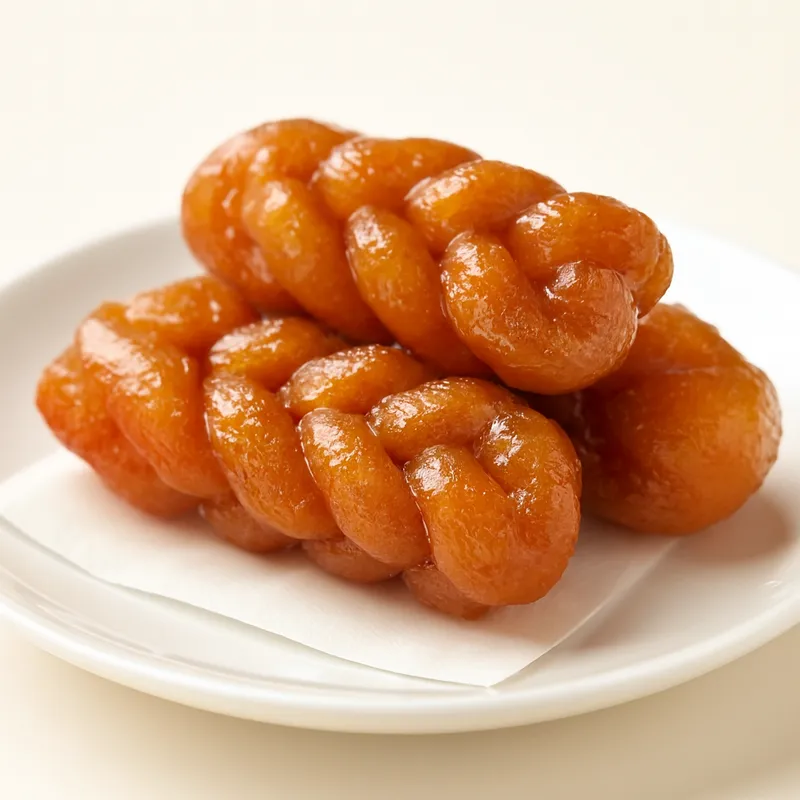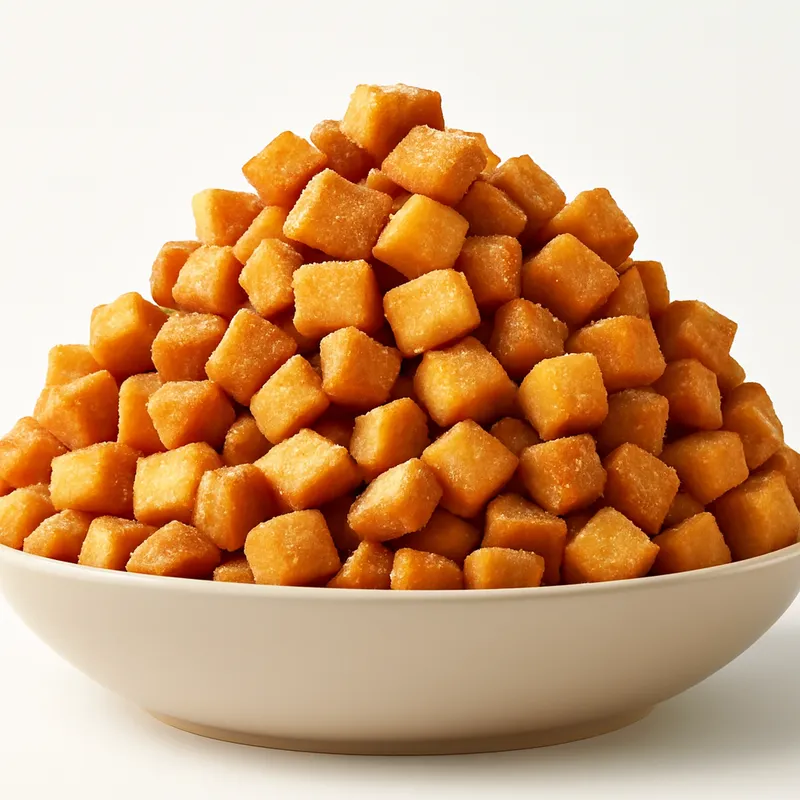
Crunchy, fried dough snacks flavored with nutmeg and sugar.






A West African fried-dough snack with a hazy lineage. In the pre-colonial era such treats leaned on local grains like sorghum and millet; the wheat flour and refined sugar brought by Europeans gradually reshaped chin chin into the sweet, deep-fried form known today, and many trace a general European fried-pastry influence — though the exact origin is hard to pin down. It is now thoroughly Nigerian: a fixture at weddings, birthdays and newborn naming ceremonies, and above all the Christmas season, when households fry big batches by their own family recipe and seal it into tins to eat and to give away.
British wheat and refined sugar reached Yoruba kitchens in the late 1800s, and chin chin is what came out — a stiff fried biscuit-cube that keeps for weeks in a sealed bag. Closer to shortbread than donut. Hollow puff means the dough was too soft.
Small fried dough cubes, half a centimeter thick, hard-crunchy on the outside and biscuit-dense within. Sweet from sugar in the dough, warm from nutmeg, faintly buttery. Sold in plastic bags by the kilo at Nigerian weddings, parties, road-trip stops; the stiff bite means a single handful lasts a long time. Half-shelf-stable too — a sealed bag goes weeks at room temp.
The dough is much stiffer than Western fried-dough — closer to shortbread than donut. Too soft and chin chin puffs and goes hollow; too stiff and it fries to gravel. Cut precisely into uniform cubes so they fry evenly. Frying in two stages (low oil to cook through, then high oil to brown) is the trick that gives the snap-crack on bite without raw center.
Variations
Soft chin chin (cake-like, served at children's parties); hard chin chin (the keep-in-the-bag-for-weeks version); coconut chin chin (with desiccated coconut in the dough); Ghanaian atwemo is the cousin twisted into rosettes before frying.
On the Palate
Where Chin Chin sits in the Nigerian flavor cloud
Keep the dough stiff, closer to shortbread than to bread — a soft dough puffs up and fries hollow, so it should feel firm and just cohesive, not springy or sticky.
Ingredients


How it's made
5 steps · 45 min
- 15 min
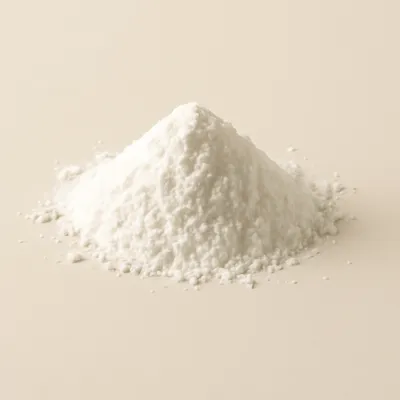
In a large bowl, combine flour, sugar, and a pinch of nutmeg. Add butter and rub it into the dry ingredients with your fingertips until the mixture resembles breadcrumbs.
- 210 min
Gradually add milk and a beaten egg to the mixture, stirring continuously until a soft, cohesive dough forms. Knead the dough gently on a floured surface until smooth.
Watch outStop kneading the moment it's smooth — over-working develops gluten and turns the finished snack tough and chewy instead of short and crisp.
- 310 min
Roll out the dough to about a quarter of an inch thickness. Cut into small squares, roughly one inch each, using a sharp knife or dough cutter.
Watch outRoll it to an even quarter-inch — too thin and they scorch, too thick and the centers stay doughy.
- 415 min
Heat vegetable oil in a deep pan until it reaches 350°F (175°C). Fry the dough squares in batches, turning occasionally, until they are golden brown and crispy.
Watch outThe oil is right when a scrap of dough sizzles and rises slowly — a violent roar means it's too hot and will brown the outside raw.
- 55 min
Remove the fried chin chin with a slotted spoon and drain on paper towels. Allow to cool completely before serving or storing.
Archive tool suggestions — not reviewed
These legacy suggestions have not been evidence-reviewed and are not presented as required tools.