The name comes from "láng," the Hungarian word for flame. The earliest lángos wasn't fried at all: on baking day, families would pull off a piece of leftover bread dough, flatten it, and bake it right at the flaming mouth of the wood-fired oven while the oven was heating up, eaten hot as the baker's first meal. Deep-frying in fat spread later, taking its modern shape over the 18th and 19th centuries. In the 20th century, Budapest street stalls made the garlic, sour cream, and grated cheese topping standard, and the stands spread to public swimming pools and weekend markets.
19th-century Hungarian baker's by-product — leftover bread dough fried in lard rather than wasted. Modern street form spread from state-run huts at Budapest swimming pools after the 1960s. Dough wants ~70% hydration so it puffs into airy pockets in the oil.
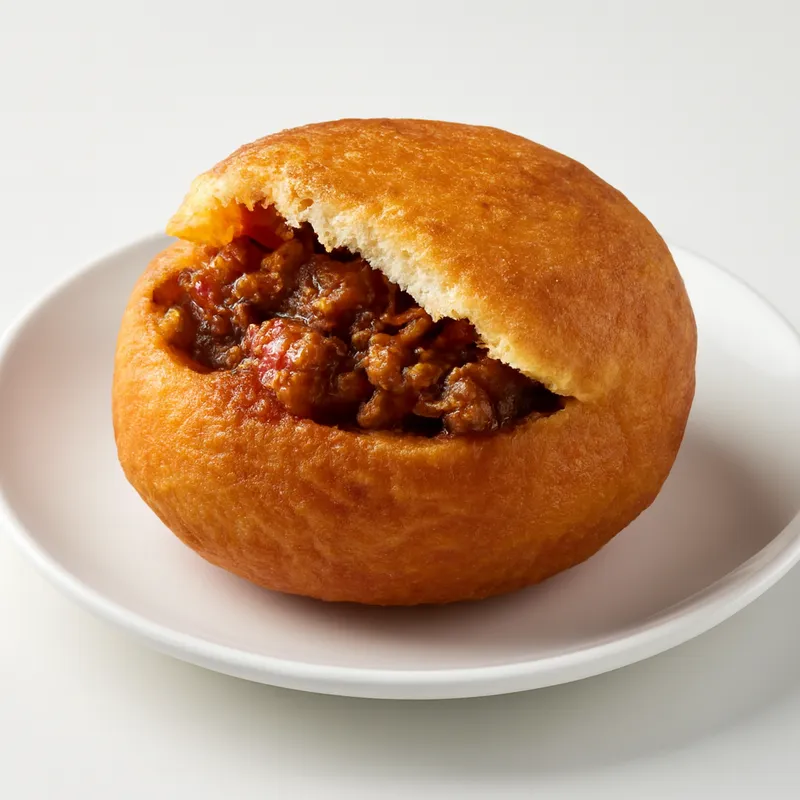
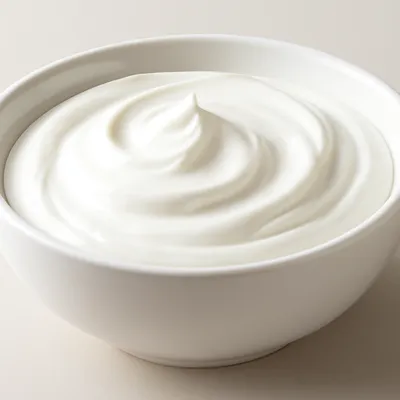
A flat disc of yeasted dough, deep-fried until the surface blisters golden and the inside stays cottony. Hot from the oil, it gets rubbed with a raw garlic clove, slathered in sour cream, then snowed with grated sharp cheese. Eaten standing up at a market stall, folded in half, fingers slick. Cold lángos is dead lángos.
The dough has to be wet — closer to a thick batter than bread dough, around 70% hydration — so it puffs into airy pockets in the oil rather than frying dense. Lard or rendered pork fat at 180 °C gives the right blister and the savory back-note that neutral oil flat-out misses. Garlic must be raw and rubbed on while the surface is still hot enough to cook the harshness off.
Variations
Sajtos-tejfölös (raw garlic + sour cream + cheese — Budapest pool-side standard); kolbászos (sausage); kapros-túrós (dill + curd cheese); Retro-Lángos at Budapest's Hold Street market keeps the lard-fried version; Slovakian langoš is the cross-border twin.
On the Palate
Where Lángos sits in the Hungarian flavor cloud
Keep the dough wet — around 70% hydration, closer to a thick batter than bread dough — so it puffs into airy blistered pockets in the hot fat instead of frying dense and bready.
Ingredients




How it's made
6 steps · 30 min active + 8 hours waiting
- 115 min
In a large bowl, combine flour and yeast. Add eggs and yogurt, stirring until a dough forms. Sprinkle in the salt and knead until smooth and elastic, adjusting with flour or yogurt as needed.
Watch outThe dough should be pliant and not too sticky; it should resemble a softer version of egg pasta dough.
- 20 min
Transfer the dough to an oiled bowl, cover it, and let it rise in the refrigerator overnight. This slow rise will develop flavor and texture.
- 310 min
Gently deflate the risen dough and divide it into pieces slightly larger than a ping-pong ball. Flatten each piece by hand into a disk, making the center thin and the edges thicker.
Watch outPress each disk thin in the middle and thicker at the rim — the thin center puffs and blisters, the rim stays chewy.
- 41 min
Heat about 2 inches of lard in a pan until a small piece of dough rises to the surface immediately upon being dropped in. Carefully slide a dough disk into the hot oil.
Watch outThe oil is ready when a scrap of dough shoots straight to the surface and sizzles — not when it sinks and rises slowly.
- 52 min
Fry the dough for about 30 seconds on each side until golden brown and puffed. Adjust frying times as needed for subsequent pieces.
Watch outAbout 30 seconds a side — flip once the underside is deep golden and the top has ballooned up.
- 62 min
Remove the lángos from the oil and drain excess oil. Serve hot with garlic dressing, sour cream, and cheese if desired.
Archive tool suggestions — not reviewed
These legacy suggestions have not been evidence-reviewed and are not presented as required tools.