In Practice
Oven calibration matters more than the recipe — a 25°C drift ruins lean breads. Stone or steel preheated 45 min at 230°C for hearth loaves; convection at 165°C for laminated pastry; 175°C for butter cakes. Inject steam in the first 10 min to delay crust set and maximize oven spring. Failure modes: opening the door early collapses gluten before set; underweighing flour by 10% turns cake to pudding.
Background
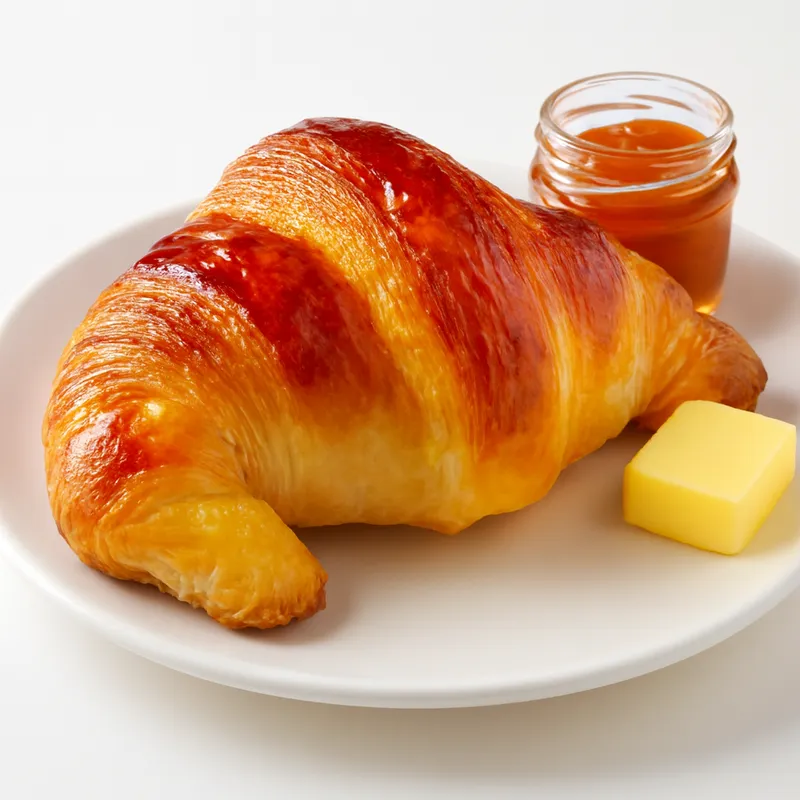
Baking is a universal technique, with each culture adding its own flair. French baking, for instance, is renowned for its precision and artistry, often using butter-rich doughs and intricate pastries like the Croissant. Italian baking celebrates simplicity and regional ingredients, as seen in the Margherita Pizza, which highlights tomatoes, mozzarella, and basil. Turkish baking, with its roots in Ottoman traditions, features layered and syrup-soaked delights such as Baklava. In the Middle East, flatbreads like Naan are baked in tandoor ovens, providing a smoky flavor and soft texture.
How It Works
Convective and radiant dry heat at 150-230°C drives three parallel transformations: water vaporizes from dough surfaces and sets a crust, starches gelatinize above 60°C while gluten coagulates near 75°C, and Maillard browning of crust amino acids with reducing sugars generates pyrazines and melanoidins. CO2 from yeast or chemical leaveners expands before the protein matrix locks.
Dish examples
1752 dishes · 141 cuisines




Through Time
Egyptian leavened bread c. 1500 BCE established the wild-yeast lineage; Roman pistores codified commercial bakeries. The 1683 Vienna kipferl and Marie-Antoine Carême's early-19th-century Parisian pâtisserie shaped Western technique. Raymond Calvel's 1980s autolyse method and Chad Robertson's *Tartine Bread* (2010) reset the modern artisan canon.
Related cooking knowledge
Roasting is baking's direct sibling — same dry-heat oven, but applied to whole proteins and structural vegetables rather than batters and doughs. Steaming shares the gelatinization mechanism without the crust. Sfoglia and Roux are the prepared substrates baking finishes.


