



Brought to Morocco by the same 13th-15th century Andalusian Muslim migration that delivered pastilla — sfenj descends from the Iberian buñuelo tradition, itself rooted in Roman frying-cake forms. The early-morning street ritual is specifically Moroccan: vendors fire up oil drums in old-medina alleys before dawn, and the smell pulls people out for breakfast. The Jewish Moroccan community developed a Hanukkah variant called sfenj-style sufganiyot, brought to Israel after 1948.
Brought by 13th-15th century Andalusian Muslim migration, descended from the Iberian buñuelo. The dough is wet — around 80% hydration — which is what creates the irregular bubble structure; stiffer dough fries up dense like a cake doughnut. Friday-morning street ritual in old medinas.
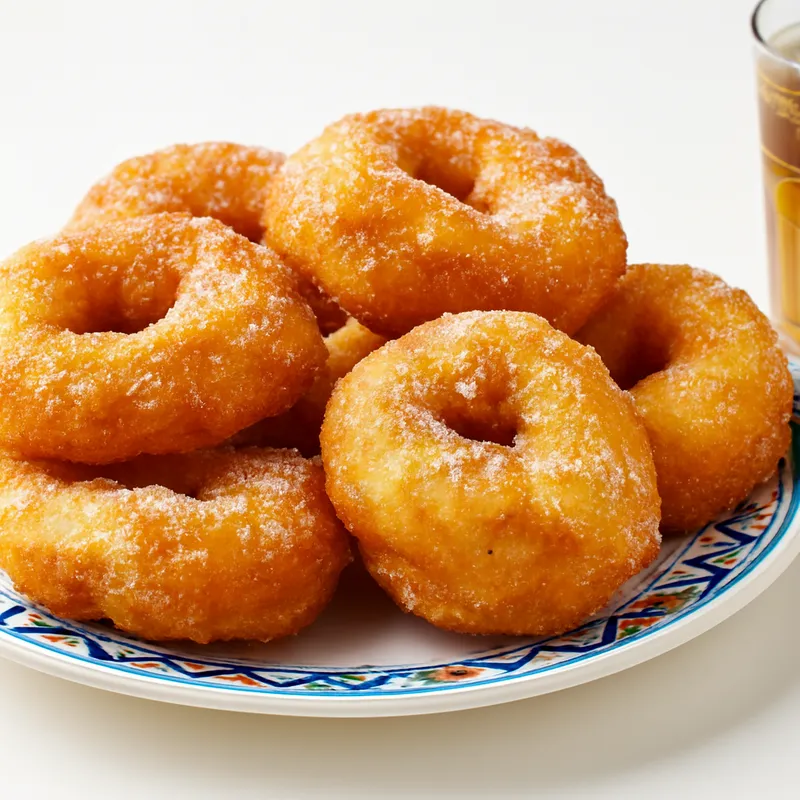
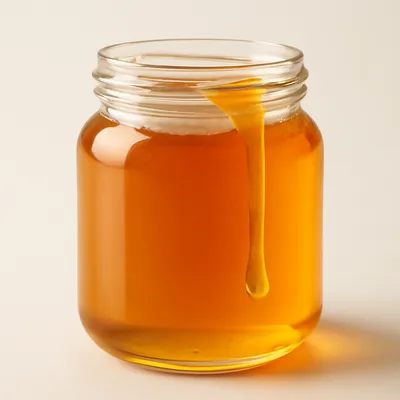
Hand-stretched dough rings, deep-fried to a deep gold, with a hole punched by the cook's finger. Outside: brittle, bubbly, almost glassy. Inside: hollow with a wet crumb. No spice, no flavoring in the dough itself — just flour, water, salt, yeast, time. Eaten plain, dusted with sugar, dipped in honey, or torn into mint tea. Bought from a street vendor who threads them onto a palm-frond loop to carry home; eaten within an hour or they go leathery.
The dough is wet — closer to a thick batter, hydration around 80%. Wet dough is what creates the irregular bubble structure; a stiffer dough fries up dense like a cake doughnut. Stretchers wet their hands constantly, pull a fistful of dough, poke through the middle, and slide it into the oil — the entire process takes under three seconds per ring. The dough must be cold-fermented overnight; same-day batters fry up flat with no internal structure.
Variations
Plain sfenj (the medina default, eaten with mint tea); sfenj bil sukkar (sugar-dusted, kid version); Moroccan-Jewish sfenj (Hanukkah variant, ancestor of Israeli sufganiyot); Algerian sfendj (slightly drier, often round-flat rather than ring-shaped).
On the Palate
Where Sfenj sits in the Moroccan flavor cloud
Keep the dough wet — around 80% hydration, closer to a thick batter than a kneadable ball — because that slack, sticky dough is exactly what fries up with sfenj's big, lacy, irregular holes; a stiff dough gives you a dense cake doughnut instead.
Ingredients
How it's made
5 steps · 25 min active + 1 hour waiting
- 110 min
In a large mixing bowl, combine flour, sugar, and yeast. Gradually add water while mixing until a sticky dough forms. Knead the dough until smooth and elastic, about 10 minutes. The dough should be soft and slightly tacky to the touch.
Watch outStop adding water when the dough is smooth but still slumps and clings to your fingers — it should feel soft and tacky, never firm.
- 20 min
Cover the bowl with a damp cloth and let the dough rise in a warm place until it doubles in size, around 1 hour. The dough should be airy and puffed up.
Watch outIt's proofed when it's doubled, domed, and jiggles with air bubbles just under the surface.
- 35 min
Heat vegetable oil in a deep pan to 350°F (175°C). The oil should be deep enough to submerge the dough rings. Test with a small piece of dough; it should sizzle and rise to the surface immediately.
Watch outA dropped scrap of dough should bubble hard and bob straight up within a second or two — that's your 175°C.
- 48 min
With wet hands, take a portion of the dough and form a ring by stretching it gently. Carefully drop it into the hot oil. Fry until golden brown on both sides, about 3-4 minutes per side. The sfenj should be crispy on the outside and soft inside.
Watch outFlip when the underside is deep gold; both sides should crisp up while the ring stays airy and light in the hand.
- 52 min
Remove the sfenj from the oil and drain on paper towels. Serve warm, either plain, sprinkled with sugar, or drizzled with honey.
Archive tool suggestions — not reviewed
These legacy suggestions have not been evidence-reviewed and are not presented as required tools.