




A staple of Morocco and western Algeria, with deep Berber roots — flat fried breads on heated stones predate the wheat-based version by centuries. The folded-square form likely standardized in the 18th-19th centuries in northern Moroccan towns, where olive oil for the lamination was abundant. Its name comes from the Arabic root for "smooth" or "polished," referring to the pulled-thin sheet before folding.
Northern Moroccan flatbread, square form likely standardized 18th-19th century where olive oil for the lamination was abundant. The semolina dusted between folds is the trick — it stops the layers fully fusing, so they peel apart when fried. Wheat flour alone gives a dense bread.
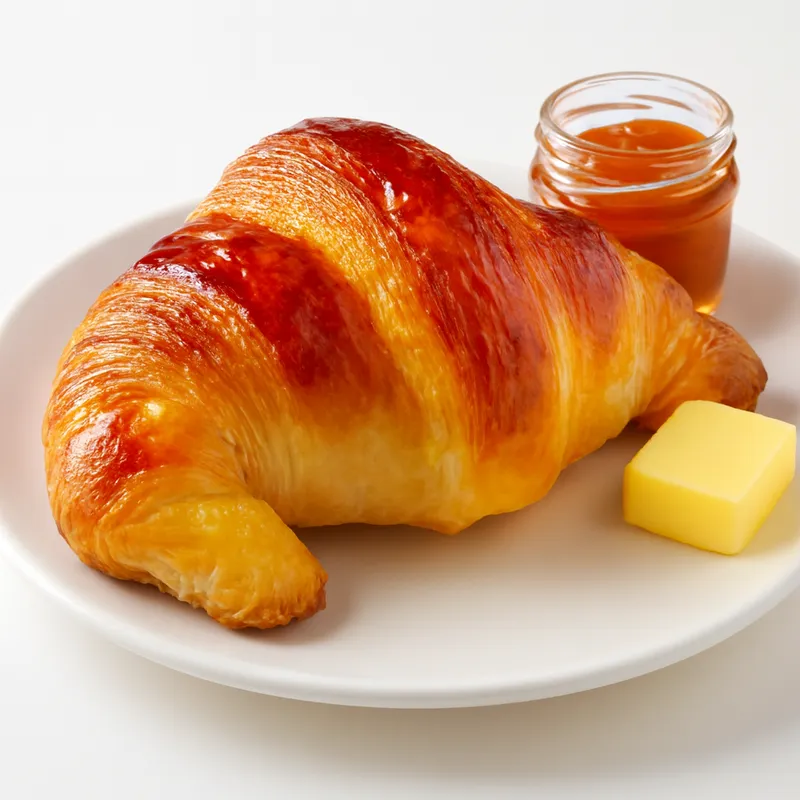
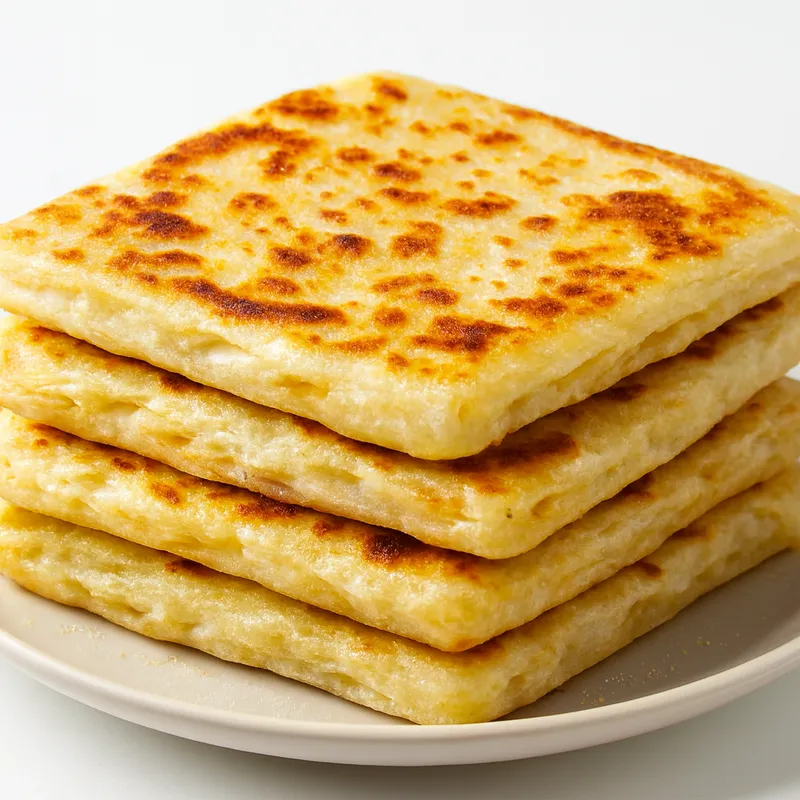
Square flatbread, palm-and-a-half wide, pulled and folded into 3-4 layers before pan-frying — the layers separate when you tear it, like a flat croissant without butter laminating. Crisp on the outside, chewy-flaky inside. Eaten warm at breakfast with butter and honey, or torn into rfissa. The signature is the square shape — a circle means the cook didn't fold, just rolled, and the texture goes wrong.
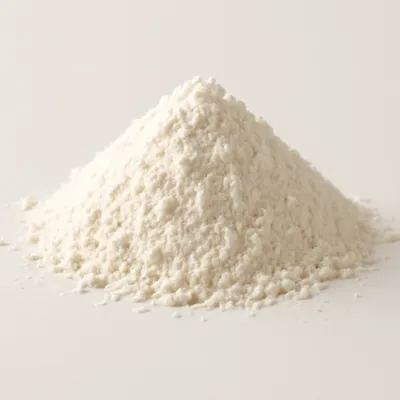
The lamination is mechanical, not yeast-driven. Dough rests, gets pulled translucent on an oiled surface, then folded in thirds horizontally and thirds vertically — that produces 9 layers of dough alternating with 8 layers of oil and fine semolina. The semolina dusting between layers is the trick: it stops the layers fully fusing, so they separate cleanly when fried. Wheat flour alone gives a dense bread; semolina is what makes msemen flaky.
Variations
Plain msemen (breakfast, with butter and honey); msemen mahchi (stuffed with onion-tomato-spice); rghaif (round version, common in Casablanca); meloui (rolled into a coil before flattening, popular in Marrakech).
On the Palate
Where Msemen sits in the Moroccan flavor cloud
Flakiness comes from lamination, not yeast: pull the rested dough translucent on an oiled surface, dust it with fine semolina, then fold it in thirds each way — that semolina between the layers is what stops them fusing so they separate into flaky sheets when cooked.
Ingredients



How it's made
5 steps · 43 min active + 15 min waiting
- 110 min
In a large bowl, combine flour, semolina, sugar, and salt. Gradually add water, kneading until a smooth, elastic dough forms, about 10 minutes.
Watch outThe dough should be soft but not sticky; add flour or water as needed to achieve the right consistency.
- 20 min
Divide the dough into small balls. Cover with a damp cloth and let rest for 15 minutes.
- 315 min
Flatten each ball on a lightly oiled surface, spreading melted butter over it. Fold the dough into a square, creating multiple layers, about 5 minutes per piece.
Watch outStretch and fold each ball until you can almost see through the sheet, dusting semolina as you go — that translucency is your cue the layers will be fine.
- 416 min
Heat a griddle or non-stick pan over medium heat. Cook each msemen until golden brown and crispy on both sides, about 4 minutes per side.
Watch outKeep the pan at a steady medium and press lightly — it's done when both sides are deep golden and crisp and the square feels flaky, not doughy, when pressed.
- 52 min
Serve warm, optionally with honey or mint tea.
Archive tool suggestions — not reviewed
These legacy suggestions have not been evidence-reviewed and are not presented as required tools.