



Levantine, with deep roots in Lebanese and Palestinian villages where wood-fired taboon ovens were used for daily bread; fatayer was the small-batch use of leftover dough plus garden vegetables. The triangular fold is centuries old — a closed shape that protects spinach from drying in the dry oven. Common as breakfast, mezze, and Lent food in Eastern Christian communities, where the cheese-free spinach version fits fasting rules.
Lebanese-Syrian triangle pies — spinach, sumac, and pine nut crimped into a three-corner pleat. The pleat seals only when the dough is rested twice; first-rise dough tears as it bakes.
Triangular hand-pies of soft yeasted dough pinched closed over fillings of spinach with sumac and pine nuts, or spiced lamb, or akkawi cheese. Baked until the dough is matte gold on top, soft and pale on the bottom. The spinach version goes lemony from sumac and the slight acidity opens the seams a little. Eaten warm; cold fatayer is fine, refrigerated fatayer is dough.
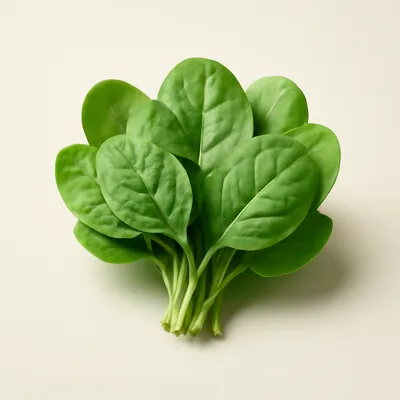
Spinach must be salted and squeezed nearly dry before filling — wet spinach bursts the seams in the oven and the bottom crust steams instead of bakes. Sumac is added at the final mix, not earlier; its acidity wilts the spinach further if left to sit. The triangle pinch is structural — three seams pulled to a center point, so steam pressure escapes evenly rather than blowing one weak side.
Variations
Sabanikh (spinach) is the canonical; jibneh (cheese) uses akkawi; lahm (lamb) becomes sfiha when open-topped; Armenian version stuffs string cheese and parsley.
On the Palate
Where Fatayer sits in the Lebanese flavor cloud
Ingredients




How it's made
5 steps · 55 min active + 30 min waiting
- 110 min
In a large mixing bowl, combine flour, a pinch of salt, and water to form a dough. Knead until smooth and elastic, then cover with a damp cloth and let rest for 30 minutes.
Watch outEnsure the dough is not too sticky; add flour gradually if necessary.
- 210 min
Meanwhile, heat olive oil in a pan over medium heat. Add chopped onions and cook until translucent. Stir in the spinach, lemon juice, and a pinch of salt, cooking until the spinach wilts and the mixture is fragrant.
Watch outCook only until the spinach just collapses and smells fragrant — don't stew it; you want it wilted, not swimming in liquid.
- 310 min
Preheat the oven to 375°F (190°C). Divide the rested dough into small balls. Roll each ball into a thin circle, about 1/8 inch thick, on a floured surface.
Watch outEnsure the dough is evenly rolled to avoid uneven baking.
- 410 min
Place a spoonful of the spinach mixture onto each dough circle. Fold the edges over the filling into a triangular shape, pinching the seams tightly to seal.
Watch outThe dough circle should be thin but not see-through; a heaping spoon of filling, then seal dry edges — flour on the rim stops a clean pinch.
- 515 min
Arrange the fatayer on a baking sheet lined with parchment paper. Bake in the preheated oven until the pastry is golden brown and crisp.
Watch outPull them the moment the tops turn deep golden and the bottoms are crisp — a shade too long and the thin dough goes hard and dry.
Archive tool suggestions — not reviewed
These legacy suggestions have not been evidence-reviewed and are not presented as required tools.