




Documented in Levantine villages by the 16th century, manakish predates the modern bakery (furn) era as a household bread baked on a saj over a wood fire. Za'atar topping evolved as a savory match to the bitter herb's medicinal use — it was traditionally fed to children before school as folk wisdom for sharpening memory (the carvacrol in thyme has stimulant effects). Lebanese town bakeries formalized it as a takeaway item in the 20th century.
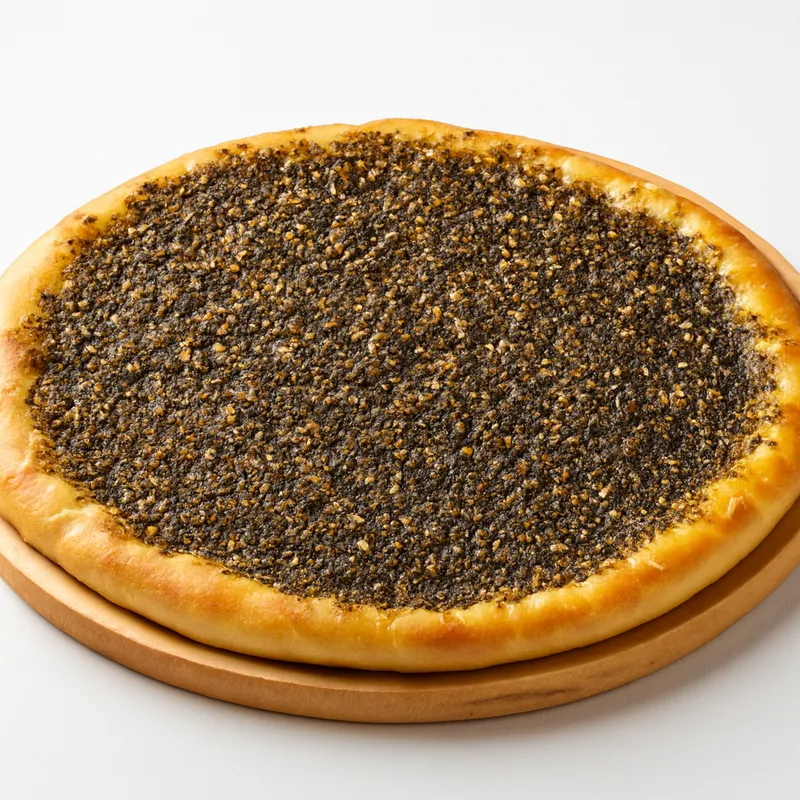
Levantine breakfast flatbread — za'atar mixed with olive oil, smeared on dough, baked in a saj or stone oven. Beirut bakeries open at 5am specifically for the morning rush; the bread is meant to be eaten hot, folded, with cucumber and labneh on the side.
A flat round of dough, hand-stretched and pressed with fingertips to dimple the surface, then painted with a slurry of za'atar (wild thyme, sumac, sesame, salt) loosened with olive oil. Baked on a domed metal saj or in a stone oven. The dough stays soft, the topping turns dark and grassy. Eaten folded around labneh, cucumber, mint, sometimes a tomato — the Levantine breakfast for centuries.
The dimples are not decoration: they hold the za'atar oil pool and prevent the dough from ballooning into pita. A flat manakish must stay flat. The za'atar paste should be loose enough to brush, thick enough to coat — too much oil and the topping slides off in the oven; too dry and the herbs scorch before the dough sets. Wild Lebanese za'atar (Origanum syriacum) is the right plant; supermarket 'thyme' za'atar tastes flat.
Variations
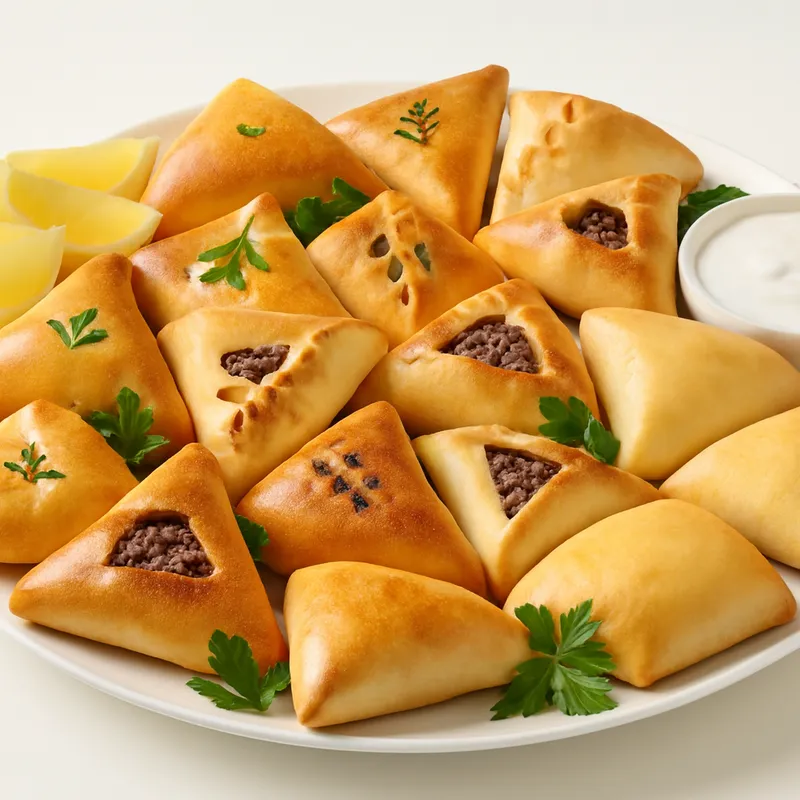
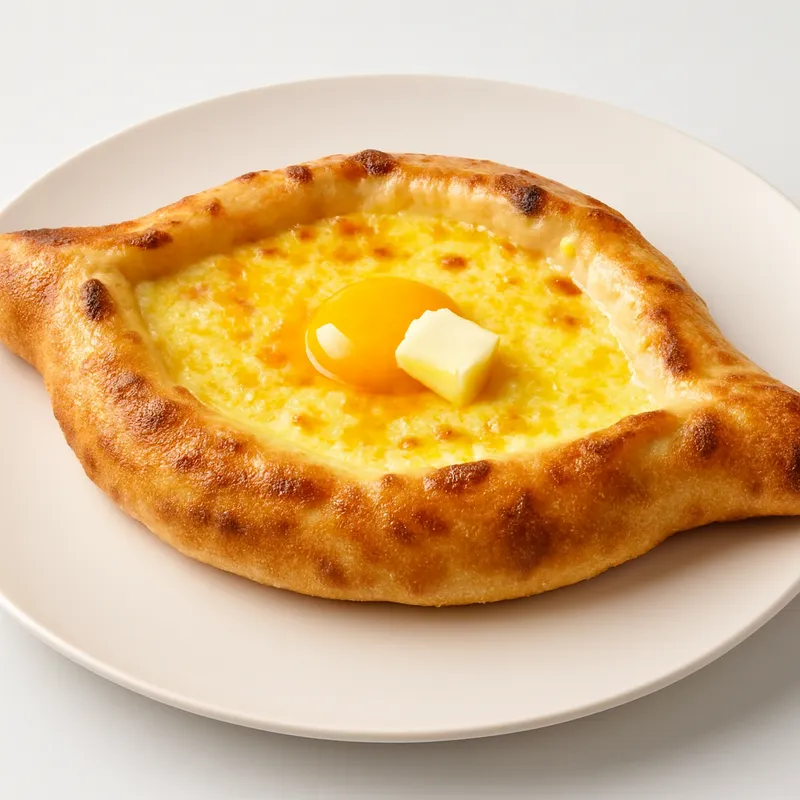
Za'atar is the canonical topping; jibneh (cheese, usually akkawi) is the second-most common; lahm bi ajeen tops it with spiced minced meat — most commonly beef, or a beef-lamb mix (Lebanese meat flatbread); kishk version uses fermented bulgur-yogurt powder; Aleppo's makdous-topped version is regional.
On the Palate
Where Manakish sits in the Lebanese flavor cloud
Ingredients



How it's made
5 steps · 30 min active + 1 hour waiting
- 110 min
In a large bowl, combine flour, yeast, and a pinch of salt. Gradually add water while mixing until a soft dough forms. Knead the dough until it is smooth and elastic, about 8-10 minutes.
Watch outIf the dough feels sticky, add a little more flour until it's just right.
- 20 min
Cover the dough with a damp cloth and let it rest in a warm place until it doubles in size, about 1 hour.
Watch outDough is ready when it has doubled and springs back slowly when poked, not before — under-proofed dough stays tight and won't take the dimples.
- 35 min
Preheat your oven to 220°C (428°F). Divide the risen dough into small balls, roll each into a thin circle about 1/4 inch thick.
- 45 min
Spread a mixture of za'atar and olive oil evenly over the surface of each dough circle, pressing lightly to adhere. Optionally, sprinkle cheese over the top.
Watch outThe paste should coat evenly and glisten, not pool or run off the edges — that's the right oil-to-herb balance.
- 510 min
Place the topped dough on a baking sheet and bake in the preheated oven until the edges are golden brown, about 8-10 minutes.
Watch outPull it when the edges just turn golden and the base is set but still pale — the herbs go bitter if you wait for deep color.
Archive tool suggestions — not reviewed
These legacy suggestions have not been evidence-reviewed and are not presented as required tools.