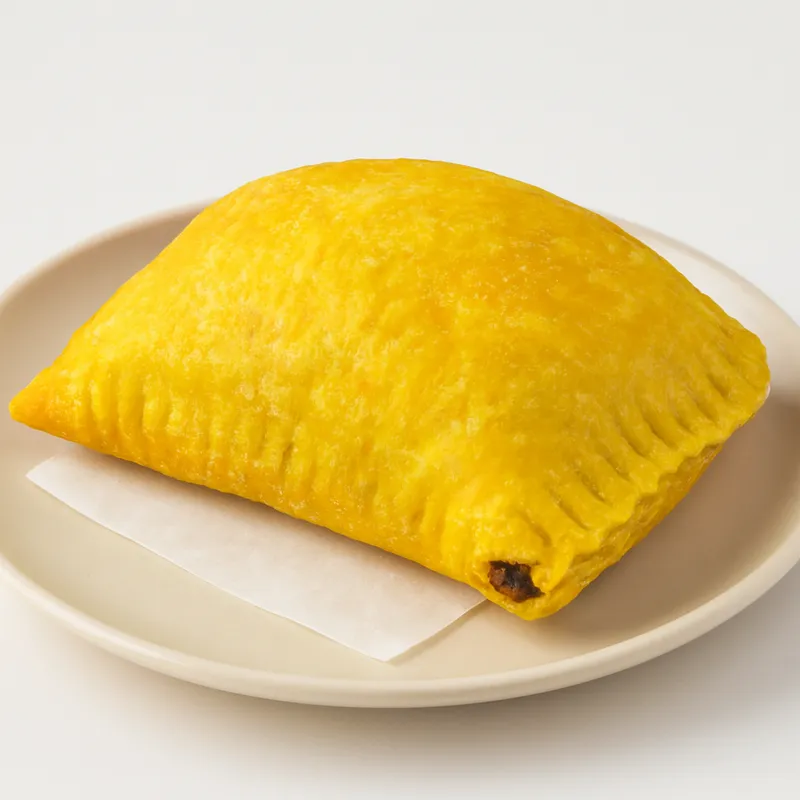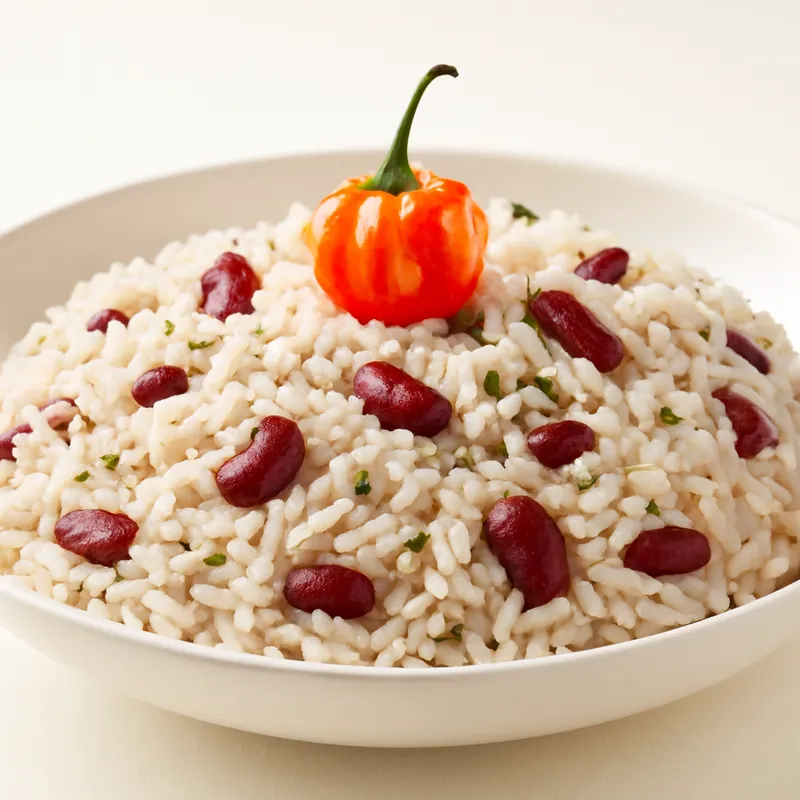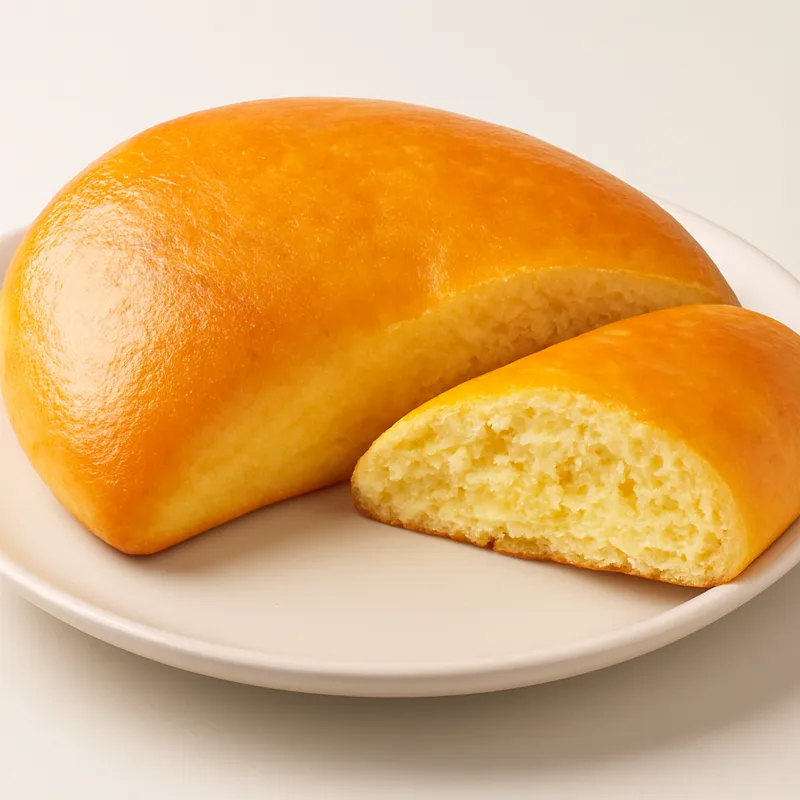
Soft, buttery bread often paired with patties.




A Jamaican bread of uncertain origin, descended from earlier island sweet and hard-dough breads; the enriched-dough tradition was shaped during the colonial era partly by Chinese and Indian indentured laborers and European settlers. Kingston bakeries later standardized its size and shape to fit a patty. The bread evolved as a vehicle for the beef patty — patties alone are too flaky to eat on the go without losing half to the pavement. Coconut milk and the fold technique came from earlier Jamaican home-baked enriched breads; commercial bakeries standardized the shape so it would fit a standard patty exactly.
1950s–60s Kingston bakery invention, designed as a wrapper for the beef patty — the patty is too flaky to eat on the go. The fat-brushed fold is structural: it stops the dough from welding back together so the bun pulls open in two leaves.
A folded soft bun, pale yellow, the seam in the middle pulling apart in two leaves like a clamshell. Slightly sweet, faintly coconut, brushed with butter or coconut oil between folds so the layers separate clean. The point is to wedge a Jamaican beef patty inside — bread becomes the wrapper, holds the flaky pastry without crumbs everywhere.
The fat layer between folds is structural, not flavor — it stops the dough from welding back together during the bake, which is what gives the clamshell opening. Coconut milk in the dough does double duty: lauric acid keeps the crumb tender for hours (longer than dairy), and a faint sweetness offsets the savory patty filling.
Variations
Kingston bakeries (Hammond's, National) sell it pre-folded around a patty; Brooklyn Caribbean bakeries run it sweeter; Bahamian coconut bread is unrelated — a sweet loaf, not a folded bun.
On the Palate
Where Coco Bread sits in the Jamaican flavor cloud
Ingredients


How it's made
5 steps · 40 min active + 1 hour 30 min waiting
- 110 min
Sift the bread flour into a mixing bowl, then add sugar, yeast, baking powder, and a pinch of salt. Whisk to combine. Use your fingertips to rub 8 tablespoons of butter into the flour mixture until it resembles coarse crumbs. Gradually add the coconut milk while kneading until a sticky dough forms.
Watch outEnsure the butter is well incorporated to avoid clumps in the dough.
- 25 min
Dust a work surface with flour. Knead the dough until it is smooth and no longer sticky, about 5 minutes. Lightly oil a mixing bowl, place the dough inside, and cover with a kitchen towel or plastic wrap. Let it rise in a warm area until doubled in size, airy with some bubbles, and soft to the touch.
Watch outThe first rise is done when the dough has doubled and feels airy with a few surface bubbles — poke it and the dent fills back slowly.
- 310 min
Melt the remaining butter and mix with olive oil in a small bowl. Punch down the dough gently to release excess air. Dust the work surface with flour again, and knead until smooth. Divide the dough into 6 equal pieces, forming each into a ball.
- 410 min
Roll each dough ball into a circle about 5 inches in diameter. Brush the surface with the butter and olive oil mixture, then fold in half to form a half-moon shape. Place on a baking sheet, cover, and let rise again until airy and soft.
Watch outBrush the butter-oil right to the edges before folding — any dry patch there is where the clamshell will stay stuck shut.
- 55 min
Preheat the oven to 350°F. If using, whisk the egg for an egg wash. Brush the dough pieces with the egg wash or remaining butter mixture. Bake until golden brown, 30 to 40 minutes. Serve warm or at room temperature.
Watch outPull them when the tops are evenly golden-brown; underbaked and the middle stays doughy, over and the crumb dries.
Archive tool suggestions — not reviewed
These legacy suggestions have not been evidence-reviewed and are not presented as required tools.

Flat rectangular metal pan (sheet pan, half-sheet, quarter-sheet), 33×23 cm to 45×33 cm, with a low rim. The flat surface gives even heat for cookies, biscuits, roasted vegetables, sheet-pan dinners. Heavy aluminum sheets conduct heat fastest; non-stick coatings make cleanup easier but can warp over 200°C; rimmed half-sheet is the modern American restaurant standard.

Hand-held wire loop tool for beating eggs, whipping cream, emulsifying dressings, and incorporating air into batters. Balloon whisks (large round head) for whipping cream and meringues; French whisks (narrow tear-drop) for sauces in pots; flat whisks (gravy) for pan sauces. Stainless steel is universal; silicone-coated for non-stick pans.