



Documented at the imperial court of Delhi by Persian poet Amir Khusrau around 1300 CE — naan-e-tanuri ("oven bread") came in with Persian and Turkic cooks during the Delhi Sultanate. For centuries it was a court and noble-household bread, since most Indian villages cooked on flat tawas, not tandoors. It only became a household-restaurant staple in 20th-century Punjab, after tandoors moved into commercial kitchens.
Tandoor-baked leavened bread, slapped onto the clay wall at 480°C and pulled in 60 seconds. The yogurt in the dough — and the long bench rest — produce the soft-yet-blistered character.
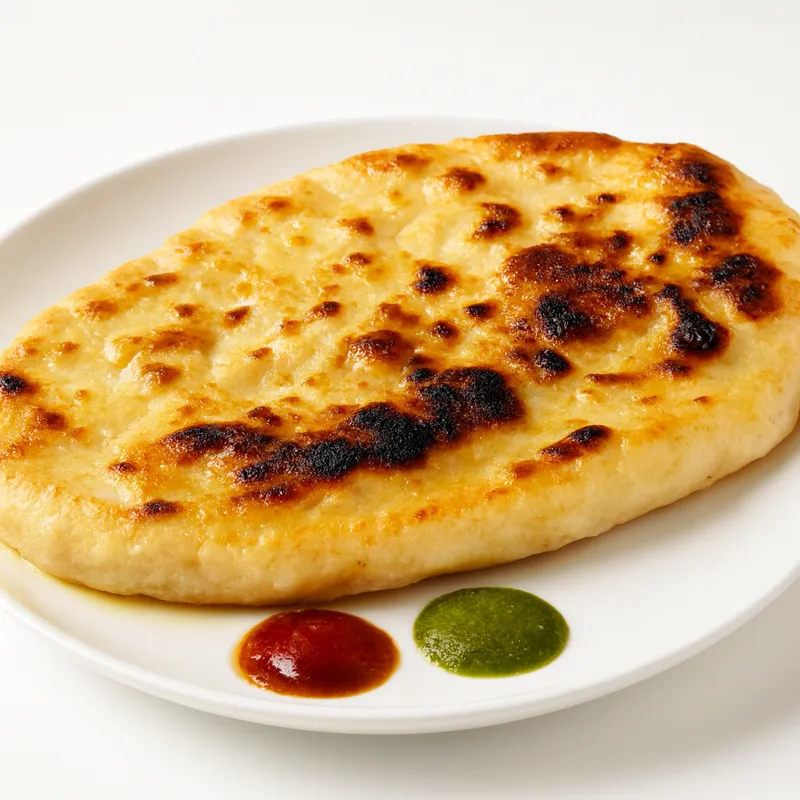
Teardrop-shaped, charred-spotted, soft inside, slightly chewy. Tear with the hands; never cut. Used to scoop or wrap; the texture matters as much as the curry it accompanies.
Tandoor temperatures hit 480°C — the dough sticks to the wall for 60-90 seconds and cooks before water can fully evaporate, producing a chewy crumb under a charred surface. Home ovens cap at 280°C; pizza stones approximate but can't fully replicate.
Variations
Pakistani naan tends to be larger and chewier; North Indian naan is more often stuffed; Afghan naan is longer and thinner; Iranian taftoon is closer to bread than flatbread — one technique, many silhouettes.
On the Palate
Where Naan sits in the Indian flavor cloud
Ingredients





How it's made
5 steps · 27 min active + 1 hour waiting
- 110 min
In a large bowl, combine flour, yeast, sugar, and salt. Stir in yogurt and warm water until a soft dough forms. Knead on a floured surface until smooth and elastic, about 10 minutes.
Watch outKnead until the dough turns smooth and springs back when poked; that means the gluten is ready.
- 20 min
Cover the dough with a damp cloth and let it rest in a warm place until doubled in size, about 1 hour.
Watch outIt's proofed when doubled and airy — press a finger in and the dent fills back slowly.
- 310 min
Divide the dough into equal portions and roll into balls. Flatten each ball into a teardrop shape using a rolling pin.
- 45 min
Preheat a tawa or cast-iron skillet over medium-high heat. Place the naan on the skillet, cooking until bubbles form and the bottom is golden brown, about 2 minutes. Flip and cook the other side for another 2 minutes.
Watch outBubbles ballooning up and brown spots on the underside mean it's time to flip.
- 52 min
Brush the hot naan with melted ghee and serve immediately.
Archive tool suggestions — not reviewed
These legacy suggestions have not been evidence-reviewed and are not presented as required tools.
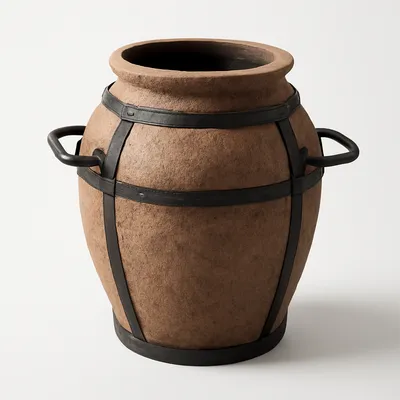
A vertical clay cylinder, 1-1.5 m tall, fired by a charcoal or wood pit at the bottom — the inner walls reach 480°C. Naan dough is slapped against the side and pulls free in 60 seconds, blistered and chewy; chicken on long iron skewers cooks dangling over the embers. Restaurant tandoors are gas-or-electric clones, but the original clay cylinder gives bread an aroma the modern versions can't quite replicate.
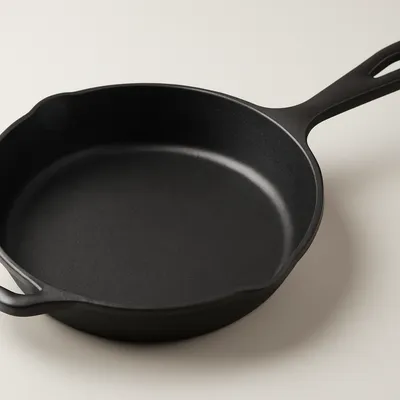
A heavy, single-piece cast iron pan, 25-30 cm across, weighing 1.5-2.5 kg. Once preheated, the thick mass holds 230°C+ even when a cold steak hits the surface — that's the secret to a deep crust. A well-seasoned skillet (multiple thin layers of polymerized oil baked into the iron) is essentially nonstick, gets better with use, and lasts a century. Lodge skillets from Tennessee have been in continuous production since 1896.

A flat or slightly concave cast-iron griddle, 25-30 cm across, used in Indian and Pakistani kitchens for chapati, paratha, and roti. Distinct from the Dosa Tawa (smaller, for batters) — the bread tawa is heavier and unglazed, and you cook directly on it without oil. A well-seasoned tawa develops a near-black patina and lasts generations.