




The 13th-century association is legend (Saint Hyacinth is said to have fed pierogi to famine victims c. 1240); the earliest documented recipes appear in Poland's first cookbook, the Compendium ferculorum of 1682, likely arriving via Kievan Rus' trade routes — the very name ruskie pierogi means "Ruthenian dumplings," naming the eastern origin. Spread west through monastery kitchens; by the 17th century pierogi were a fast-day food (no meat) and a wedding dish. Every Polish region keeps its own filling: Silesia goes sweet with cherries, Lublin uses buckwheat, Galicia adds sauerkraut and mushroom.
Documented in Polish cookbooks from the 13th century — ruskie pierogi literally means "Ruthenian dumplings," naming the eastern origin. The dough is just flour, hot water, and a touch of fat; hot water gelatinizes the starch, which is what gives the chew.
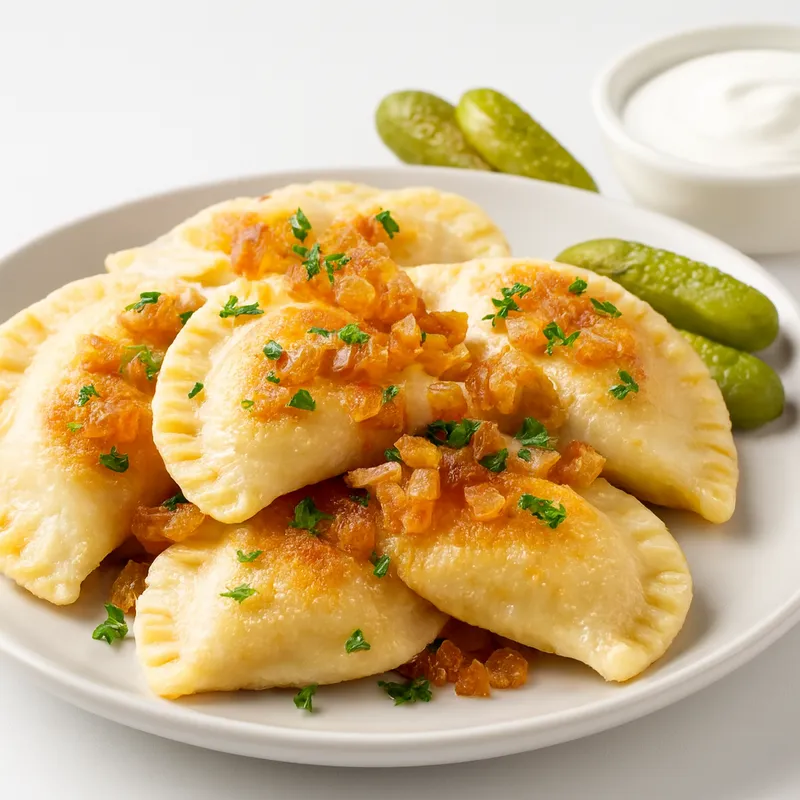
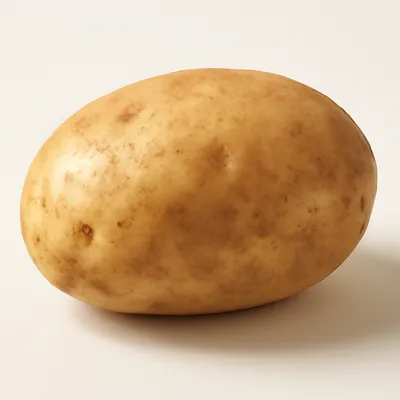
Half-moon dumplings, pinched edges, boiled until the dough goes translucent. The classic ruskie filling is potato mashed with farmer's cheese (twaróg) and fried onion — sweet from the onion, salty-tangy from the cheese. Topped with melted butter and crisp pork-fat cracklings (skwarki). Sour cream on the side. Eight to a plate is dinner.
The dough is just flour, hot water, and a touch of fat (sometimes egg) — no leavening. Hot water partially gelatinizes the starch, which is what gives boiled pierogi their characteristic chew rather than the bready bite of egg-noodle dough. The pinch matters: a leaky seam dumps filling into the pot. Many Polish kitchens boil pierogi first then pan-fry the leftovers in butter the next day — the pan-fried version (odsmażane) is widely considered better than the original.
Variations
Ruskie (potato + twaróg + onion) is the canonical; Silesian goes sweet with cherries; Lublin uses buckwheat and curd; pierogi z kapustą i grzybami (sauerkraut + dried mushroom) is the Wigilia Christmas Eve filling.
On the Palate
Where Pierogi sits in the Polish flavor cloud
Ingredients




How it's made
6 steps · 50 min
- 110 min
In a large bowl, combine flour with a pinch of salt. Gradually add warm water and an egg, mixing until a smooth dough forms. Knead the dough for about 5 minutes until it is soft and elastic.
Watch outAdd the hot water gradually and knead until the dough is smooth, soft, and no longer sticky — supple but not wet.
- 210 min
Roll the dough out on a floured surface to about 1/8 inch thickness. Use a round cutter or a glass to cut the dough into circles.
- 310 min
In a separate bowl, mix mashed potatoes with cheese and finely chopped onions. Place a small spoonful of this filling in the center of each dough circle.
- 45 min
Fold the dough over the filling to form a half-moon shape. Press the edges firmly to seal, ensuring no filling escapes during cooking.
Watch outPress the whole rim firmly and feel for any gap — a fully closed, dry seam is what keeps the filling in.
- 55 min
Bring a large pot of salted water to a gentle boil. Drop the pierogi in, making sure they have room to move. Cook until they float to the surface, about 3-4 minutes.
Watch outThey're done a moment after they bob to the surface — floating means the dough has set through.
- 610 min
Drain the pierogi and, if desired, fry them in butter until golden brown on both sides for an added layer of flavor and texture.
Watch outFry in butter only until deep golden and crisp on each face, the edges lightly blistered.
Archive tool suggestions — not reviewed
These legacy suggestions have not been evidence-reviewed and are not presented as required tools.