

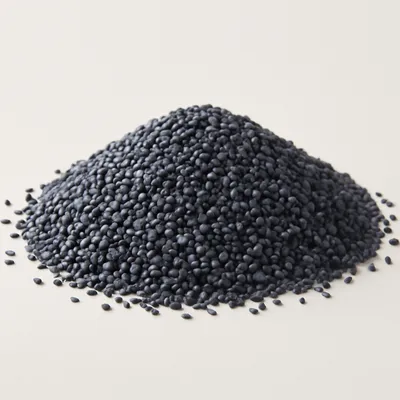



A staple of Polish Christmas Eve (Wigilia) and Easter tables since at least the 19th century, rooted in the older Central European tradition of poppy-seed pastries tied to fertility and prosperity. Poppy thrived in Polish soil, and the dense filling stretched expensive sweeteners across a long winter — by the early 1900s makowiec was fixed to holiday baking across all Polish regions.
A fixture of the Wigilia Christmas Eve table since the 19th century — poppy seeds tied to fertility rites in older Slavic tradition. Seeds must be scalded in milk, then ground twice in a cast-iron grinder until they release oil and turn paste-like. Raw seeds straight from the packet stay gritty and bitter; that's the most common failure.
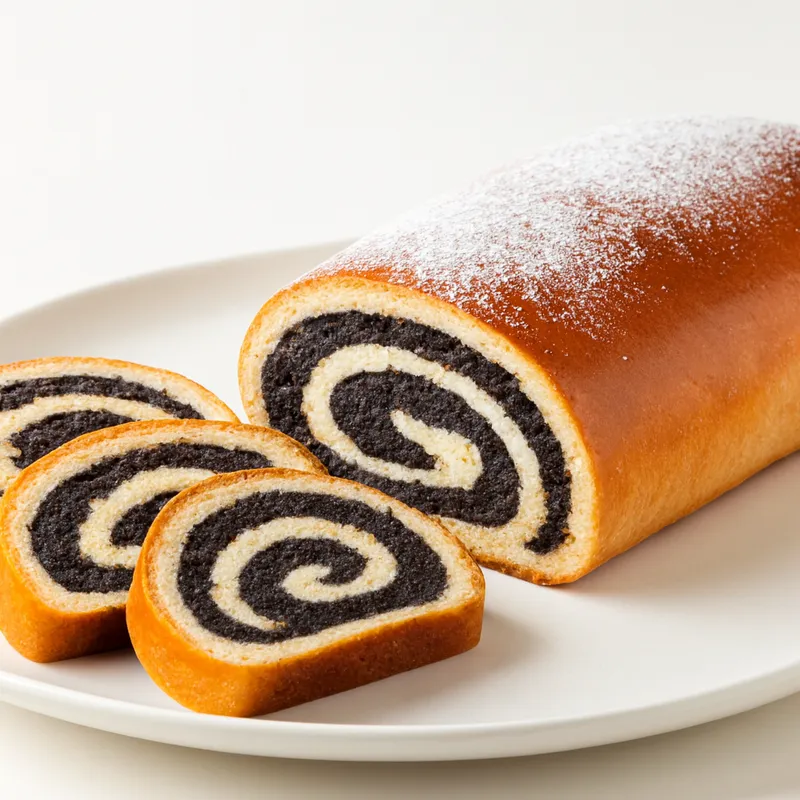
A spiral cross-section: dark gray-black poppy filling coiled tight inside pale yeast dough, sometimes glazed with white icing and candied orange peel on top. The filling tastes nutty, faintly bitter, sweetened with honey and raisins. Sliced thin with coffee. If the swirl gapes or the filling feels gritty, the seeds were not scalded and ground properly.
The poppy seeds must be scalded in milk or water, drained, then ground twice (traditionally in a cast-iron grinder) until they release their oil and turn into a paste — raw seeds stay gritty and bitter. Most failed makowiec uses unground seeds straight from a packet. The dough is enriched yeast, rolled thin so the spiral reads as filling-dominant, not bread-dominant.
Variations
Polish makowiec (yeast dough roll, white icing, candied orange); Czech-Moravian makový závin uses puff-style dough; Hungarian mákos beigle pairs the poppy roll with a walnut-roll twin; Lithuanian aguonų vyniotinis is denser, with less dough relative to filling.
On the Palate
Where Makowiec sits in the Polish flavor cloud
Ingredients




How it's made
5 steps · 1 hour 15 min active + 5 min waiting
- 15 min
In a small bowl, dissolve yeast in warm water with a pinch of sugar. Let it sit until frothy, about 5 minutes.
Watch outThe yeast is alive when the surface goes foamy and domed after about 5 minutes; if it stays flat, the water was too hot or the yeast is dead.
- 215 min
In a large mixing bowl, combine flour, sugar, and a pinch of salt. Add the yeast mixture and melted butter, mixing until a dough forms. Knead until smooth and elastic.
Watch outKnead until the dough is smooth and elastic; under-kneaded dough will not rise properly.
- 310 min
Roll out the dough on a floured surface into a rectangle. Spread a generous layer of poppy seed paste evenly over the dough.
Watch outSpread the paste right to the edges in an even layer so every slice of the spiral shows filling, not a bare rim.
- 45 min
Carefully roll the dough into a log, ensuring the filling stays inside. Place the roll seam-side down on a baking sheet lined with parchment paper.
Watch outTighten the roll as you go to prevent the filling from leaking out during baking.
- 540 min
Bake in a preheated oven at 350°F (175°C) for 35-40 minutes, until the crust is golden and firm to the touch.
Watch outIt's done when the crust is deep golden and firm and a skewer comes out clean; pull it pale and the dough stays doughy inside.
Archive tool suggestions — not reviewed
These legacy suggestions have not been evidence-reviewed and are not presented as required tools.