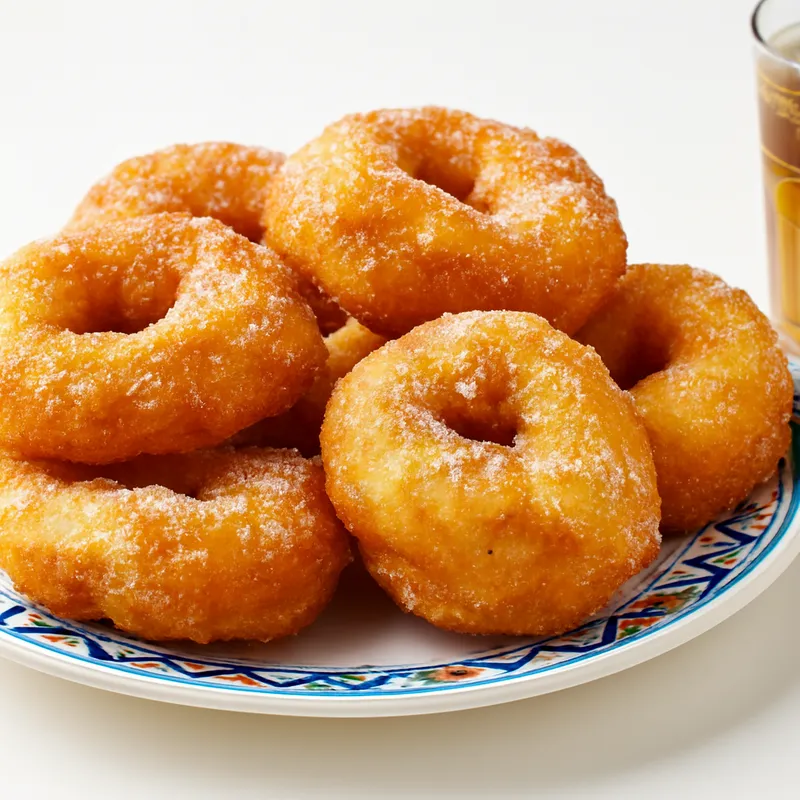

Brought to Hawaii in the 1870s (commonly dated to 1878) by Portuguese laborers from Madeira and the Azores, who fried up scrap dough on Shrove Tuesday (Terça-feira Gorda) to use up lard and sugar before Lent. The tradition stuck on the plantations; Leonard Rego's family bakery in Honolulu, opened in 1952 using a São Miguel recipe, popularized them island-wide and turned malasadas into a daily Hawaii thing rather than a once-a-year Catholic one.
Brought to Hawaiʻi in the 1870s by Madeiran and Azorean laborers who fried scrap dough on Shrove Tuesday. Leonard's Bakery in Honolulu started selling them year-round in 1953 — that's when they stopped being a once-a-year Catholic thing.
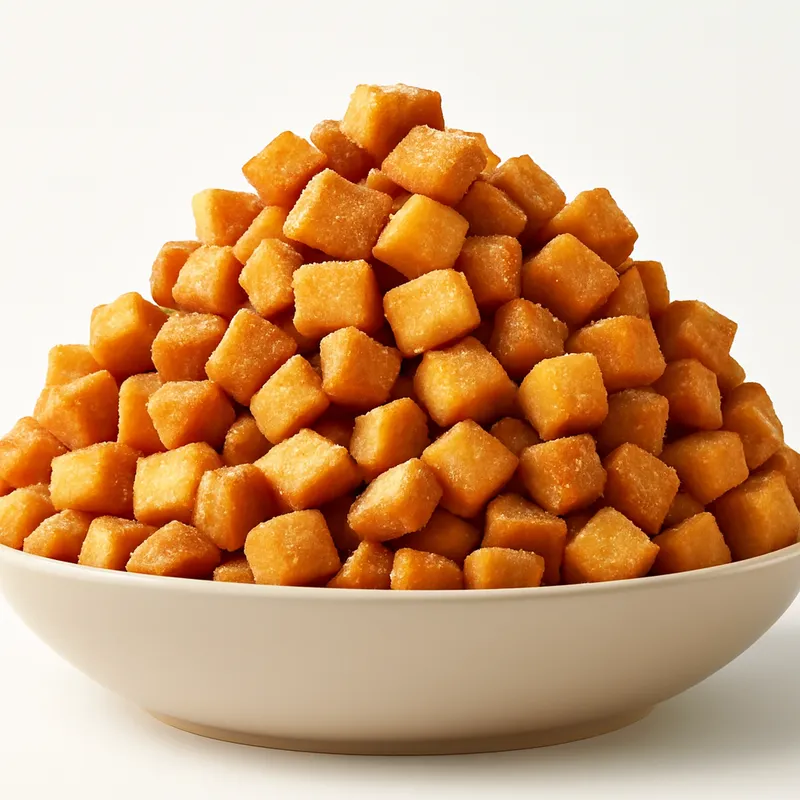
A yeasted ball of dough, deep-fried until the outside crackles and the inside steams — handed to you in a paper bag dusted with granulated sugar that crunches against the crust. No hole, no glaze. Eat within five minutes; once cool the inside goes from cloud to sponge. Leonard's Bakery on Oahu still drops them to order.
No hole is the tell — the dough must be wet enough that frying steam puffs the center hollow on its own. Most recipes use evaporated milk and a long overnight proof so the gluten relaxes; underproofed dough fries up dense and oily. Sugar goes on hot, never glaze, because granular sugar sticks to surface oil and stays crunchy where icing would dissolve.
Variations
Leonard's plain-sugar (1953 original); Punaluʻu Bake Shop on the Big Island (with macadamia and lilikoi fillings); Champion Malasadas in Honolulu; Agnes' Portuguese Bake Shop in Kailua does the most traditional yeasted dough.
On the Palate
Where Malasadas sits in the Hawaiian flavor cloud
Ingredients

How it's made
6 steps · 40 min active + 1 hour waiting
- 15 min
In a large bowl, mix yeast with warm milk and a pinch of sugar. Let it sit until the mixture is foamy and aromatic, about 5 minutes.
Watch outThe milk should be warm, not hot, to prevent killing the yeast.
- 210 min
Add flour, sugar, and eggs to the yeast mixture, stirring until a smooth dough forms. Knead the dough on a floured surface until it is elastic and smooth, about 10 minutes.
Watch outKnead until the dough is elastic; under-kneaded dough will not rise properly.
- 30 min
Cover the dough with a damp cloth and let it rise in a warm place until doubled in size, about 1 hour.
- 410 min
Once risen, punch down the dough and roll it out to about 1/2 inch thickness. Cut into rounds with a biscuit cutter.
Watch outEnsure the dough is not too thick or thin to achieve even frying.
- 510 min
Heat oil in a deep fryer or large pot to 350°F (175°C). Fry the dough rounds until golden brown and puffed, about 2 minutes per side.
Watch outMaintain oil temperature to avoid soggy or burnt malasadas.
- 65 min
Drain on paper towels, then roll the warm malasadas in sugar until well coated. The sugar should cling to the surface and glisten.
Archive tool suggestions — not reviewed
These legacy suggestions have not been evidence-reviewed and are not presented as required tools.