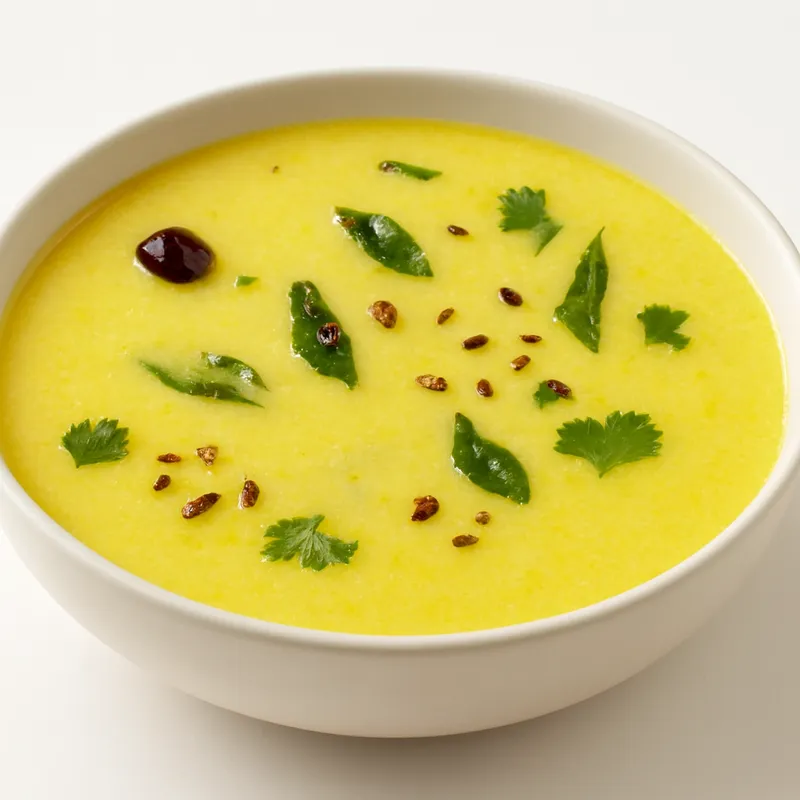
A hearty, fiery concoction of sprouted moth beans swimming in a spicy red gravy, crowned with crunchy sev and served with soft pav.
From Pune and Kolhapur in western Maharashtra, with documented stalls back to the early 1900s. A working-class breakfast originally — high-protein sprouts, fiery enough to wake you up, cheap. Kolhapuri misal is the hottest version (uses Lavangi chili); Puneri is sweeter and milder; Nashik adds extra tarri served in a separate jug. Each city argues its version is the real one.
Pune and Kolhapur breakfast since the early 1900s — sprouted moth-bean curry under a layer of orange tarri oil, sev added at the table. Sprouting 36-48 hours before cooking breaks down phytic acid and gives the legume a crunch that survives stewing.
A bowl of sprouted moth-bean curry under a layer of bright orange chili oil (tarri), topped with raw onion, fresh coriander, lemon, and a thick pile of crunchy sev. Served with two warm pav for dipping. The heat builds — first bite is fine, by the fourth your nose runs. The sev must go on at the table; minute one it's crisp, minute three it's gone.
Sprouting the moth beans 36–48 hours before cooking is what separates this from a regular bean curry — sprouting breaks down phytic acid, raises B-vitamins, and gives the legume a slight crunch even after stewing. The tarri is a separate pour-over: oil infused with onion, garlic, ginger and chili powder, kept at the side so each diner adjusts heat. Pre-mixed misal goes muddy and uniformly hot.
Variations
Kolhapuri (hottest, uses Lavangi chili); Puneri (sweeter, milder, the breakfast standard); Nashik (extra tarri served in a separate jug); Mumbai version adds farsan toppings; Maharashtra-Khandeshi misal uses peanuts in the gravy.
On the Palate
Where Misal Pav sits in the Indian flavor cloud
Two things make real misal: sprout the moth beans 36–48 hours ahead so they keep a slight crunch and cook faster, and keep the tarri (the fiery spiced oil) as a separate pour-over — pre-mix it in and the whole thing goes muddy and uniformly hot instead of layered.
Ingredients
















How it's made
5 steps · 40 min
- 15 min
In a large pot, heat oil over medium heat. Add chopped onions, garlic, and ginger, sautéing until the onions are translucent and the mixture is fragrant, about 5 minutes.
Watch outEnsure the oil is not too hot to prevent burning the garlic.
- 22 min
Add the goda masala and Kashmiri chili, stirring for 2 minutes to bloom the spices. Add the sprouted moth beans and stir to coat them in the spice mixture.
Watch outFry the spices until they turn fragrant and a shade darker and the oil around them glistens — that's the raw dustiness cooking off; a minute too long and they scorch bitter.
- 320 min
Pour in enough water to cover the beans and bring to a simmer. Cook until the beans are tender, about 20 minutes.
Watch outThe beans are done when they're tender but still hold a faint bite from the sprouting — taste one; fully collapsed means they've gone too far.
- 410 min
Add chopped tomatoes and tamarind paste, simmering for an additional 10 minutes until the tomatoes have broken down and the mixture has thickened.
Watch outStir occasionally to prevent sticking at the bottom of the pot.
- 53 min
Serve the thick curry (usal) with pav buns, garnishing with cilantro, lemon, and a sprinkle of sev for crunch.
Watch outScatter the sev on right before eating so it stays crisp — pile it on early and it goes soggy in the gravy in minutes.
Archive tool suggestions — not reviewed
These legacy suggestions have not been evidence-reviewed and are not presented as required tools.