A beloved Kashmiri Pandit vegetarian paneer curry in which fried cottage-cheese cubes are simmered in a turmeric-yellow, fennel-and-ginger-spiced gravy finished with cream. The name states its look: lyodur means yellow, tschaman means paneer, and the dish is a Pandit classic — no onion, no garlic.
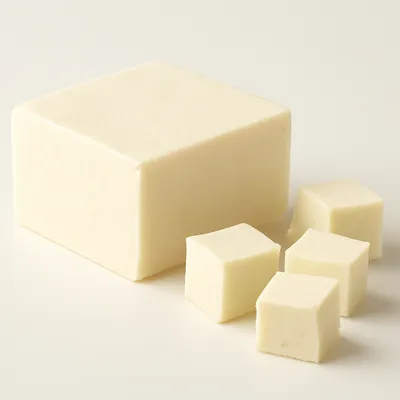


Lyodur tschaman (lyadur chaman, chaman kaliya) is a Kashmiri Pandit vegetarian preparation whose name describes its defining look: lyodur (lyadur) means yellow in Kashmiri, tschaman (chaman) means paneer, the fresh cottage cheese. Like other Kashmiri Pandit dishes it follows the community's dietary rules — no onion, no garlic — and builds its flavor on the Pandit spice triad of fennel powder, dry ginger powder, and asafoetida, with turmeric supplying the characteristic yellow and sometimes a few strands of saffron deepening it. The paneer is typically cut into cubes, lightly fried to hold its shape, then simmered in a gravy built from whisked yogurt or a milk-cream base with the ground spices, finished with a swirl of cream. It is a Pandit kitchen classic, served with rice or flatbread, and it demonstrates how the community's satvik vegetarian cooking achieves richness and depth without the onion-garlic base of most Indian curries.
Soft, fried paneer in a smooth, turmeric-yellow, gently spiced gravy with the warm hum of fennel and ginger, rounded by a creamy finish.
The dish works by layering fat-soluble color and aroma onto a dairy base. Turmeric's curcumin is fat-soluble, so frying the spice briefly in oil or ghee disperses its yellow through the fat phase and into the gravy, giving the dish its even color; a few saffron strands, if used, add their crocin to the same phase. The paneer is fried first for two reasons: the brief fry sets its surface proteins into a thin skin that helps the cubes hold their shape through the simmer, and it develops Maillard browning that adds a roasted depth the raw cheese would lack. The gravy's body comes from the yogurt or milk-cream base, kept just below a boil so the dairy does not split; fennel's anethole and dry ginger's gingerol, both fat-soluble, are carried by the dairy fat and the cooking oil. The final cream enriches the emulsion and rounds the spice edges without diluting the yellow.
Variations
A richer version uses more cream or a little khoya; some add green peas or potato, and the saffron is reserved for festive preparations.
On the Palate
Where Lyodur Tschaman sits in the Indian flavor cloud
Ingredients
Serves 4
How it's made
6 steps · 20 min
- 16 min
Cut paneer into cubes and shallow-fry them in mustard oil or ghee until lightly golden; set aside.
Watch outShallow-fry the paneer only to light golden — that thin skin helps the cubes hold shape in the simmer; over-fry and they turn rubbery and tough.
- 24 min
In the same oil, temper a pinch of asafoetida, then stir in turmeric, fennel powder, and dry ginger powder.
- 36 min
Add whisked full-fat yogurt (or a milk-cream mix) gradually, stirring constantly to prevent splitting.
Watch outWhisk the yogurt in gradually, stirring constantly, so it doesn't split — dump it in cold or let it boil hard and the gravy curdles into grains.
- 410 min
Add a little water, bring to a gentle simmer, and slide in the fried paneer cubes.
- 58 min
Simmer until the gravy thickens and coats the paneer, then finish with a swirl of cream and a few saffron strands.
- 62 min
Serve hot with rice or flatbread.


