A dense, sliceable guava confection from Goa's Catholic Christmas table, the local heir of Portuguese goiabada, itself the guava reworking of Iberian quince marmelada. Guava pulp is cooked down with sugar and a little lime until it thickens to a deep-pink, faintly grainy paste that sets firm enough to cut into diamond-shaped slabs. It is a fixture of the kuswar, the Goan Catholic sweet platter, served alongside neureos, dodol and bebinca.
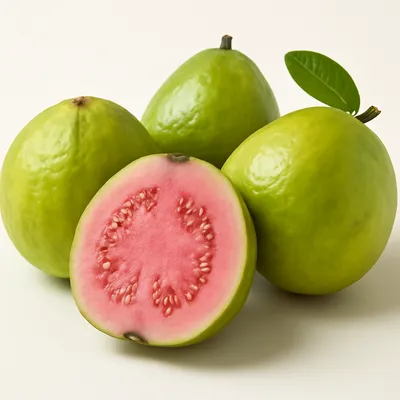


Perad traces a long migration. Its technique descends from an old Mediterranean habit of preserving fruit by stewing it with honey and, later, sugar; European convents turned this into marmelada, a firm quince paste named for marmelo, the Portuguese word for quince. When the Portuguese and their nuns reached the Americas in the sixteenth century they met the guava, a New World fruit unknown in the Old World, and swapped it for the scarce quince to make goiabada. Both the guava plant and the confection then traveled east on Portuguese ships to Goa, where the sweet took the name perad. Today it is made seasonally, after the guava harvest, and cut into diamonds for the kuswar, the assortment of sweets that Goan Catholic households prepare and exchange at Christmas, whose making, stirred by hand for hours, was itself a marker of festive effort.
Perad is dense and chewy, somewhere between a firm jelly and a fruit fudge, with a slightly grainy bite that gives way to a bright, concentrated guava flavor. It is sweet but not cloying, the sugar cut by a musky floral tartness and a whisper of lime. Cut thin, each ruby slab is fragrant and sticky, meant to be nibbled in small squares alongside the rest of the Christmas sweets.
Perad sets as a classic pectin-sugar-acid gel. Guava is unusually rich in pectin, and as the pulp cooks down with sugar the water evaporates until soluble solids climb toward about 65% and the temperature reaches roughly 104-105°C; at that concentration, with the low pH supplied by the lime, the pectin chains stop repelling one another and cross-link into a three-dimensional network that traps the syrup and sets the paste firm enough to slice. The faint graininess comes from the guava's own stone cells, tiny hard sclereids in the flesh, and sometimes from sucrose beginning to crystallize in the very high-sugar mass. The deep pink-red deepens over the long cook as the fruit's pigments concentrate and gentle caramelization and Maillard browning add darker tones. Constant stirring is essential: it drives off water evenly and keeps the sugar-dense paste from scorching on the pan floor before it reaches the set.
Variations
Ripe pink guavas give the richest color and a softer set; firmer or under-ripe fruit yields a paler, stiffer paste and is sometimes helped along with added pectin. Some cooks strain the pulp for a smooth, glassy perad, while others leave it coarser for the traditional grainy texture. A little ghee rubbed into the pan or the paste makes it glossier and easier to unmould. Beyond Goa the same sweet appears as goiabada across the Portuguese-speaking world, often paired with a slice of mild white cheese.
On the Palate
Where Perad sits in the Indian flavor cloud
Ingredients
Serves 12How it's made
8 steps · 30 min
- 120 min
Wash guavas, trim the ends, chop roughly and simmer with a little water until completely soft.
- 210 min
Pass the cooked guava through a sieve or food mill to extract a smooth, seed-free pulp, and measure it.
- 35 min
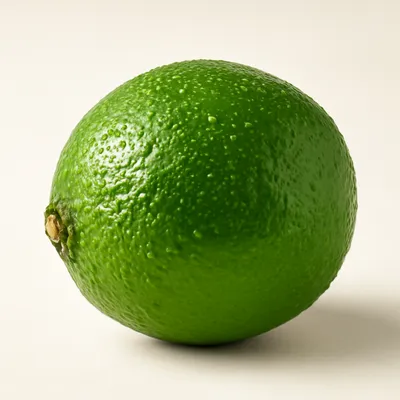
Combine the pulp with an almost equal weight of sugar and the juice of a lime in a heavy, wide pan.
- 450 min
Cook over medium heat, stirring constantly, as the mixture bubbles and slowly thickens; expect 40 to 60 minutes.
- 510 min
Continue until the paste pulls away cleanly from the pan floor and a spoon drawn through leaves a lasting trail, around 104-105°C.
Watch outCook until the paste pulls cleanly off the pan floor and a spoon leaves a lasting trail, around 104-105 — pull it early and it never sets sliceable.
- 61 min
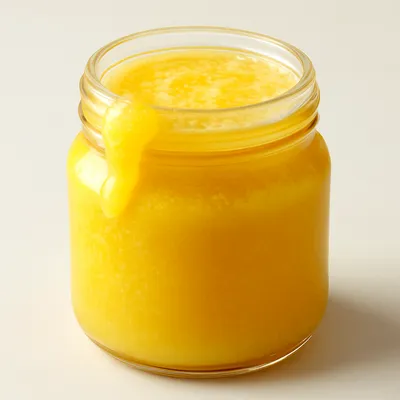
Stir in a teaspoon of ghee at the end for gloss, then immediately pour into a greased flat tray.
- 7480 min
Spread level and leave to set at room temperature, uncovered, for several hours or overnight until firm.
- 85 min
Cut into diamond-shaped slabs and store in an airtight tin; serve as part of the Christmas kuswar.
Archive tool suggestions — not reviewed
These legacy suggestions have not been evidence-reviewed and are not presented as required tools.