
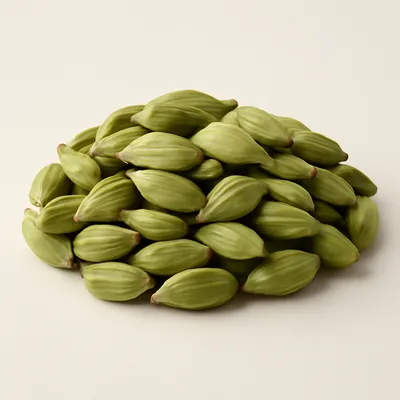
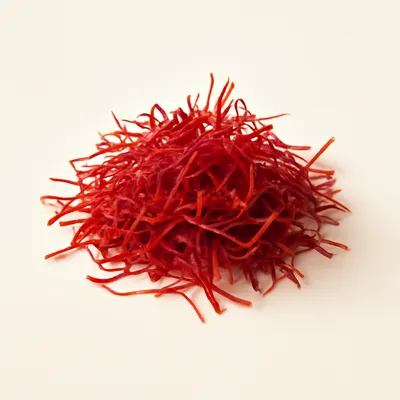
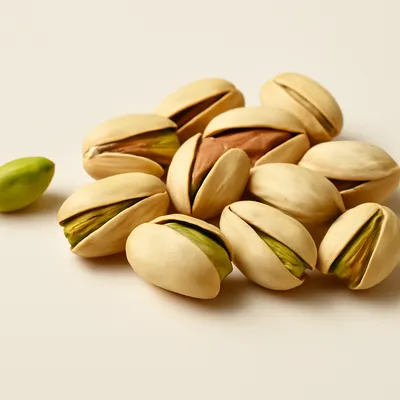
Kulfi is the dense, slow-frozen milk dessert of the Indian subcontinent, often called Indian ice cream though it is made and set quite differently. Full-fat milk is simmered and stirred down for a long time until it reduces by half or more, thickening and faintly caramelizing, then sweetened and flavoured — classically with green cardamom, saffron and ground pistachios, or with mango, rose or kewra. The thickened mix is poured into small conical metal moulds (kulfi or qulfi moulds) and frozen solid without churning, so it sets dense and close-grained rather than light and aerated. It is unmoulded, sliced or eaten on a stick, and in North India is frequently served as kulfi-falooda, paired with cooked vermicelli and rose syrup.


Kulfi belongs to the wider family of frozen and chilled milk sweets of South Asia and is generally traced to the Mughal era; the name is usually derived from the Persian qulfi, meaning a covered cup, reflecting the metal moulds it is frozen in. The 16th-century Ain-i-Akbari, Abu'l-Fazl's account of the court of Emperor Akbar (reigned 1556–1605), is frequently cited as recording the technique behind it, describing how saltpetre (potassium nitrate) was used in the royal kitchens to chill water into ice — the same endothermic salt-and-ice method that let cooks freeze sweetened, reduced milk before mechanical refrigeration; the dish's precise origin, however, is not firmly documented. The flavoured-and-frozen reduced-milk preparation packed into conical moulds is the form that became established across northern India and spread through the subcontinent.
Cut or bitten, kulfi is dense and almost chewy at first, far firmer than scoopable ice cream, then melts slowly on the tongue into something rich and milky. The taste leads with cooked, faintly caramelized milk and cream, followed by warm cardamom, a thread of saffron, and the green, slightly resinous crunch of chopped pistachios; mango or rose versions come through floral and fruity over the same dense base. It is intensely cold and very sweet, eaten in small slices or off a stick, and with falooda the soft vermicelli and rose syrup loosen each firm bite.
Two steps define kulfi: long reduction, then quiescent (unstirred) freezing. Simmering full-fat milk down by half or more evaporates water and concentrates the milk solids, fat and lactose; gentle browning of those sugars and proteins (Maillard and caramelization) builds the cooked, faintly toffee note, while the higher solids and fat content keep the frozen texture dense and limit large ice crystals. Because the mix is frozen still in narrow conical moulds rather than churned in a machine, no air is whipped in, so kulfi sets harder and closer-grained than aerated ice cream — its smoothness comes from the concentrated solids and any added thickener (such as ground nuts, cornflour or khoya) rather than from incorporated air. Traditionally the sealed moulds were buried in a pot of ice mixed with salt: dissolving salt depresses the freezing point and draws heat from the milk fast enough to set it.
Variations
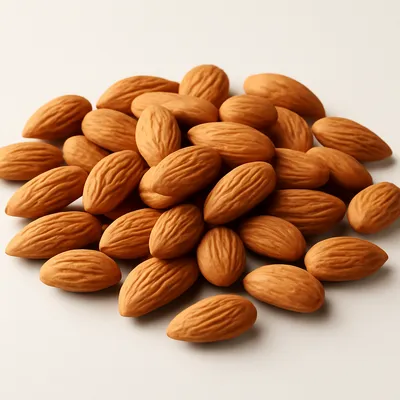
Flavours are regional and seasonal: malai (plain cream), kesar-pista (saffron-pistachio), badam (almond), mango in summer, and rose, paan or kewra. Texture and richness vary with how the milk is built up — pure reduced milk, milk thickened with khoya (mawa), or quicker home versions bound with cornflour, condensed and evaporated milk. Matka kulfi is set in small earthen pots; kulfi-falooda layers it with rose-scented vermicelli, basil seeds and syrup. It sits alongside other South Asian frozen and chilled milk sweets such as ras malai and, more distantly, the Mughal-era frozen confections from which it descends.
On the Palate
Where Kulfi sits in the Indian flavor cloud
Ingredients
Serves 6

How it's made
6 steps · 20 min
- 140 min
Bring full-fat milk to a boil in a heavy wide pan, then lower the heat and simmer, stirring often and scraping the sides, until it reduces by roughly half and thickens.
Watch outSimmer the milk down by half, stirring and scraping the sides — this concentrates the solids for a dense texture and builds the cooked, faintly toffee note.
- 28 min
Stir in sugar, ground green cardamom and a pinch of saffron (soaked in a little warm milk); for a richer body, mix in some khoya or a little cornflour slurry and cook until smooth.
- 35 min
Fold in most of the chopped pistachios and almonds (or the mango pulp, if making mango kulfi), then take the pan off the heat and let the mix cool to room temperature.
- 45 min
Pour the cooled mix into conical kulfi moulds or small earthen pots, leaving a little headroom, and scatter the remaining nuts on top.
- 5360 min
Seal the moulds and freeze undisturbed for at least 6 hours, or overnight, until completely solid.
Watch outFreeze undisturbed at least 6 hours — because it's frozen still, not churned, no air gets whipped in, which is what gives kulfi its dense, close grain.
- 65 min
To serve, dip the moulds briefly in warm water, run a thin knife around the edge, and unmould; slice or serve on a stick, plain or as kulfi-falooda with vermicelli and rose syrup.
Archive tool suggestions — not reviewed
These legacy suggestions have not been evidence-reviewed and are not presented as required tools.


