Warm full-fat milk slowly simmered with Kashmiri saffron, green cardamom, and blanched almonds, sweetened and served in small cups; a Punjabi dairy-belt celebratory drink historically offered at weddings, Lohri bonfires, and as a postnatal winter tonic.

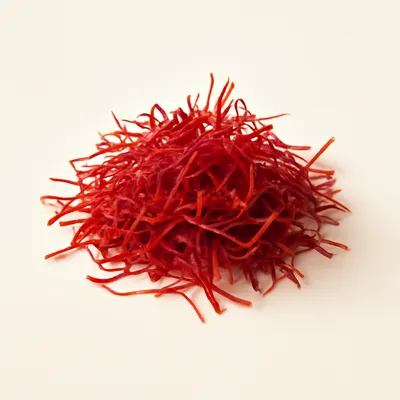


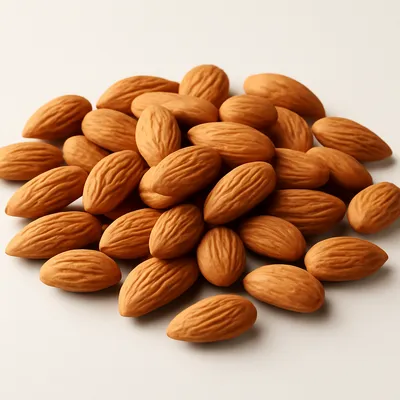
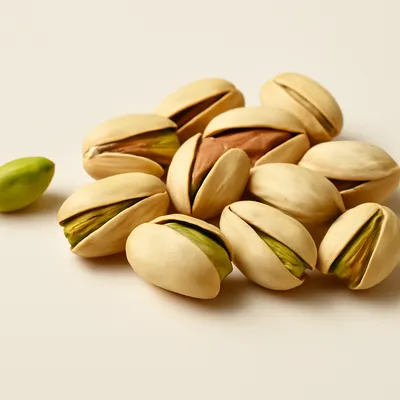
Kesar doodh's origins are anchored in Kashmir's saffron industry on the Karewa plateau near Pampore, one of the world's highest-altitude saffron-growing regions. Mughal court chronicler Abul Fazl recorded Kashmiri saffron cultivation in the Ain-i-Akbari (c. 1590), and Emperor Jahangir documented his personal admiration of it in the Tuzk-i-Jahangiri. Kashmir saffron entered Punjab's grain and dairy belt via the Grand Trunk Road trade route, merging with the region's deep dairy culture into a sweetened festival milk that has long held a place in Punjabi households at Lohri, weddings, and as a restorative after childbirth.
Floral warmth opens on the tongue — saffron's honeyed hay-note leading, cardamom's eucalyptus coolness threading through the fat-sweet whole milk; blanched almonds give a mild nuttiness at the finish, and the slightly reduced, dense body clings gently to the palate.
Saffron's primary colorant, crocin, is a water-soluble carotenoid that dissolves readily in warm milk, producing the characteristic golden-orange colour. Its aroma precursor, picrocrocin, breaks down above 60°C to release safranal, the volatile aldehyde responsible for saffron's floral fragrance — making vigorous boiling counterproductive, as safranal dissipates rapidly. Whole milk's fat acts as a carrier matrix for cardamom's fat-soluble aroma compounds — principally 1,8-cineole and terpinyl acetate — amplifying their prolonged release in the mouth. Simmering at 80–85°C for 10–15 minutes concentrates dissolved lactose and milk proteins through controlled evaporation, enriching body and natural sweetness without triggering Maillard browning that would discolour the milk.
Variations
Badam doodh is the almond-forward sibling, with saffron reduced or omitted; adding turmeric yields haldi doodh with Ayurvedic tonic roots distinct from the Punjab festival tradition; chilled and poured over ice as a summer drink; some recipes add ground pistachio and rose water for a more elaborate Mughal-inflected flavour.
On the Palate
Where Kesar Doodh sits in the Indian flavor cloud
Ingredients
Serves 4How it's made
7 steps · 15 min
- 110 min
Warm 2 tablespoons of milk to about 50°C; soak saffron threads in the warm milk for 10 minutes to bloom the crocin colour.
Watch outBloom the saffron in warm (about 50) milk, not hot — its aroma compound is fragile; too much heat and you lose the floral scent before it ever colours the milk.
- 25 min
Pour remaining full-fat milk into a heavy-bottomed saucepan; bring to a gentle simmer over medium heat, stirring continuously to prevent scorching.
- 31 min
Add the bloomed saffron together with its soaking liquid; stir gently to distribute the colour evenly.
- 41 min
Add ground green cardamom and sugar; stir until the sugar dissolves completely.
- 512 min
Maintain at 80–85°C and simmer for 10–12 minutes, stirring occasionally, until milk thickens slightly and deepens in colour.
Watch outHold it at a bare simmer, 80–85, and never let it boil hard — a rolling boil drives off the saffron and cardamom perfume that's the whole point of the drink.
- 62 min
Add blanched, slivered almonds; cook for 2 more minutes.
- 71 min
Remove from heat; pour into small cups and serve warm, garnished with a pinch of saffron threads and crushed pistachios.
Archive tool suggestions — not reviewed
These legacy suggestions have not been evidence-reviewed and are not presented as required tools.


