
Basundi is a sweetened reduced-milk dessert from western India, popular in Gujarat and Maharashtra. Full-fat milk is simmered down by roughly a third to a half until it thickens and takes on a faint cooked-milk colour, then sweetened with sugar and perfumed with cardamom and saffron, often enriched with charoli (chironji) seeds, almonds and pistachios. Compared with North Indian rabri it is generally smoother and thinner — more of a pourable, drinkable cream than a spoon-mounding one — and the skins are stirred in rather than collected in distinct sheets. It is served chilled in small bowls or cups, especially at festivals like Bhaubeej, Kartik Purnima and during Janmashtami and weddings in the region.


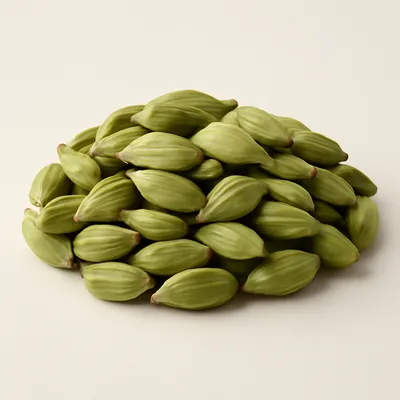
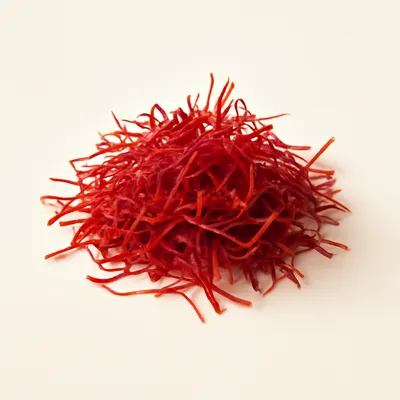
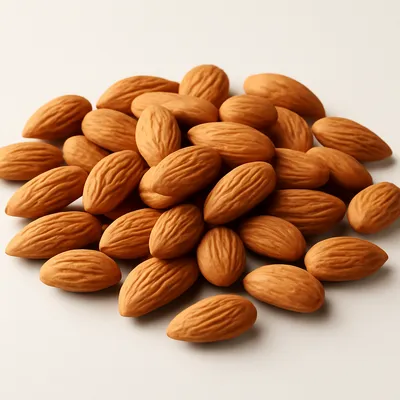
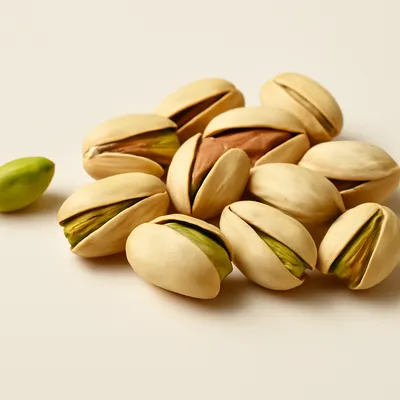
Basundi is part of the broad western-Indian repertoire of reduced-milk sweets and is most strongly identified with Gujarati and Maharashtrian festive cooking. Like its relatives it grows out of the pre-refrigeration practice of preserving and enriching milk by concentrating it, and it has no recorded inventor or single point of origin. Its closeness to rabri reflects a shared technique across regions rather than a borrowing in one direction; the western version simply trends smoother and more pourable. The exact early history is undocumented, but its place in Gujarat–Maharashtra festival and wedding menus is long established, where it is commonly paired with hot puris.
A pale ivory cream tinged gold by saffron, thick but still flowing, dotted with tiny crunchy charoli seeds and slivered nuts. It is silky and cool on the tongue, with only a slight grain from the cooked milk, sliding rather than mounding. The flavour is concentrated sweet milk with the rounded depth that comes from reduction, lifted by cardamom and a delicate floral saffron, the charoli and pistachio adding small bursts of crunch. Lighter and more sippable than rabri, it is taken cold, sometimes drunk straight from a cup.
Basundi is straightforward milk reduction, managed for smoothness. Full-fat milk is simmered in a wide pan and stirred fairly often, including the skins that form, so they break up and disperse instead of building into the distinct layers that define rabri; this is the key technical difference. Steady low heat evaporates water and concentrates the milk solids — lactose, casein and fat — and gentle Maillard browning of the lactose and proteins gives the cooked, faintly nutty colour and depth. Because the aim is a thinner, pourable consistency, reduction is stopped earlier than for rabri (around one-third to one-half, not two-thirds or more). Sugar goes in once the milk is reduced, so it neither scorches nor slows evaporation; saffron and cardamom are bloomed in the hot milk. Chilling thickens it a little further as the concentrated proteins and fat set.
Variations
Basundi is the smoother, more pourable western cousin of North Indian rabri; the two are made by the same reduction logic but differ in how the skins are handled and how far the milk is taken. Flavoured versions are common: sitaphal (custard-apple) basundi folds in fruit pulp, angoor basundi adds tiny chhena balls, and there are mango, dry-fruit and nutmeg-rose variants. Some cooks add a little condensed milk to speed thickening. It pairs traditionally with hot puris in Gujarat, and is served on its own as a chilled sweet across Maharashtra.
On the Palate
Where Basundi sits in the Indian flavor cloud
Ingredients
Serves 4
How it's made
6 steps · 5 min
- 18 min
Bring full-fat milk to a boil in a wide, heavy pan, then reduce to a steady simmer.
- 235 min
Simmer, stirring fairly often and scraping the base, breaking any skin back into the milk so it stays smooth.
Watch outBreak every skin back into the milk as it forms — dispersing the skins is exactly what keeps basundi smooth instead of layered like rabri.
- 330 min
Continue until the milk reduces to about half to two-thirds of its volume and visibly thickens.
Watch outReduce only to about half or two-thirds and stop — basundi is meant to stay thinner and pourable, so cook it further and it turns into rabri.
- 46 min
Stir in saffron soaked in warm milk, then add sugar and cardamom and simmer a few minutes more.
- 52 min
Fold in charoli seeds, almonds and pistachios; switch off the heat.
- 6120 min
Cool and chill, then serve cold (or warm with puris).
Archive tool suggestions — not reviewed
These legacy suggestions have not been evidence-reviewed and are not presented as required tools.


