
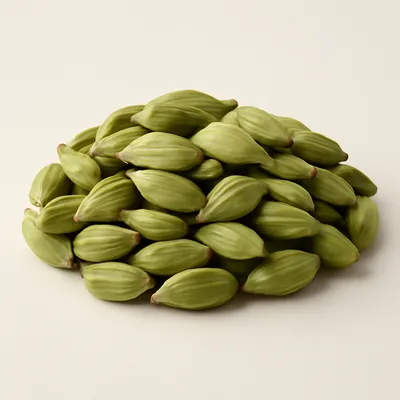
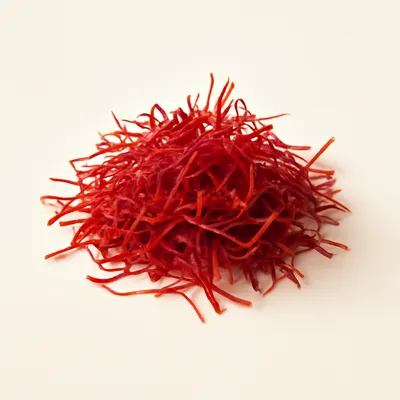
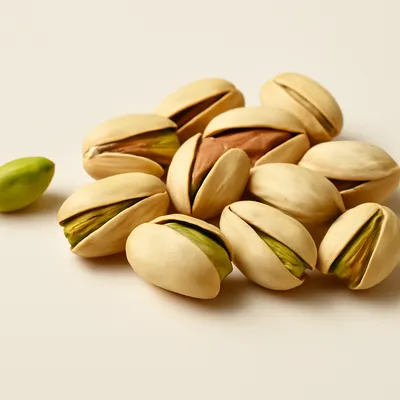
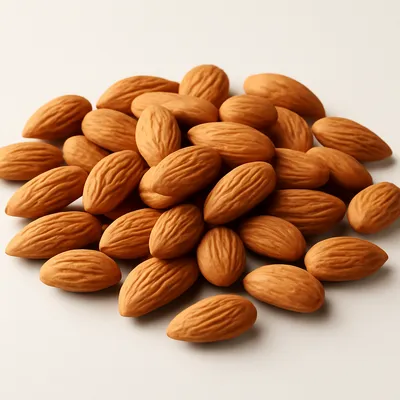
Rabri (also rabdi) is a North Indian milk dessert made by simmering full-fat milk slowly over low heat for a long time, repeatedly pushing the skin (malai) that forms on the surface to the sides of the pan and folding it back in. As the milk reduces by half or more, those collected layers of clotted cream thicken it into a rich, grainy, slightly chewy cream, sweetened with sugar and scented with cardamom, saffron and sometimes rose, then finished with slivered pistachios and almonds. It is eaten chilled on its own, or used as the cream that bathes other sweets such as jalebi, malpua and shahi tukda. The defining feature is the texture of those folded-in skins, which give it body and bite rather than the smoothness of a thickened custard.


Rabri belongs to India's old repertoire of khoya- and reduced-milk sweets, a category built on the slow concentration of milk that long predates refrigeration and is associated above all with the dairy-rich North — Uttar Pradesh, Rajasthan and the wider Hindi belt. It is not the invention of any single cook or court; rather it is a basic technique of the halwai and home kitchen, and it appears as both a standalone sweet and a component of grander ones. Some towns are noted for their rabri — the dish is closely tied to places like Mathura and Varanasi — but these are reputations rather than documented origins. The exact history is unrecorded; what is certain is its long standing in the milk-sweet traditions of North India.
Thick, off-white to pale gold, flecked with strands of cream and green nut, thick enough to mound on a spoon and pull slightly in threads. Cold and dense on the tongue, it is not smooth but pleasantly uneven — soft sheets and grains of clotted milk that give a gentle chew before they melt. The taste is concentrated cooked milk, faintly caramelized and almost cheesy in its depth, roundly sweet, with cardamom and saffron and the crunch of pistachio and almond. Richer and more substantial than kheer, it coats the mouth and is meant to be eaten cold in small quantities.
Rabri is the controlled reduction and capture of milk skin. Full-fat milk is held at a low simmer in a wide, heavy pan with maximum surface area; as it heats, fat and denatured whey proteins rise and dry at the surface into a film of malai (clotted cream). Instead of stirring this in, the cook repeatedly nudges each skin to the cooler edge of the pan, lets it firm, and folds the accumulated layers back into the shrinking milk. This is why the texture stays in sheets and grains rather than going homogeneously smooth. Long low heat drives off water, concentrating lactose, casein and fat; the lactose browns slowly through the Maillard reaction and caramelization, giving the cooked, faintly toffee depth. Sugar is added late, once the milk is well reduced, so it does not scorch or impede reduction; saffron's pigments and aroma compounds bloom in the hot milk. It is then chilled, which firms it further.
Variations
Rabri shades into a family of reduced-milk sweets and is the thicker, skin-laden relative of basundi (the Gujarati and Maharashtrian version, which is generally smoother and pourable). Lachha rabri prizes long visible strands of malai; some towns serve it nearly set and sliceable. It is also a building block: the cream that soaks rasmalai, the topping for jalebi (jalebi-rabri), malpua and shahi tukda, and the filling logic behind sweets like rabri-stuffed gulab jamun. Perfume varies between cardamom, saffron, rose and kewra, and the nut garnish between pistachio, almond and charoli.
On the Palate
Where Rabri sits in the Indian flavor cloud
Ingredients
Serves 4How it's made
6 steps · 5 min
- 18 min
Pour full-fat milk into a wide, heavy-bottomed pan and bring to a gentle boil, then lower to a steady simmer.
- 230 min
As a skin forms on top, push it to the side of the pan with a spatula rather than stirring it in; let it firm at the edge.
Watch outPush each milk skin to the cool side of the pan instead of stirring it in — collecting and folding back these malai layers is what keeps rabri in sheets and grains rather than going homogeneously smooth.
- 330 min
Keep simmering and repeating, occasionally folding the collected skins back in, until the milk reduces by at least half and thickens.
Watch outKeep the heat low and gentle — slow reduction concentrates the milk sweet without scorching; a hard boil catches on the bottom and burns a scalded taste through the whole batch.
- 48 min
Stir in saffron soaked in a little warm milk, then add sugar and cardamom and cook a few minutes more.
- 52 min
Fold in slivered pistachios and almonds and switch off the heat.
- 6120 min
Cool, then chill thoroughly before serving cold.
Archive tool suggestions — not reviewed
These legacy suggestions have not been evidence-reviewed and are not presented as required tools.


