Creamy and slightly sweet, almonds offer a satisfying crunch that evokes the warmth of sun-filled orchards. Their subtle flavor lends itself beautifully to both sweet and savory dishes, making them a culinary darling across multiple cuisines.
Where it comes from
Hailing from the Middle East and Mediterranean regions, almonds have been cultivated for millennia, revered not only for their taste but also for their health benefits. They are featured prominently in both sweet pastries and savory tagines.
In the kitchen
Ground into flour, sliced for garnishes, or roasted for snacking, almonds provide texture and flavor versatility. They also serve as a base for almond milk and marzipan, showcasing their adaptability in both sweet and savory realms.
Across cuisines
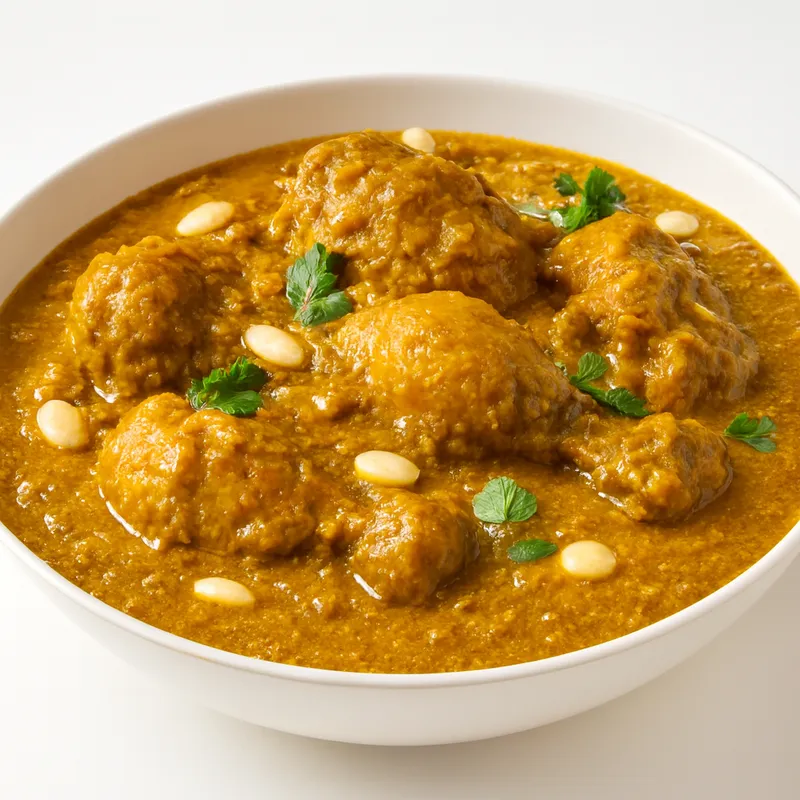
In Moroccan cuisine, almonds are often ground into a paste to form a base for sweet and savory dishes. They are a key ingredient in pastilla, where the almond paste is mixed with sugar and cinnamon to contrast with the savory filling. Almonds are also used in mrouzia, a lamb tagine where they provide a rich, nutty depth to the sauce.
In Indian cuisine, almonds are often used as a garnish for rich desserts. They are sliced or slivered and sprinkled over dishes like shahi tukda and phirni, adding a crunchy texture and a nutty aroma. Almonds are also sometimes soaked and blended into a paste to enrich the base of these desserts.
In Middle Eastern cuisine, almonds are used both in crusts and fillings for desserts. In dishes like basbousa, almonds are often ground into flour and used to create a nutty crust. They are also mixed into fillings, providing texture and a subtle sweetness to the dish.
Nutrition (per 100g)
AI-estimated; model and run unavailable.
Pairs well with