A syrup-soaked semolina cake found across the eastern Mediterranean and the wider Arab world — known as revani in Turkey, namoura in Lebanon, hareeseh in the Levant, basbousa in Egypt. Its origins are debated, but its roots clearly reach back into the medieval Arab world: a near-identical recipe is recorded in a 13th-century Andalusi (Arabic) cookbook, and many link it to the 9th-10th-century Abbasid ma'mounia, a semolina-or-rice sweet named for the caliph al-Ma'mun. It was the Ottomans who popularized it and spread it widely. Egypt's Copts make a vegan version (no eggs, no butter) eaten at the end of fasts. Egyptians often use the name basbousa as an affectionate term for a loved one; scholars trace the word itself variously to "a kiss" or to a verb meaning "to mix," with no firm consensus.
Ottoman 16th-century sweet — revani in Turkey, hareeseh in the Levant, basbousa in Egypt. Coptic monasteries baked it as a fasting cake using desert-storable semolina. The rule is one hot, one cold: cold syrup over warm cake, never both hot, or the crumb dissolves.
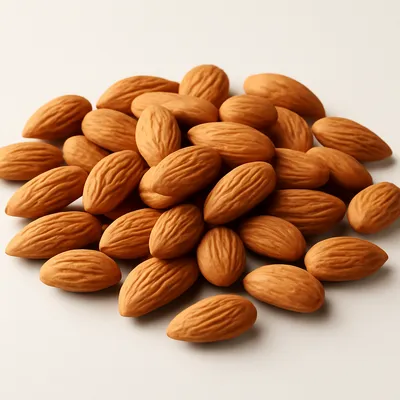
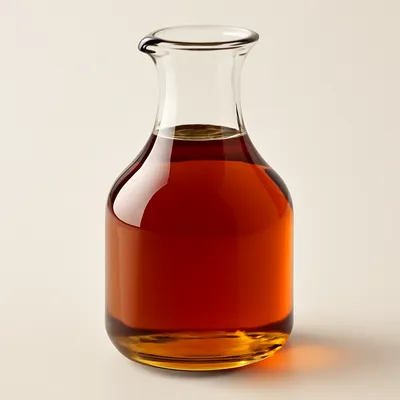
A dense yellow square of coarse semolina cake, scored into diamonds, each topped with a blanched almond. Soaked in rosewater or orange-blossom syrup straight from the oven so the bottom stays wet and the top crusts. Eats sandy then sticky in the same bite. Coconut versions add chew; cold from the fridge it tightens up and slices clean.
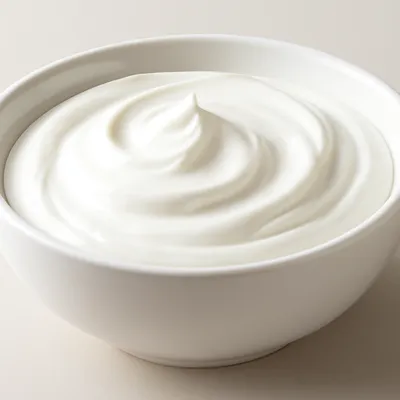
Hot cake, hot syrup is wrong — the standard rule is one hot, one cold. Egyptian bakers usually pour cool syrup over a still-warm cake so the syrup soaks in without dissolving the crumb. The tender, crumbly, non-elastic texture isn't because semolina is gluten-free — it isn't: semolina is milled from durum wheat and actually carries more gluten than all-purpose flour. The crumb stays short because the grind is coarse and the batter is mixed quickly with almost no gluten development. Yogurt or tahina in the batter adds a fat-acid combo that keeps the texture from going to brick.
Variations
Egyptian (almond on each diamond, rose-water syrup); Turkish revani (lemon-zest in batter, lighter syrup); Lebanese namoura (more yogurt, denser); Greek ravani-Veroia (orange-syrup, toasted almonds, drier crumb); coconut-version basbousa goz hindi adds chew.
On the Palate
Where Basbousa sits in the Egyptian flavor cloud
Pour cool syrup over the still-hot cake, never hot-on-hot — the temperature gap lets the syrup wick into the crumb and set it moist instead of dissolving it into mush.
Ingredients


How it's made
5 steps · 55 min
- 15 min
Preheat your oven to 180°C (350°F). In a large mixing bowl, combine semolina and melted butter until the mixture resembles wet sand. The grains should be fully coated but not swimming in butter.
Watch outThe mix should look like damp sand — grains coated and clumping loosely, not pooling in butter.
- 210 min
Spread the semolina mixture evenly into a greased sheet pan, pressing it down gently with your fingers. Score the surface into diamond shapes, pressing an almond into the center of each piece for a decorative touch.
- 325 min
Bake in the preheated oven until the top is golden brown and a toothpick inserted into the center comes out clean, about 25 minutes. The kitchen should fill with a warm, nutty aroma as it bakes.
Watch outTop is deep golden and a toothpick comes out clean; the nutty smell means it's ready.
- 410 min
While the basbousa bakes, prepare the sugar syrup by heating sugar and water in a saucepan until the sugar dissolves completely. Simmer for 10 minutes until slightly thickened, then let it cool to room temperature.
Watch outMonitor the syrup closely to avoid overcooking, which can lead to crystallization.
- 55 min
Once the basbousa is out of the oven, pour the cooled syrup evenly over the hot cake. Listen for the soft sizzle as the syrup is absorbed, ensuring each piece is well-soaked.
Watch outListen for the soft sizzle as the cool syrup hits the hot cake and every piece drinks it in.
Archive tool suggestions — not reviewed
These legacy suggestions have not been evidence-reviewed and are not presented as required tools.

Flat rectangular metal pan (sheet pan, half-sheet, quarter-sheet), 33×23 cm to 45×33 cm, with a low rim. The flat surface gives even heat for cookies, biscuits, roasted vegetables, sheet-pan dinners. Heavy aluminum sheets conduct heat fastest; non-stick coatings make cleanup easier but can warp over 200°C; rimmed half-sheet is the modern American restaurant standard.

Round metal pot, 14-26 cm diameter, with vertical walls and a long handle, designed for sauces, soups, oatmeal, rice, boiled vegetables. The vertical walls minimize evaporation (vs. a sauté pan). Sizes: 1 qt for melting butter, 2-3 qt for sauces, 4 qt for soups. Stainless-steel-clad aluminum or copper is best for conduction; cast-iron is too thick for delicate sauces.