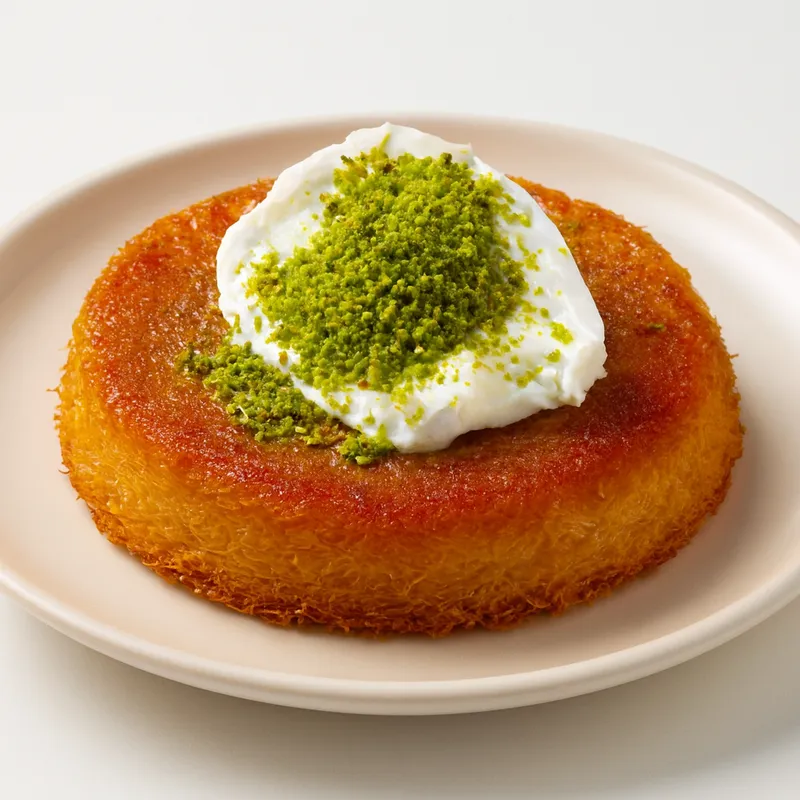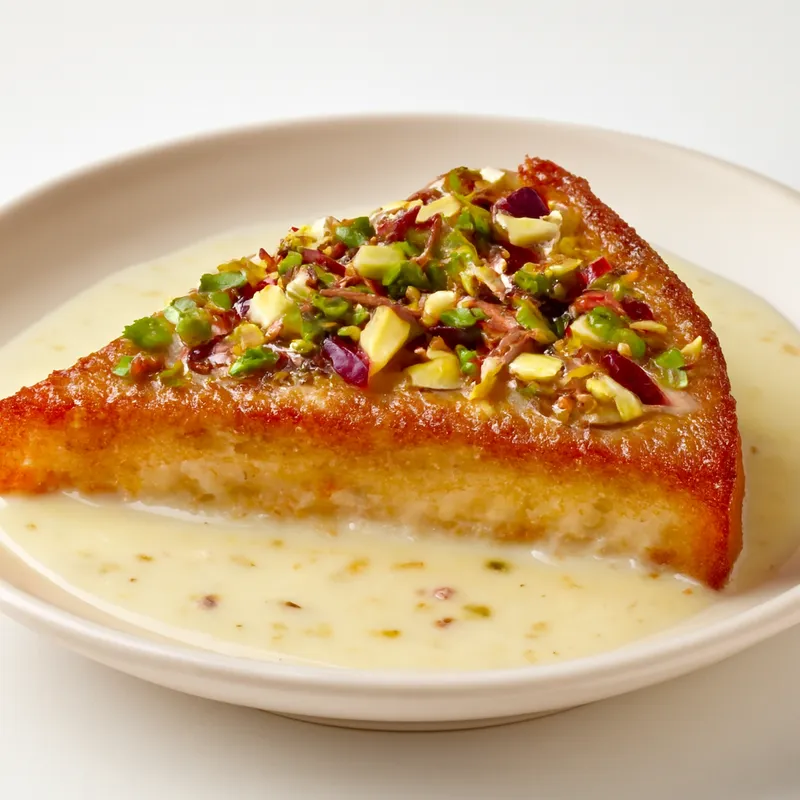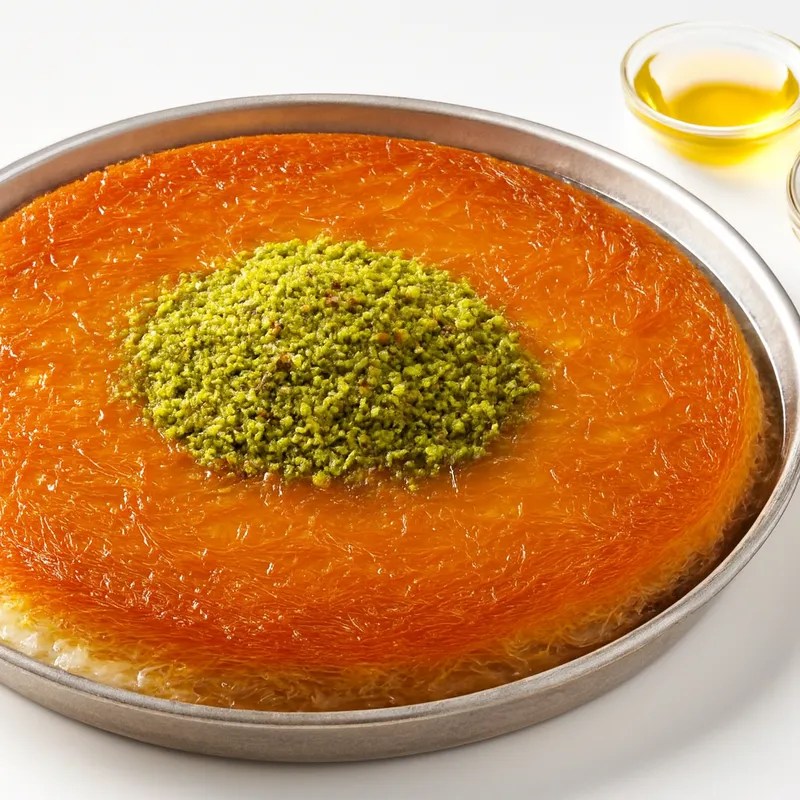




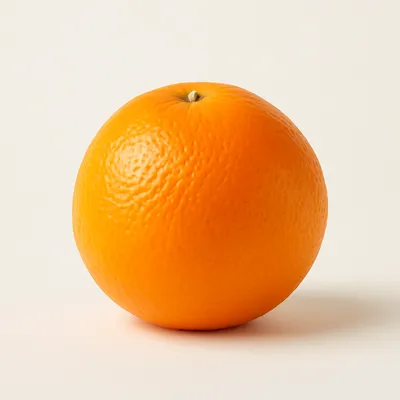
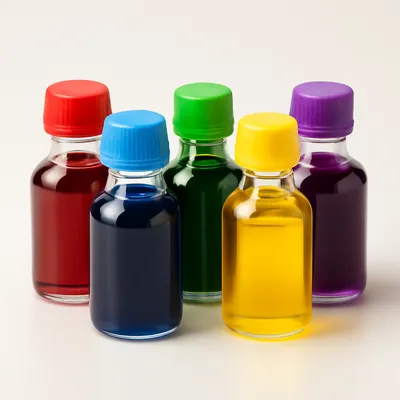
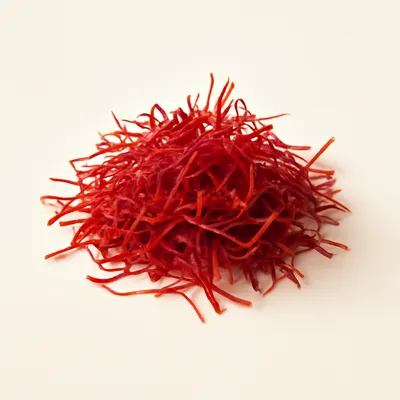
Documented in Nablus, Palestine, in the 15th century, where bakers built it around locally produced akkawi cheese; the city remains the standard reference (knafeh nabulsiyeh). The dish spread through the Ottoman Empire — Damascus, Beirut, Cairo, Istanbul each developed variants. The orange color comes from food coloring added in the 20th century to mark the kataifi-style top, originally tinted with saffron or annatto.
15th-century Nablus invention built on local akkawi cheese — a low-acid brine cheese that melts without breaking. The orange dye is a 20th-century cosmetic; the cold-syrup-on-hissing-pastry temperature gap is the actual technique.
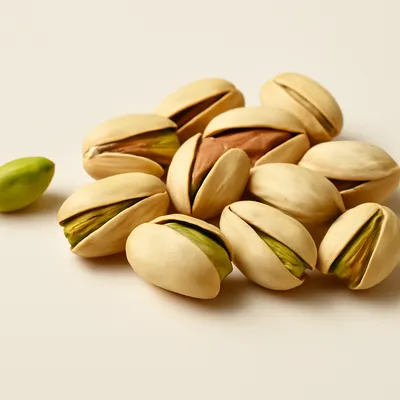
A bright orange disc of shredded pastry (kataifi) or fine semolina dough, layered over a melt of unsalted akkawi cheese, baked until the bottom turns mahogany, then flipped onto a tray and drenched in rose-orange-blossom sugar syrup the second it leaves the oven. The cheese stretches in long ropes; the pastry stays crisp. Crushed pistachio finishes. Eaten standing, hot enough to pull strings.
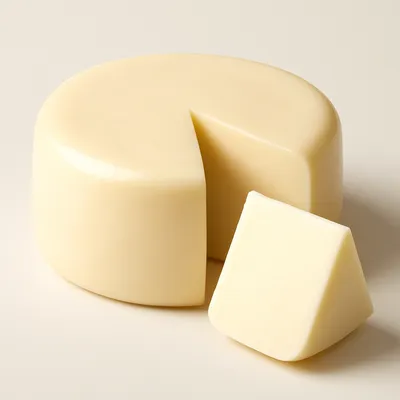
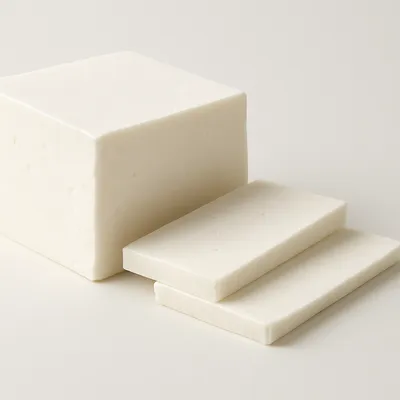
Akkawi cheese is the load-bearing ingredient — it's a low-acid brined white cheese from the Acre region, rinsed of its salt before use, that melts without breaking, holds shape under heat, and stays mild enough to read sweet next to syrup. Mozzarella substitutes go rubbery; ricotta runs. The other technical move is pouring cold syrup onto a still-hissing pastry: the temperature gap drives syrup into the kataifi without making it soggy. Equal-temperature pour kills the texture.
Variations
Knafeh na'ameh (Nablus, smooth fine-semolina top); knafeh khishneh (Damascus, coarse shredded-kataifi top); Beirut and Cairo run a heavier syrup, Istanbul's künefe uses unsalted Hatay cheese and a thinner pastry.
On the Palate
Where Knafeh sits in the Lebanese flavor cloud
Ingredients



How it's made
5 steps · 45 min
- 15 min
In a large pan, melt butter over medium heat. Add semolina and stir continuously until it becomes fragrant and golden, about 5 minutes.
Watch outThe semolina's ready when it smells toasty-nutty and turns even gold, not pale — that color is the crunch.
- 25 min
Spread half of the semolina mixture evenly in a baking dish. Layer with soft cheese, ensuring it covers the semolina completely.
- 320 min
Cover the cheese with the remaining semolina mixture, pressing gently to compact the layers. Bake in a preheated oven at 180°C (356°F) until the top is golden and crispy, about 20 minutes.
Watch outPull it when the top is deep golden and crisp to a tap; the cheese underneath should be soft and just molten.
- 410 min
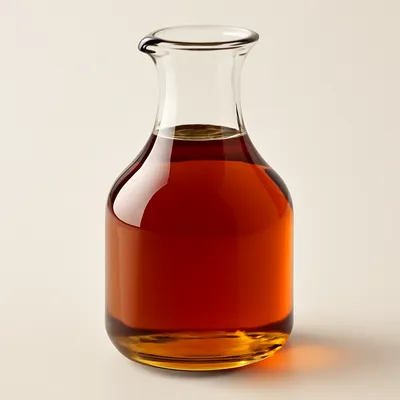
While the knafeh bakes, prepare a sugar syrup by combining sugar and water in a saucepan. Bring to a boil, then simmer until slightly thickened, about 10 minutes. Add a few drops of rose water or orange blossom water for aroma.
Watch outAvoid boiling too long; syrup can crystallize if overcooked.
- 55 min
Once the knafeh is baked, pour the warm syrup over the top. Garnish with crushed pistachios before serving.
Watch outPour the cooled syrup the instant it leaves the oven — you should hear it hiss and see it drink in, not pool on top.
Archive tool suggestions — not reviewed
These legacy suggestions have not been evidence-reviewed and are not presented as required tools.