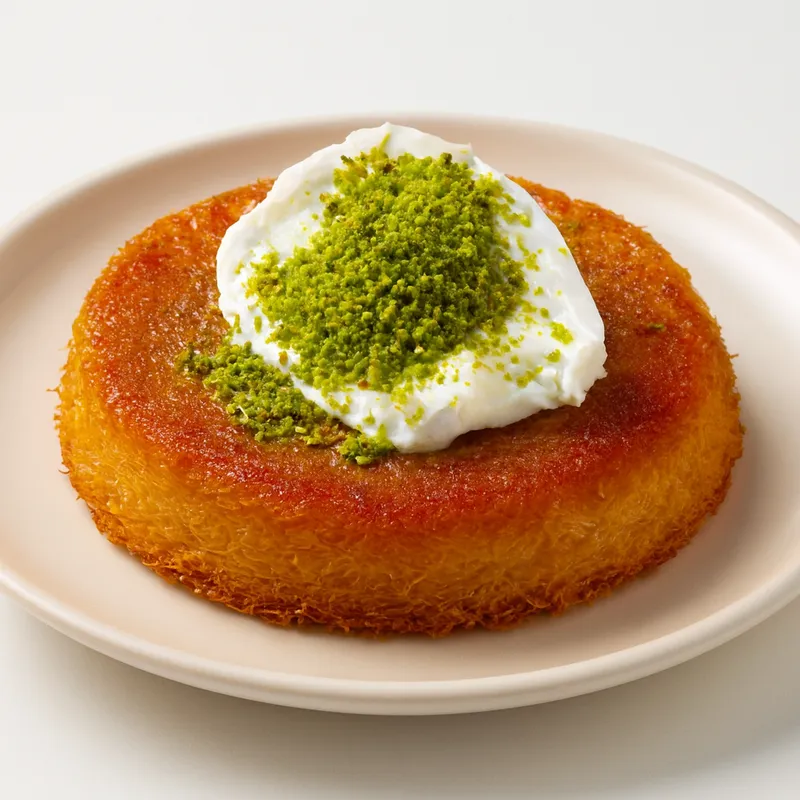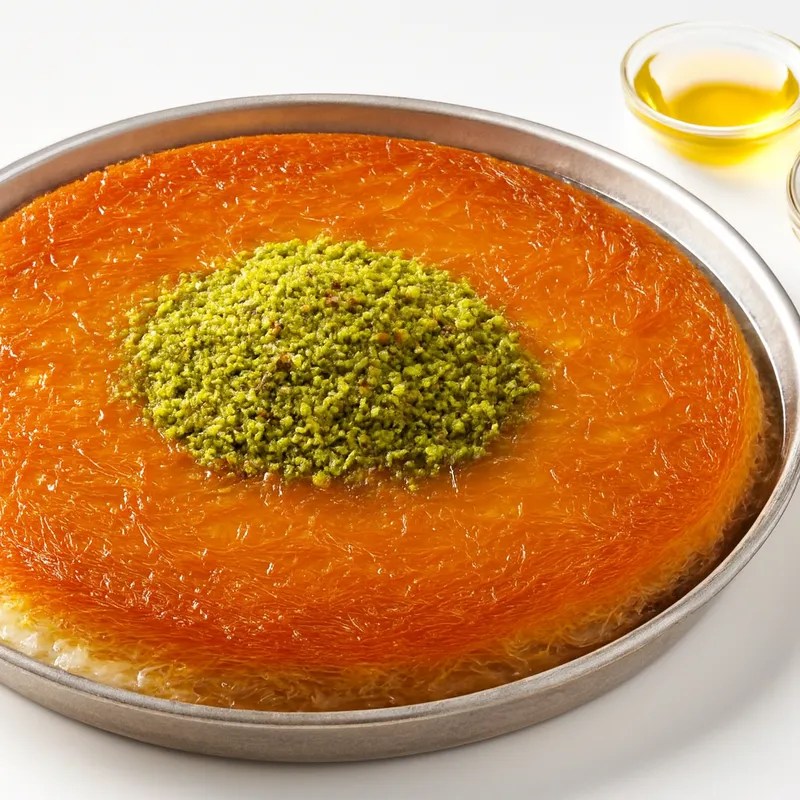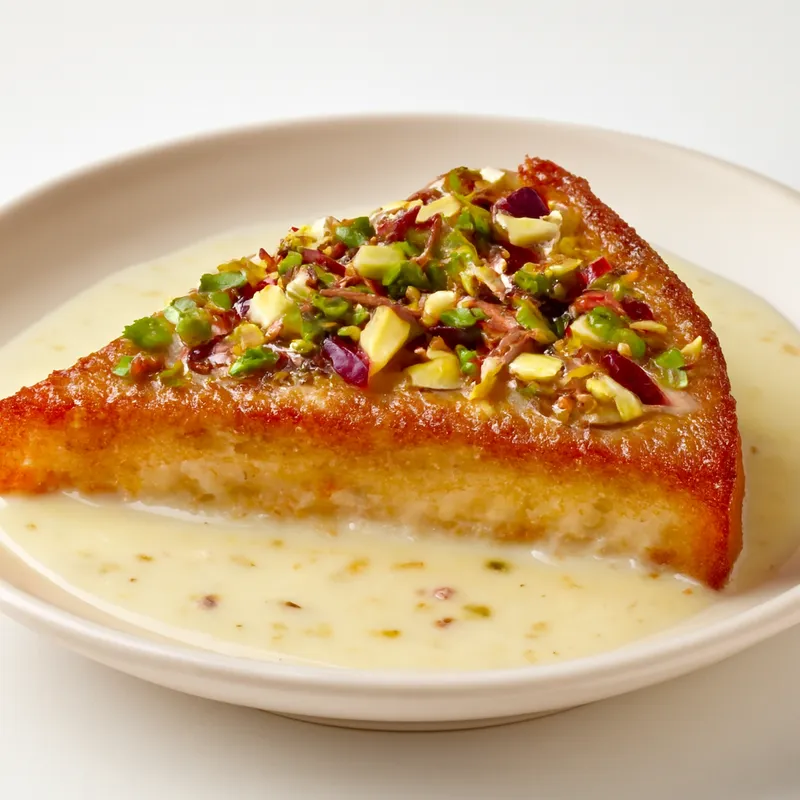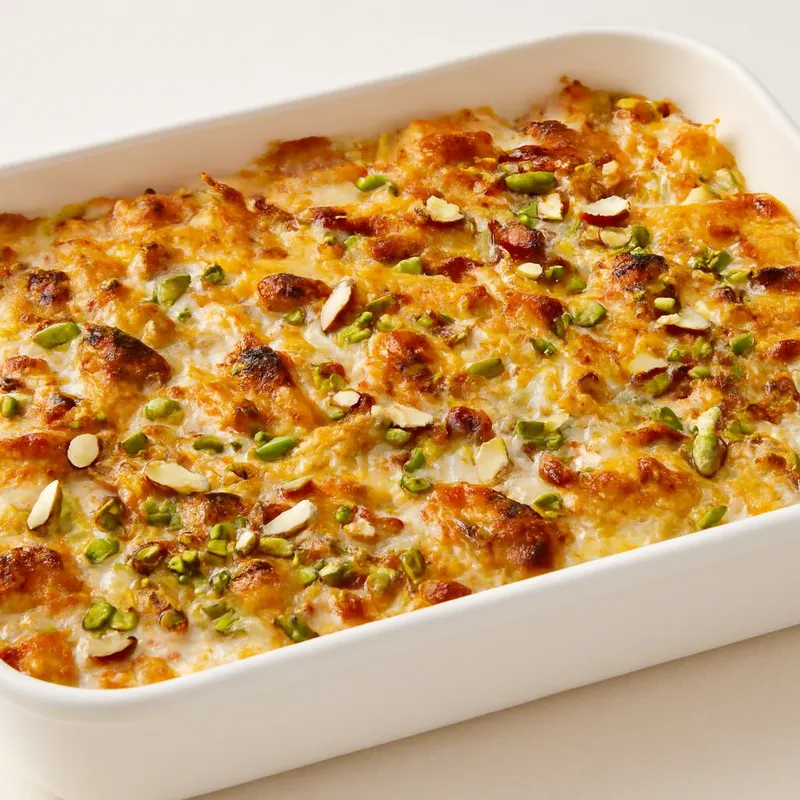



Origin disputed across the Levant — Nablus, Palestine claims the cheese version (kunafa nabulsiyeh) and likely has the strongest case, with documented production from at least the 15th-century Mamluk period. The dish was originally a pre-dawn Ramadan meal, dense enough to last through the fast. The rose syrup arrived later via Persian and Ottoman influence; the pre-modern version used date or grape molasses.
Nablus is the kunafa capital — the city's 2009 record clocked the largest at 75 meters. Kataifi shredded pastry over akkawi cheese, drowned in attar (rose-orange-blossom syrup). Pastry crackles, cheese stretches.
A round of shredded kataifi pastry over melted akkawi or nabulsi cheese, baked until the pastry top goes deep orange, then drenched in rose-water sugar syrup and topped with crushed pistachios. Cut and the cheese pulls in long strings; the pastry stays crisp under the syrup for about ten minutes, then surrenders. Eat hot. Cold kunafa is structurally a different dessert and not really worth eating.
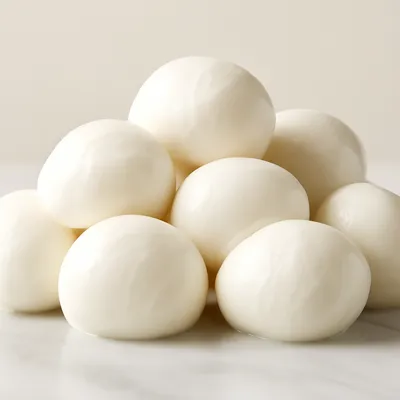
The cheese must be unsalted or desalinated — Nabulsi is brined and has to be soaked in water for hours before use, otherwise the dessert reads as savory. Hot syrup goes onto cold pastry, or cold syrup onto hot pastry — never hot on hot, which makes the kataifi go limp instantly. The pastry is pre-tossed in clarified butter (samneh), which is what gives the deep mahogany color, not the oven heat alone.
Variations
Nabulsi (West Bank) is orange-tinted and akkawi-stuffed; Lebanese knafeh-bil-jibneh is sandwiched in sesame-sprinkled bread; Turkish künefe is smaller and uses unsalted dil peyniri; Egyptian kunafa-bil-mango is summer street food.
On the Palate
Where Kunafa sits in the Palestinian flavor cloud
Never pour hot syrup onto hot pastry — pair hot syrup with cool pastry (or the reverse) so the kataifi stays crisp instead of collapsing limp on contact.
Ingredients


How it's made
5 steps · 28 min
- 110 min
Melt butter in a large pan over medium heat until it sizzles and releases a nutty aroma. Add the kunafa pastry, ensuring it's evenly coated with the butter, and toast until golden brown, stirring occasionally to prevent sticking.
Watch outButter is ready when it stops foaming and smells nutty; toast the pastry to even gold so it colors deep, not just from the oven.
- 25 min
Spread a layer of the softened mozzarella cheese over half of the toasted pastry. Fold the remaining pastry over the cheese, pressing down gently to encase the cheese completely.
- 35 min
Continue cooking the kunafa on medium heat until the cheese has melted and the pastry is crisp, about 5 minutes. You should hear a gentle sizzling from the butter and smell the rich aroma of the pastry.
Watch outListen for a steady gentle sizzle and smell the toasty pastry — that's the cheese melted through and the base gone crisp.
- 45 min
In a small saucepan, combine sugar and water, stirring over medium heat until the sugar dissolves and the syrup thickens slightly. Add a few drops of lemon juice for balance.
Watch outCook the syrup only until it coats the back of a spoon; too thin and it soaks in, too thick and it sets hard.
- 53 min
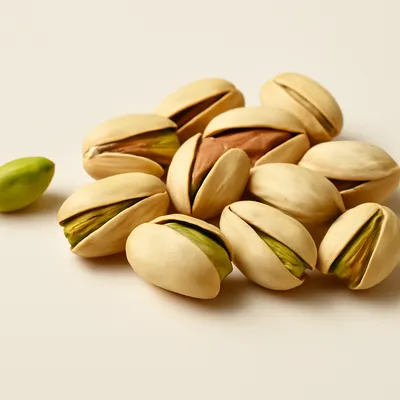
Pour the warm syrup evenly over the cooked kunafa. Sprinkle crushed pistachios generously on top for a pop of color and texture.
Archive tool suggestions — not reviewed
These legacy suggestions have not been evidence-reviewed and are not presented as required tools.