


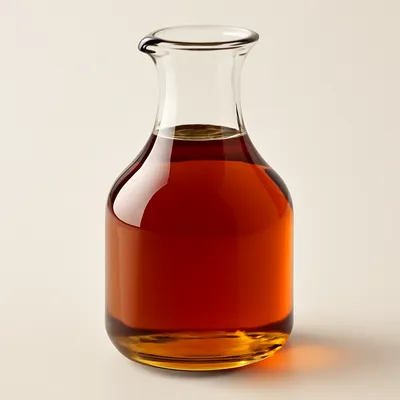
Antakya (Hatay) and the broader Levantine corridor — Aleppo, Nablus and Antakya have competed over the dish's origin for centuries, with documentation in Arab cookbooks from the 10th century onward (kanāfa). The Turkish form crystallized in southeastern cities (Hatay, Gaziantep) using local fresh stretching cheese; the Nabulsi version uses akkawi. Both predate modern borders.
Antakya, Aleppo and Nablus have argued over kanāfa since at least the 10th century — the dish appears in Arab cookbooks of that era. The Turkish form uses Hatay's fresh stretching cheese; Nablus uses akkawi. Hot pastry meets cool syrup at the table — reverse the temperatures and the crust collapses.
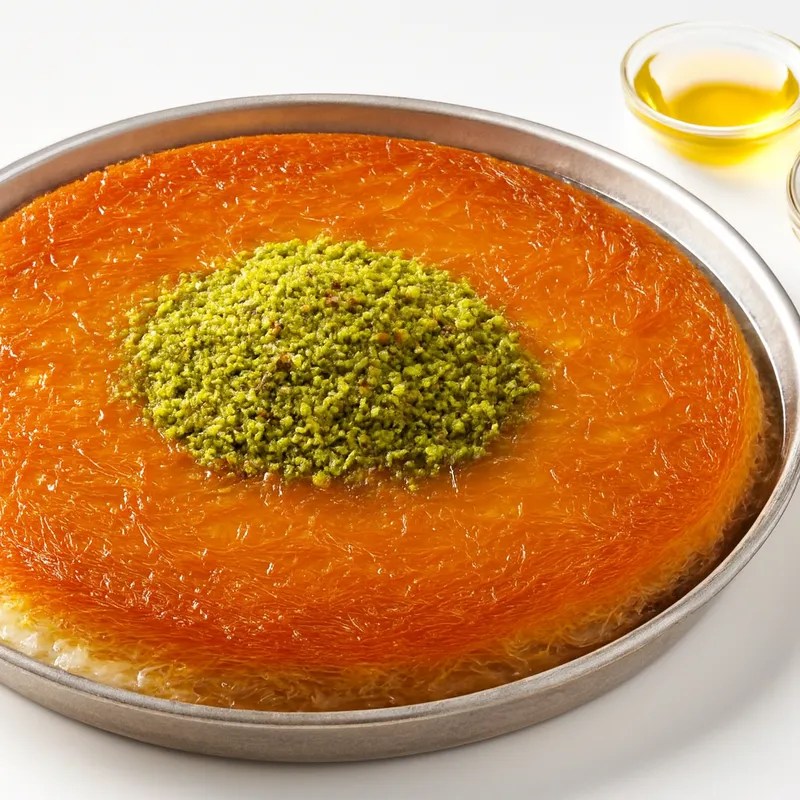
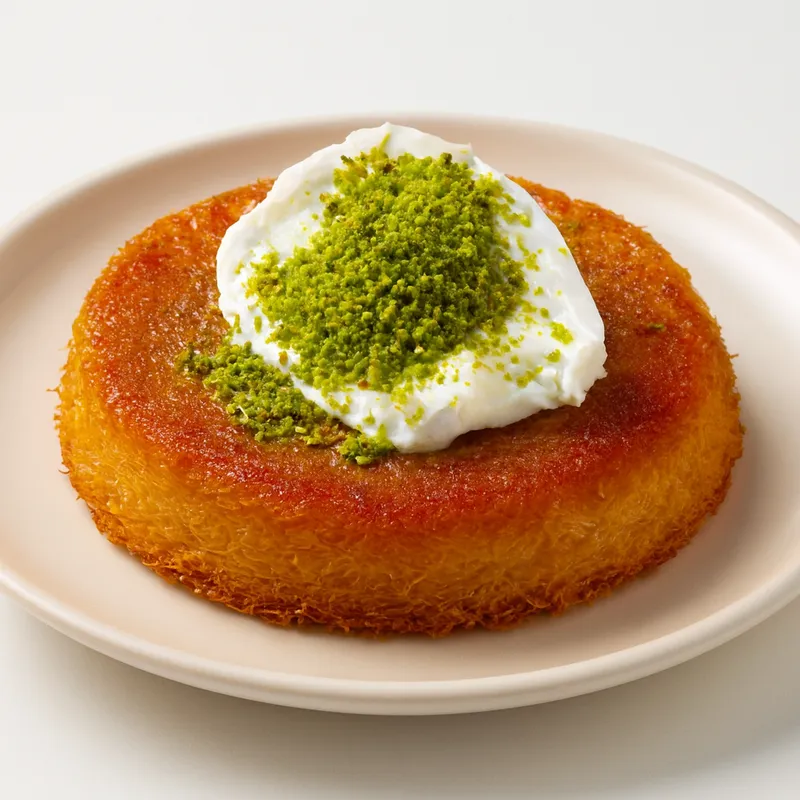
Two layers of shredded kadayif pastry sandwiching a slab of fresh, unsalted, stretchy cheese (traditionally Hatay's Antakya cheese), pan-baked in clarified butter until both faces fry to bright orange-red, then drenched in cool sugar syrup. Cut at the table — the cheese pulls in long strings. Eat immediately. Once the syrup soaks the lower crust, crispness is gone.
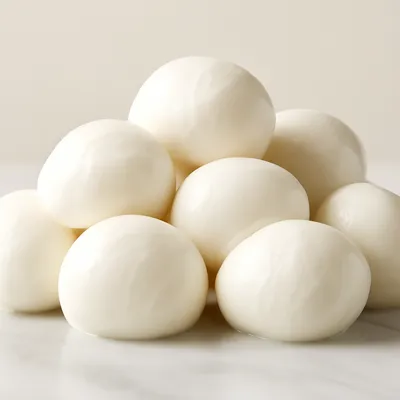
The temperature contrast is the whole point — the pastry must be screaming-hot from the pan, the syrup must be cool, and they meet only at service. Hot syrup poured on hot kunefe collapses the crust; cold syrup hits the surface, glazes it, and only enough seeps in to flavor the top layer. The cheese must be one that stretches without releasing salt or breaking — supermarket mozzarella works as a substitute; cheddar absolutely doesn't.
Variations
Antakya künefe (Hatay cheese, deep red crust); Nabulsi knafeh (akkawi cheese, ground orange food coloring on top); Egyptian konafa nests use cream filling; Lebanese knafeh bil jibn is breakfast and rolled into a sesame bun.
On the Palate
Where Kunefe sits in the Turkish flavor cloud
Serve hot pastry against cool syrup — the crust must come screaming-hot from the oven and the syrup must be cooled, or hot-on-hot turns the crisp shell soggy.
Ingredients



How it's made
5 steps · 32 min
- 15 min
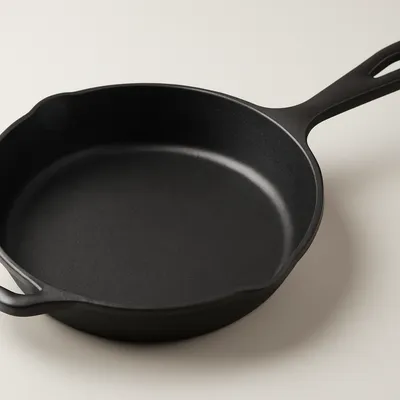
In a large skillet, melt butter over medium heat until frothy. Add the shredded kunefe dough and stir continuously to coat the strands evenly with butter, cooking until they turn golden brown, about 5 minutes.
Watch outToast the strands only until deep gold — pull them before they darken to brown or they turn bitter.
- 25 min
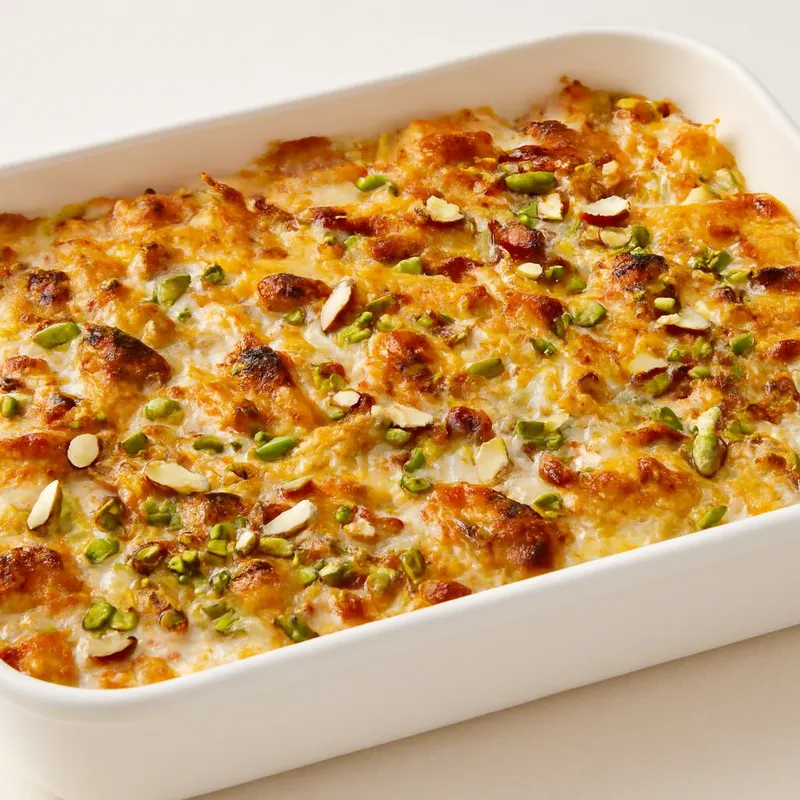
Spread half of the browned dough evenly in a baking dish. Layer with slices of mozzarella cheese, ensuring even coverage. Top with the remaining dough, pressing down gently to compact.
- 315 min
Place the baking dish in a preheated oven and bake at 180°C (350°F) until the cheese melts and the top turns crisp and golden, about 15 minutes.
Watch outCheck the kunefe regularly to avoid over-browning; the top should be golden but not burnt.
- 45 min
While the kunefe bakes, prepare the syrup. In a small saucepan, combine sugar and water. Bring to a simmer over medium heat, stirring until the sugar dissolves. Add a few drops of lemon juice and continue to simmer until slightly thickened, about 5 minutes.
Watch outSimmer the syrup only until it coats a spoon and lightly threads; boil it too long and it crystallizes as it cools.
- 52 min
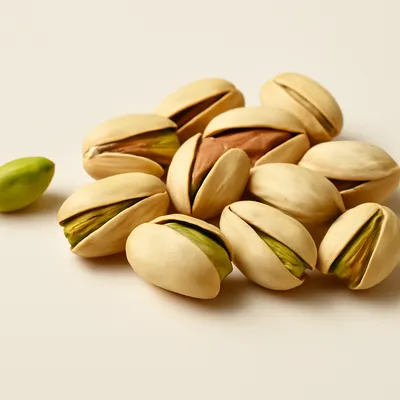
Remove the kunefe from the oven and immediately pour the warm syrup evenly over the top. Garnish with crushed pistachios before serving.
Watch outPour the cool syrup the instant it leaves the oven, while the crust is still crackling — that hiss is the sound you want.
Archive tool suggestions — not reviewed
These legacy suggestions have not been evidence-reviewed and are not presented as required tools.