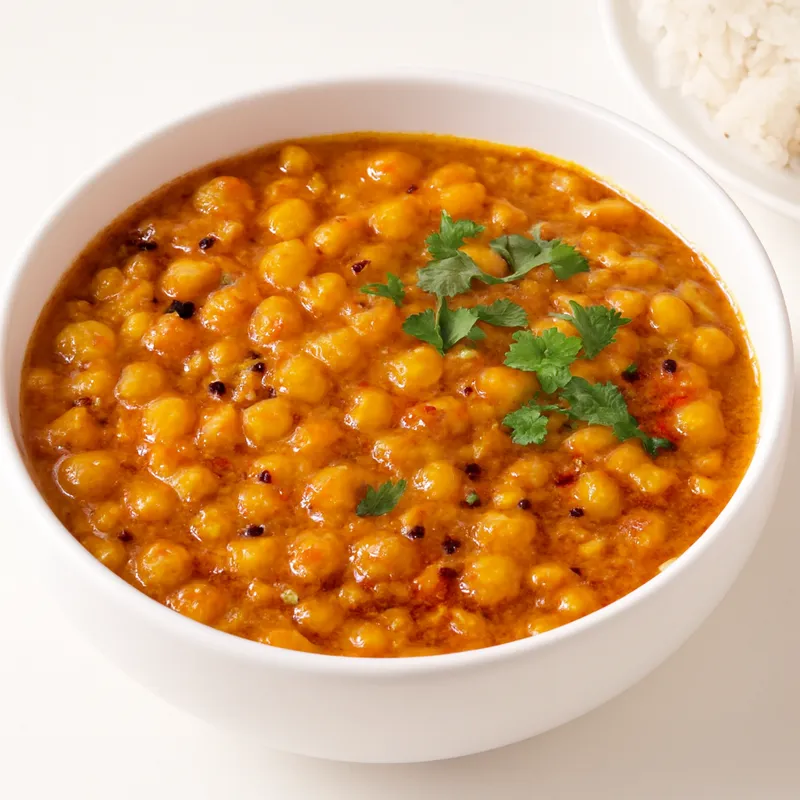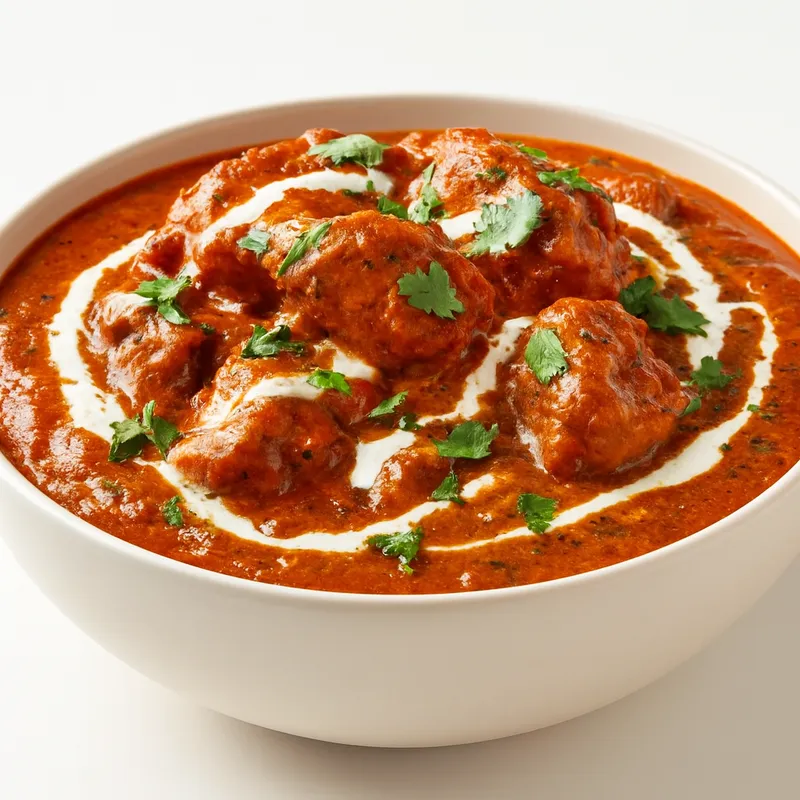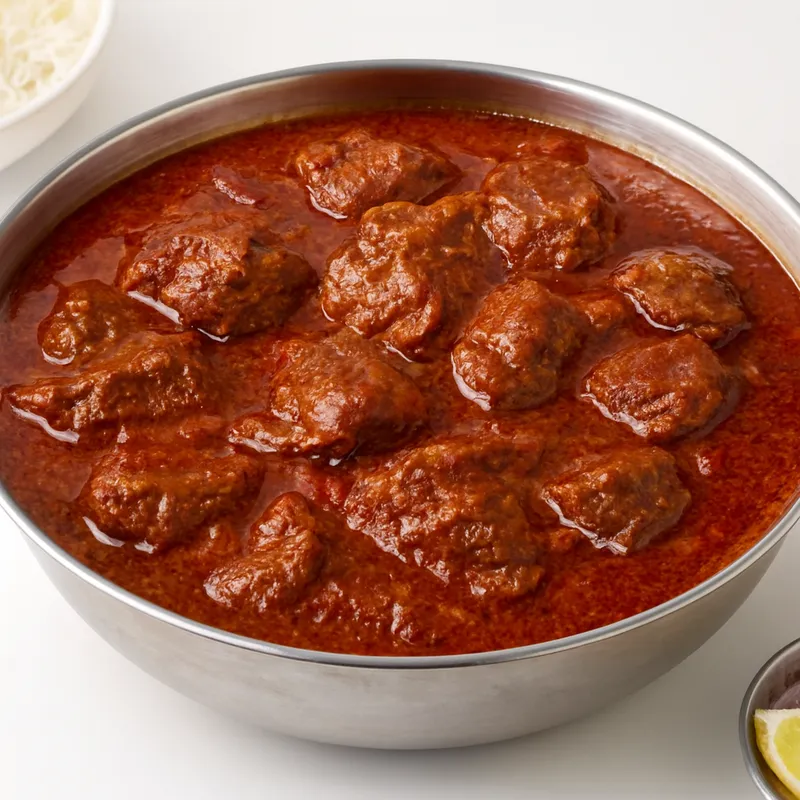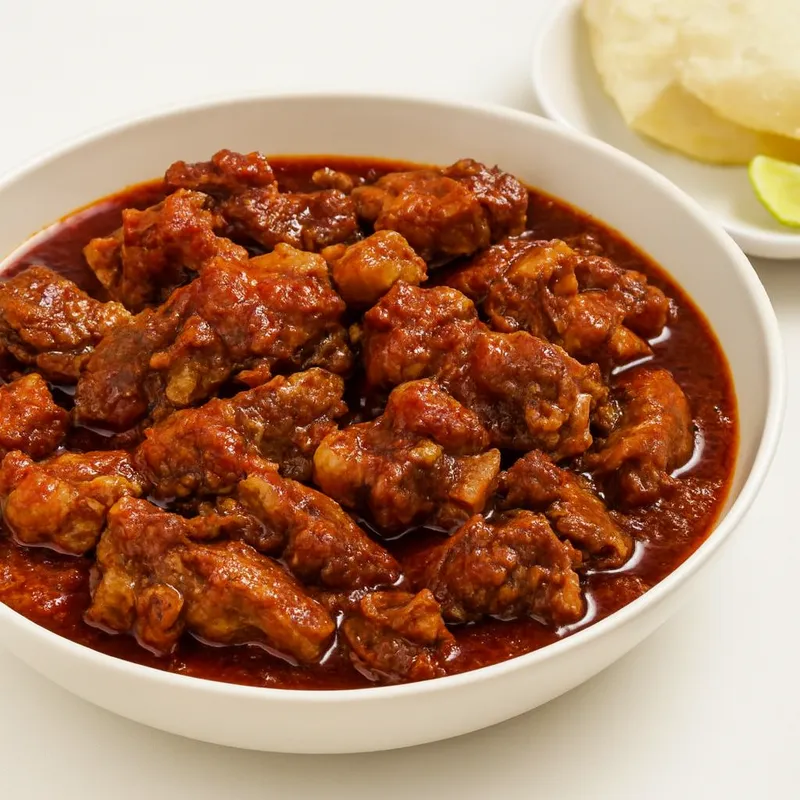



A Mughal-court dish formalized in the 16th century after Babur founded the empire in 1526; its technique — braising meat in yogurt with ground nuts and whole spices — descends from Central Asian Turco-Persian kitchens that came to Delhi with the dynasty. Akbar's court chefs (16th-century Ain-i-Akbari records the recipe) refined it; the dish was a status food, marked by saffron, almond, and gold-leaf garnish at imperial level.
Korma is the epitome of indulgence, with its creamy texture and fragrant spices wrapping around your taste buds like a warm embrace.
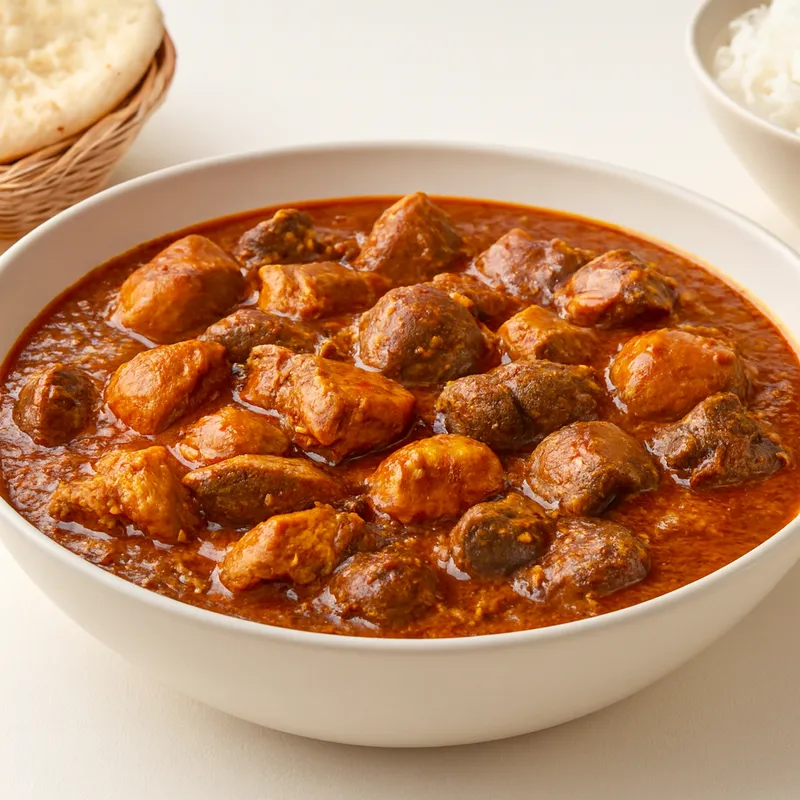
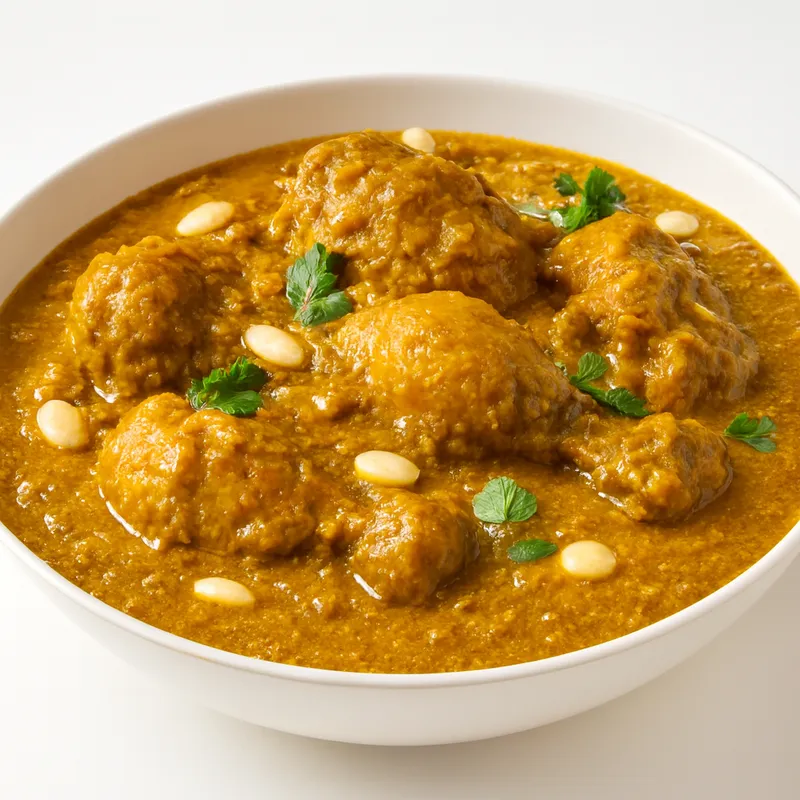
Pale ivory or buttery yellow gravy, thick enough to coat a spoon, with chunks of lamb or chicken sunk in. Cardamom and clove come up first on the nose, then a slow round sweetness from cashew or almond paste. No chili burn — heat is whole-spice warmth, not capsaicin. Eaten with naan or basmati. If it tastes of cream alone, the nuts and yogurt were skipped.
Korma is a yogurt braise that must not break. Yogurt curdles above 80°C unless stabilized — Mughlai cooks bind it with a paste of soaked cashews or almonds (whose starch and emulsifying proteins hold the dairy), add it cold to warm meat, and stir constantly until smooth before raising heat. Western shortcut versions using cream skip this; they're sweeter, heavier, and miss the slight tang yogurt brings.
Variations
Shahi korma (royal, with saffron + cream); navratan korma (nine-jewel, with vegetables); Kashmiri korma (with fennel-ginger); UK curry-house korma is unrecognizably sweet.
On the Palate
Where Korma sits in the Indian flavor cloud
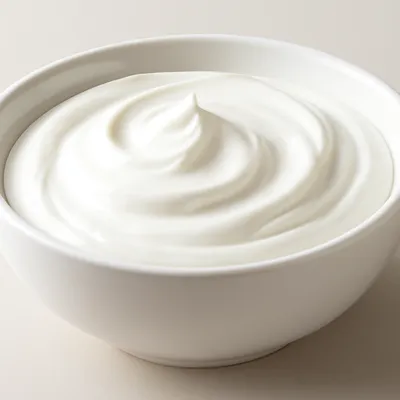
The make-or-break is keeping the yogurt from breaking: whisk it smooth, stir in a paste of soaked cashews or almonds to stabilize it, add it to the pan off high heat, and stir constantly as it warms — yogurt hit with high heat above about 80°C curdles into grainy curds and a split, weepy sauce.
Ingredients
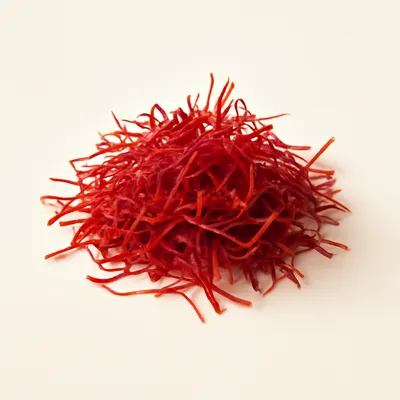
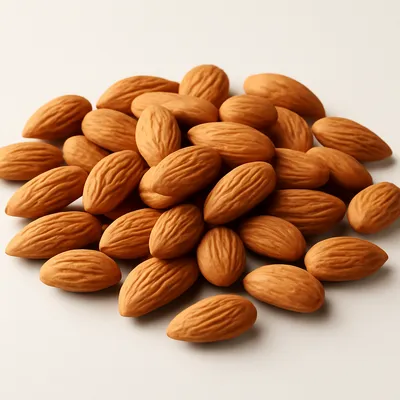


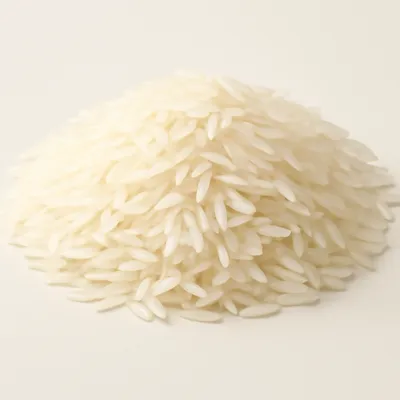

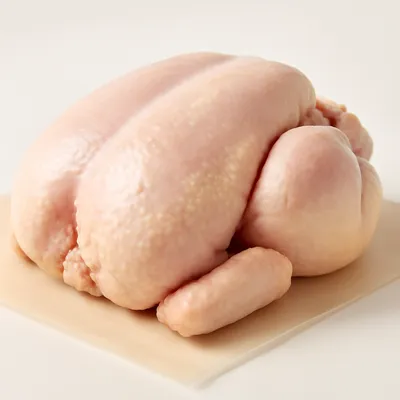
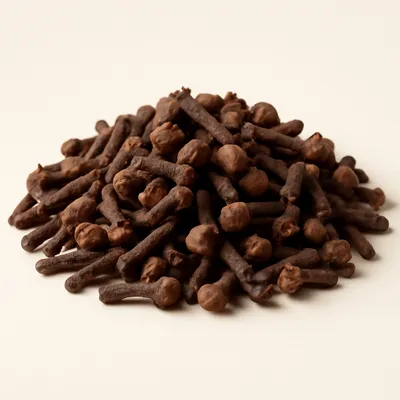

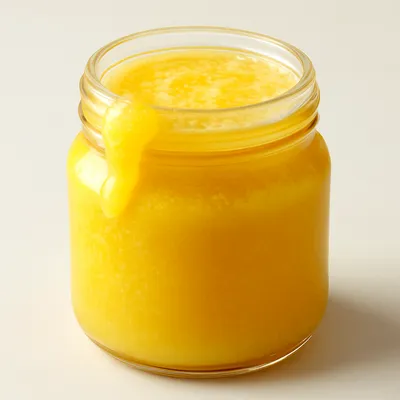

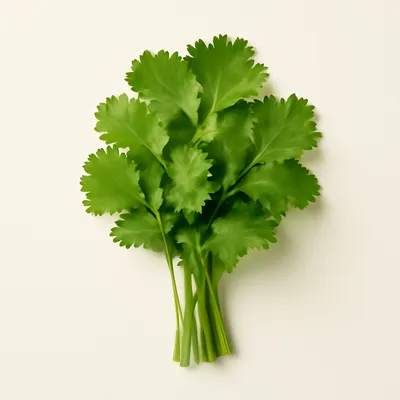

How it's made
5 steps · 52 min
- 15 min
Heat a heavy-bottomed pan over medium-high heat and add the ghee. Once the ghee is shimmering and aromatic, sear the meat until it develops a rich brown crust on all sides, about 5 minutes. The sound should be a lively sizzle.
Watch outEnsure the pan is hot enough to sear the meat quickly, preventing it from steaming.
- 210 min
Remove the meat and reduce the heat to medium. Add sliced onions to the pan, stirring frequently until they turn golden brown and caramelized, approximately 10 minutes. The aroma will become sweet and nutty.
Watch outTake the onions all the way to deep golden and sweet-smelling, not just soft — this is the sweetness that balances the tang, and pale onions leave it flat.
- 32 min
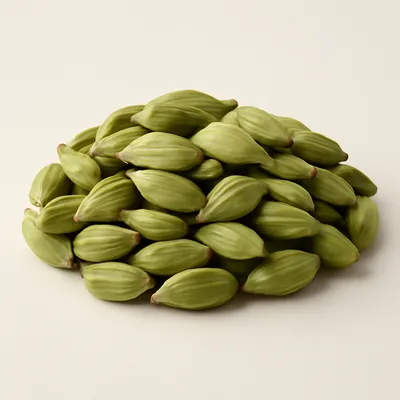
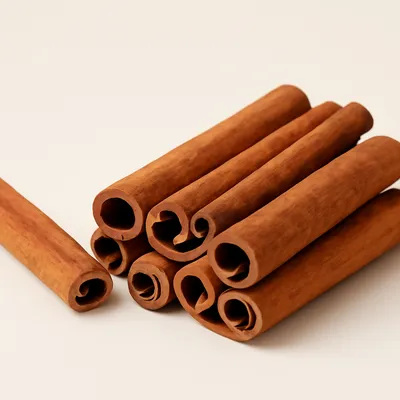
Add garlic, ginger, cardamom, cinnamon, and cloves to the pan with the onions. Stir until the spices bloom, releasing their fragrance, about 2 minutes.
- 430 min
Return the meat to the pan, add yogurt, and stir to combine. Cover the pot with a tight-fitting lid or seal with dough, and reduce heat to low. Allow it to simmer gently, letting the flavors meld, for 30 minutes.
Watch outAdd the whisked yogurt off high heat and stir without stopping until it's fully blended in and smooth before you cover and drop to low — this is the moment it either stays creamy or curdles.
- 55 min
In a small pan, heat additional ghee and briefly fry any remaining spices until fragrant, then stir this into the korma. Cover and shake the pot gently to mix and release steam, cooking for an additional 5 minutes.
Watch outThe finishing tempered spice-ghee should smell nutty and fragrant, not acrid — pour it in and fold gently so the sauce stays glossy and unbroken.
Archive tool suggestions — not reviewed
These legacy suggestions have not been evidence-reviewed and are not presented as required tools.