
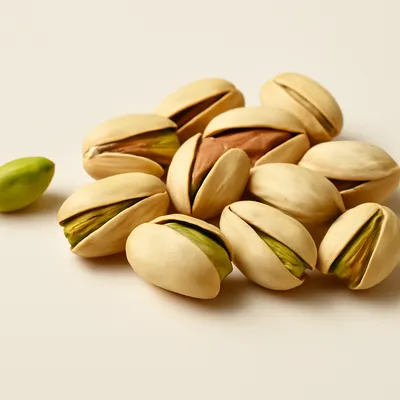
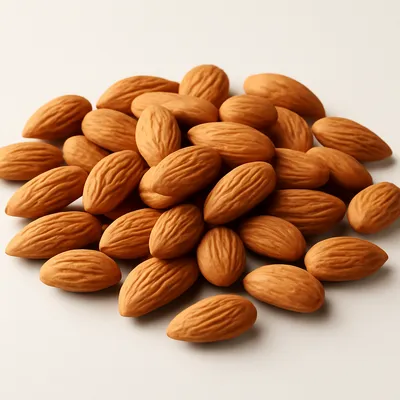
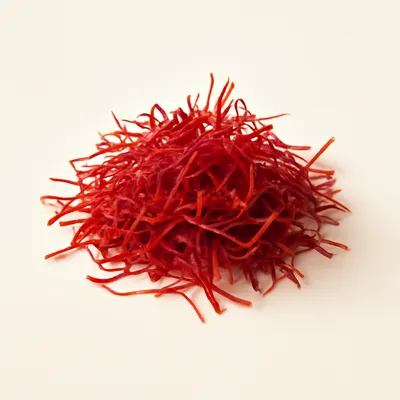
Sohan halwa is a dense, chewy, glossy sweet quite unlike the soft spoonable halwas — a brittle-to-fudgy slab made by cooking a starch (cornflour or wheat, often with sprouted-wheat extract) with sugar and a great deal of ghee until it caramelizes into a stretchy, amber mass packed with nuts. Pistachios, almonds and sometimes cashews are folded through, the whole thing flavoured with cardamom and saffron and set into thick rounds or wedges. The texture is its defining feature: firm and chewy, pulling slightly against the teeth, neither the crisp of brittle nor the melt of barfi, with the nuts giving crunch. It is a rich, keeping sweet associated with the Deccan and with Multan in the wider region.

The name sohan derives from the Persian word for pleasing or delightful, and the sweet is generally traced to a Persian, Iranian origin from which it spread into the subcontinent, carried by Persian and Mughal-era confectioners. In the region it is most strongly associated with Multan (in present-day Pakistan), whose Multani sohan halwa is recorded as gaining wide popularity in the early 19th century, around the time of the governor Diwan Sawan Mal; its dark, milk-rich cousin is known as Habshi halwa, the name habashi referring through Persian and Arabic to a dark complexion, after the sweet's deep colour. Within India the Deccan, especially Hyderabad, has its own established sohan tradition. The romantic local legend of a Multan confectioner named Sohan who saved a batch of spoiled milk is a folk tale rather than documented history; the Persian root of both the name and the technique is the better-attested origin.
A thick amber disc or wedge, glossy and studded thickly with pale-green pistachio and slivered almond, semi-translucent at the edges. It is firm and decidedly chewy, pulling against the teeth and yielding slowly rather than melting or shattering — denser styles are almost taffy-like, drier ones snap then chew. The flavour is deep caramelized sugar and toasted ghee, warm with cardamom and saffron and sometimes a faint nuttiness from sprouted wheat, the generous nuts cutting the richness with crunch. It keeps well and is eaten at room temperature in small pieces, as a rich treat.
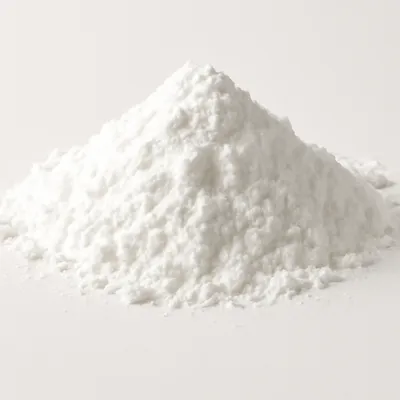
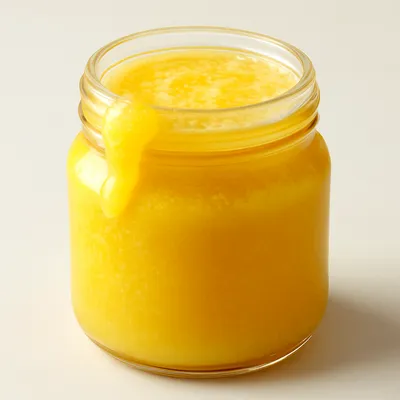
Sohan halwa is built on gelatinizing a starch and then cooking it with sugar and ghee until the whole mass caramelizes and turns chewy. A starch — cornflour, wheat flour, or the strained liquid of sprouted wheat, which contributes both starch and enzyme-developed flavour — is cooked with water and sugar so the starch granules swell and gelatinize into a thick, stretchy paste. Ghee is then added in stages and the mixture cooked long over steady heat: as water boils off, the sugars and milk solids caramelize through browning, the paste darkens to amber and develops the characteristic chew, while the staged ghee keeps it glossy and pliable rather than letting it seize. Constant stirring prevents catching, and the long reduction is what sets the firm, keeping texture. Nuts and flavourings are folded in near the end, and the hot mass is poured into trays or moulds and cut as it cools and firms.
Variations
Multani sohan halwa, dense, chewy and nut-packed, is the best-known style of the wider region; the dark, milk-heavy Habshi halwa (also called dark halwa) is its close relative, cooked longer with more milk for a deeper colour. The Deccan and Hyderabad have their own sohan, and there is a crisper, more brittle 'sohan papdi'-adjacent style as well, though flaky soan papdi is a separate sweet. Recipes vary in the starch base — cornflour, wheat or sprouted wheat — and in nut and saffron content; some are softer and fudgier, others set firm enough to snap.
On the Palate
Where Sohan Halwa sits in the Indian flavor cloud
Ingredients
Serves 12
How it's made
6 steps · 20 min
- 15 min
Whisk cornflour (or sprouted-wheat liquid) into water until smooth and lump-free.
- 218 min
Cook with sugar over low-medium heat, stirring constantly, until the starch gelatinizes into a thick, stretchy, glossy paste.
Watch outCook the starch and sugar, stirring nonstop, until it gelatinizes into a thick, stretchy, glossy paste — this stretchy stage is the foundation of the chew.
- 315 min
Add ghee in stages, stirring it in fully each time, and continue cooking over steady heat.
- 425 min
Cook on, stirring without stop, until the mass darkens to amber, caramelizes and turns chewy and pulls from the pan.
Watch outCook on, stirring without stop, until it darkens to amber, caramelizes and pulls from the pan — that color and pull-away is the doneness; stop early and it won't set chewy, but scorching turns it bitter.
- 53 min
Fold in chopped pistachios, almonds, cardamom and saffron.
- 6120 min
Pour into a greased tray or moulds, smooth the top, and cut into pieces as it cools and firms.
Archive tool suggestions — not reviewed
These legacy suggestions have not been evidence-reviewed and are not presented as required tools.


