Diamond-shaped deep-fried crackers made from refined flour seasoned with nigella seeds and carom seeds — shattering-crisp, barely oily, and warmly spiced. A standard Bengali festival snack stored in tins for Durga Puja and Diwali tea-times.

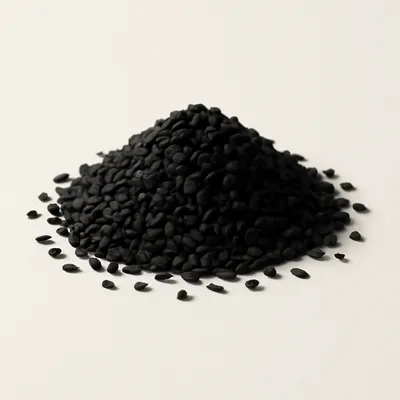
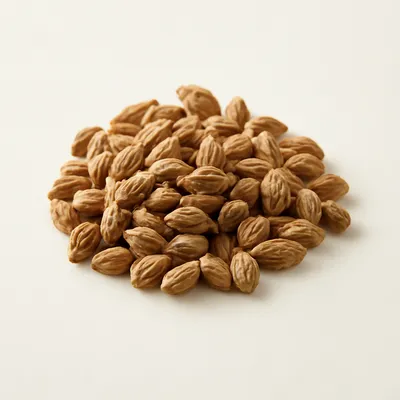


Nimki are a staple of the Bengali festival pantry — made days in advance, stored in airtight tins, and brought out for the steady stream of guests during Durga Puja and Diwali. The diamond cut is the Bengali signature; North Indian cousins such as the mathri of Uttar Pradesh are rounder, thicker, and denser. The distinguishing seasoning of the Bengali version is kalonji (nigella seeds), often paired with ajwain (carom seeds), giving a flavor profile quite unlike any other Indian fried cracker.
Crackles loudly on the first bite, shattering into thin, flaky shards; the toasty grain flavor is undercut by the faint, grassy bitterness of nigella seeds and the dry, camphoraceous warmth of carom seeds, which linger well past the crunch.
At frying temperature of 170–175°C, surface moisture flash-vaporizes in seconds, forming a steam barrier that limits oil penetration. Starch gelatinizes almost instantly and sets into a rigid, porous scaffold — the structural basis of crispness. Below 160°C this barrier fails: oil floods in before the crust sets, yielding a greasy result. Above 185°C the exterior hardens before interior moisture fully escapes, creating a hard-shelled but chewy center. Thymol from carom seeds and thymoquinone from nigella seeds are both fat-soluble; they dissolve into the frying oil and coat the cracker's surface, where they combine with Maillard reaction compounds formed from flour proteins and reducing sugars to produce the characteristic warm, slightly medicinal aroma.
Variations
Whole-wheat nimki uses atta flour for a nuttier, denser bite. A sweet version is made by dusting fried nimki with icing sugar while still warm — common at children's parties. Some households add black pepper or crumbled dried red chili for heat.
On the Palate
Where Nimki sits in the Indian flavor cloud
Ingredients
Serves 8How it's made
7 steps · 45 min
- 15 min
Combine maida, nigella seeds, carom seeds, and salt in a wide bowl; add 1 tablespoon of oil and rub it thoroughly into the flour with your fingertips until the mixture resembles coarse breadcrumbs.
- 25 min
Add cold water a tablespoon at a time, mixing after each addition, until the dough comes together into a stiff, non-sticky mass — stiffer than chapati dough; do not over-knead.
Watch outKnead to a stiff, non-sticky dough, firmer than chapati — a soft dough fries up chewy and won't crisp.
- 320 min
Cover with a damp cloth and rest for 20 minutes to allow gluten to relax.
- 410 min
Divide the dough into two portions; roll each on a lightly floured surface to an even 2 mm thickness.
- 58 min
Use a sharp knife or pastry wheel to cut parallel lines 3 cm apart, then cut across at 45° to create uniform diamond shapes; prick each diamond once with a fork to prevent ballooning.
- 618 min
Heat oil in a kadai to 170–175°C; fry diamonds in uncrowded batches, stirring gently, for 5–6 minutes until evenly deep golden and the sizzling quiets — a sign moisture has left.
Watch outHold the oil at 170-175°C and fry until deep gold and the sizzling quiets down — the quieter oil tells you the moisture's gone and they'll be crisp.
- 710 min
Lift out with a slotted spoon, drain on a paper-lined tray; cool completely before storing in an airtight tin — nimki crisp further as they cool and keep for up to two weeks.
Archive tool suggestions — not reviewed
These legacy suggestions have not been evidence-reviewed and are not presented as required tools.


