
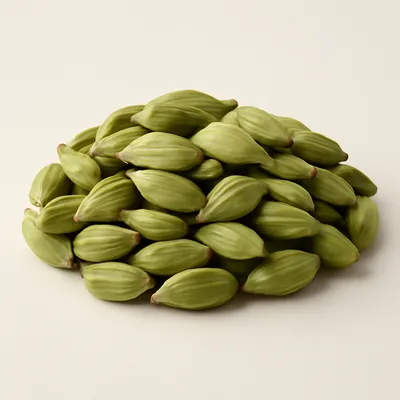
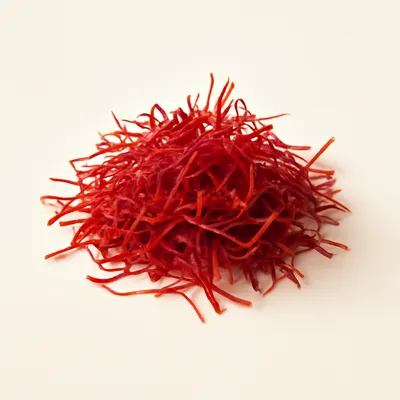
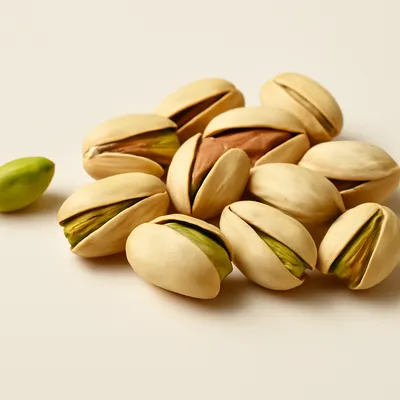
Mohanthal is a Gujarati and Rajasthani festive sweet, a rich gram-flour (besan) fudge with a distinctively grainy, fudgy texture rather than a smooth one. Coarse besan is first rubbed with warm ghee and a little milk into a damp crumb, slow-roasted in more ghee until it turns deep caramel-gold and nutty, then bound with a saffron- and cardamom-scented sugar syrup cooked to one-string consistency, set in a tray and cut into diamonds or squares, usually topped with slivered almonds and pistachios. The result is a firm-but-yielding block that melts to a sandy, ghee-rich crumb. It is a traditional offering (prasad) and a fixture of weddings and festivals, especially Diwali, across Gujarat and Rajasthan.




Mohanthal belongs to the besan-and-ghee sweet tradition of western and northern India and is identified with Gujarat and Rajasthan, as well as the Braj and Sindh regions. Its name is generally read as 'Mohan' — a name of the god Krishna — and 'thal' (a plate or offering), and it is traditionally made as bhog or prasad, food offered to the deity, which ties it to temple and festival cooking. It has no single recorded inventor; the recipe is part of the shared confectionery of the commercially linked Gujarat–Rajasthan region, where two distinct styles developed: a Gujarati version that roasts the besan without milk solids, and a Rajasthani one that often incorporates khoya (reduced milk). The exact early history is undocumented, but its place in regional festive and religious cooking is long established.
A warm-gold diamond or square, matte and dense, its surface set with slivers of green and white nut. It is firm enough to hold a clean cut and lift in the fingers, then breaks with a soft give into a coarse, sandy, almost granular crumb — the defining grain that separates it from a smooth barfi. It melts on the tongue into roasted gram and ghee, with no chew; the taste is deeply nutty and caramelized from the long-roasted besan, roundly sweet, warm with cardamom and a floral note of saffron, finished by the crunch of almond and pistachio. Eaten at room temperature in small pieces.
Mohanthal's signature grain comes from a step called dhrabo: coarse besan is rubbed by hand with warm ghee and a spoonful of milk until it forms a damp, breadcrumb-like crumb, which is then passed through a sieve. This pre-binds the flour into tiny granules that survive roasting and give the finished sweet its grainy, non-smooth bite. The crumb is slow-roasted in ghee over low heat until it turns deep gold and releases a nutty aroma — long roasting cooks out the raw-bean taste and develops flavour through Maillard browning of the besan's proteins and starches in the fat. Separately, sugar syrup is cooked to a one-string consistency (around 110–115°C) — and crucially to a full single thread, since a thinner syrup will not let the mass set firm. The hot syrup is beaten into the roasted besan off direct high heat; it is poured into a greased tray, topped with nuts, and left to cool and set, when it firms into a sliceable fudge. Too little roasting leaves it pasty and raw; too thin a syrup and it never sets.
Variations
The two principal styles are Gujarati mohanthal — roasted besan bound with syrup, no milk solids — and Rajasthani mohanthal, which often folds in khoya (reduced milk) for a softer, richer set and may shape the besan into muthias (lumps) before crumbling. It is very close to besan barfi and besan chakki but is defined by its coarser, deliberately grainy crumb. A softer, fudgier version is called dhilo mohanthal. Perfume and garnish vary — cardamom and saffron are standard, with almonds, pistachios and sometimes charoli on top — and the ghee ratio sets how rich and how firm the block turns out.
On the Palate
Where Mohanthal sits in the Indian flavor cloud
Ingredients
Serves 12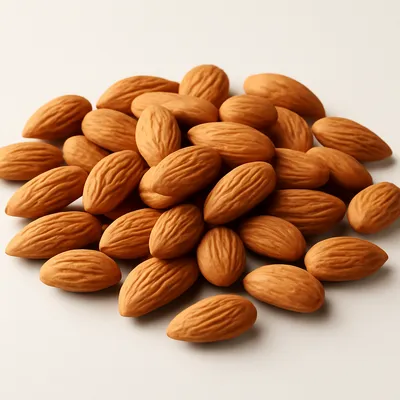
How it's made
6 steps · 20 min
- 115 min
Rub coarse gram flour by hand with warm ghee and a spoonful of milk until it forms a damp, breadcrumb-like crumb (the 'dhrabo' step); pass it through a sieve.
Watch outRub the besan and ghee until it's a damp, breadcrumb crumb that holds through a sieve — this dhrabo step pre-grains the flour and is what gives mohanthal its signature grainy bite.
- 220 min
Slow-roast the crumb in ghee over low heat, stirring, until deep gold and nutty in aroma.
Watch outRoast the crumb low and slow to deep gold and nutty — long roasting cooks out the raw-bean taste; pull it pale and it tastes flat and beany.
- 310 min
Separately boil sugar with water, saffron and cardamom to a full one-string consistency (about 110–115°C).
Watch outBoil the syrup to a full one-string stage — too thin and the mohanthal won't set, too thick and it turns hard and crumbly.
- 45 min
Take the besan off high heat and beat in the hot syrup until evenly combined and smooth-grained.
- 53 min
Pour into a greased tray, level the top and scatter with slivered almonds and pistachios.
- 660 min
Cool until set, then cut into diamonds or squares.
Archive tool suggestions — not reviewed
These legacy suggestions have not been evidence-reviewed and are not presented as required tools.


