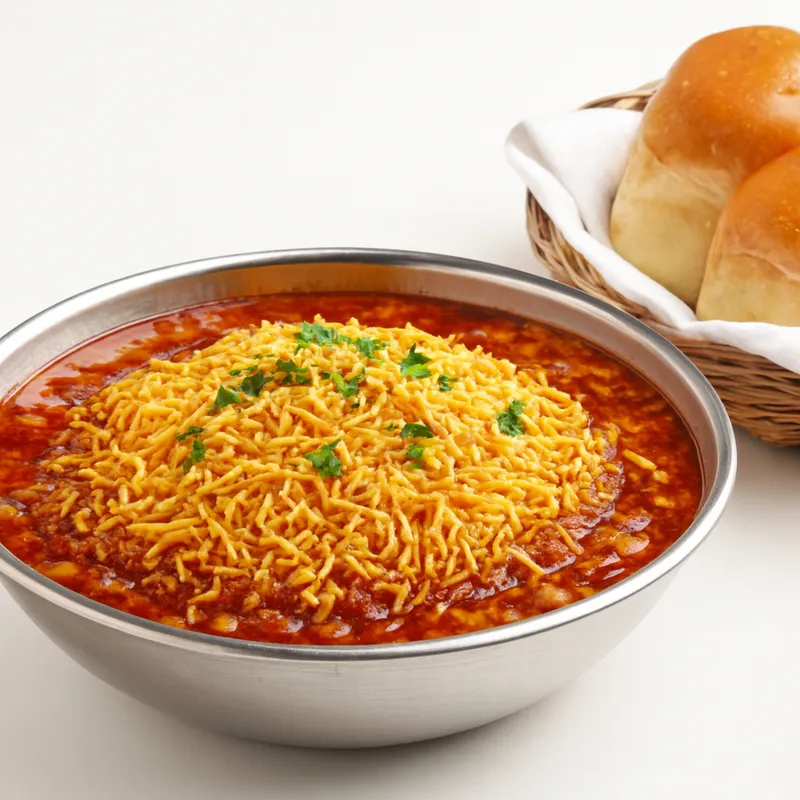
A hollowed-out loaf of bread filled with spicy curry.





Durban, South Africa, 1940s. The dish emerged in the Indian quarter around Grey Street, within a community descended from indentured laborers brought from India in the 1860s to work the Natal (now KwaZulu-Natal) sugar cane plantations. Its exact origin is disputed: one account holds that apartheid-era restaurants couldn't serve Black customers inside, so curry was loaded into a bread loaf as a takeaway vessel handed out a side door; others credit Indian sugar-cane or golf-course workers who needed a portable field lunch, or specific Grey Street cafés. The name almost certainly has nothing to do with rabbits — it is most often traced to «bania» (the Gujarati merchant caste who ran the cafés), with «bania chow» slurring into «bunny chow,» though this etymology is contested.
Durban 1940s, by Indian-South African workers descended from 1860s Natal sugar-cane indentured laborers. Apartheid-era takeaway: curry loaded into a hollowed white loaf because the café couldn't seat Black customers inside.
A quarter or half loaf of white bread, soft inside scooped out, the hollow filled with thick mutton, bean, or chicken curry. The torn-out bread (the «virgin») sits on top as a lid for dipping. Eaten with hands, on the street, no plate. By the bottom of the loaf the bread is curry-soaked and falling apart — that's the best bite.
The bread is the plate, the utensil, and part of the meal. White pan loaf is non-negotiable — the soft, tight crumb holds curry without disintegrating immediately, while still soaking up gravy from the inside out. Brown bread or artisan loaves fail: too coarse, the structure collapses before you finish. The curry has to be thick (Durban-style, heavy on tomato and reduced) or the whole loaf turns to mush in five minutes.
Variations
Quarter (1/4 loaf), half (1/2), and full-loaf sizes; you order by flavour and size, e.g. «mutton half.» The bean (sugar-bean) version is the cheapest and historically the earliest, as the original was vegetarian; mutton is the classic meat bunny. Sugar-bean and chicken versions are now standard at Durban institutions like Patel's and Capsicum.
On the Palate
Where Bunny Chow sits in the South African flavor cloud
Ingredients





How it's made
5 steps · 40 min
- 15 min
In a large pot, heat a splash of oil over medium heat. Add the chicken pieces and brown on all sides, ensuring a golden crust forms, about 5 minutes.
Watch outBrown the chicken hard until a real golden crust forms — that seared surface is the backbone of the gravy's flavor.
- 25 min
Add curry powder and stir until fragrant, about 1 minute. Toss in chopped vegetables, stirring to coat them in the spices.
- 320 min
Pour in enough water to cover the chicken and vegetables. Bring to a simmer and cook until the chicken is tender and the sauce thickens, about 20 minutes.
Watch outReduce until the sauce is thick enough to mound on a spoon, not run off — this is the make-or-break for the bread holding up.
- 45 min
While the curry simmers, hollow out a loaf of bread, leaving a sturdy shell. The removed bread can be used for dipping later.
Watch outLeave a good half-inch wall and floor when you hollow the loaf, or the curry will seep through and break it open.
- 55 min
Fill the hollowed bread with the hot curry, making sure to include both chicken and vegetables. Serve immediately with a side of salad.
Archive tool suggestions — not reviewed
These legacy suggestions have not been evidence-reviewed and are not presented as required tools.