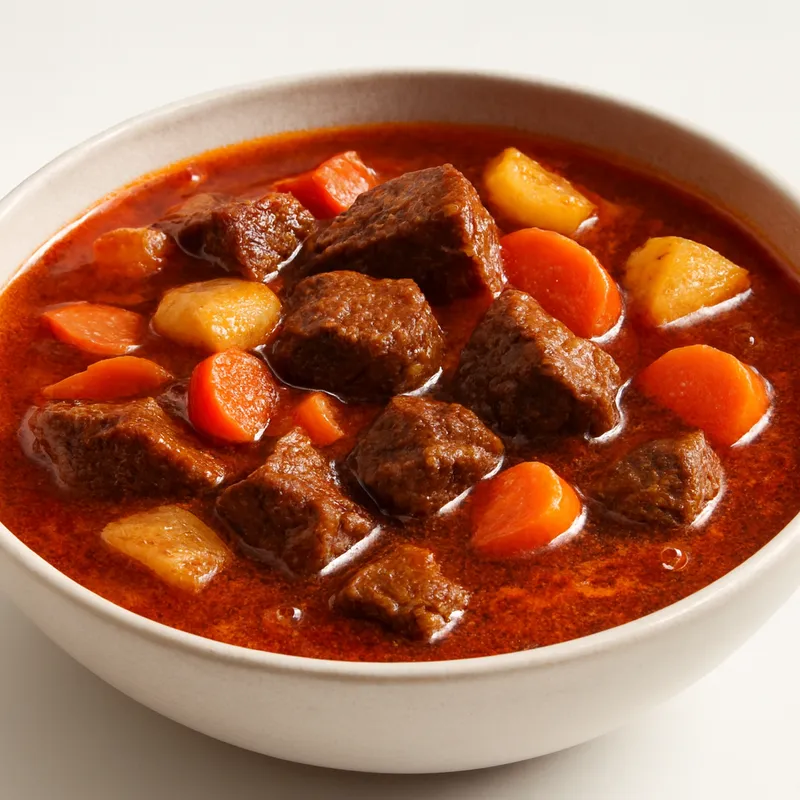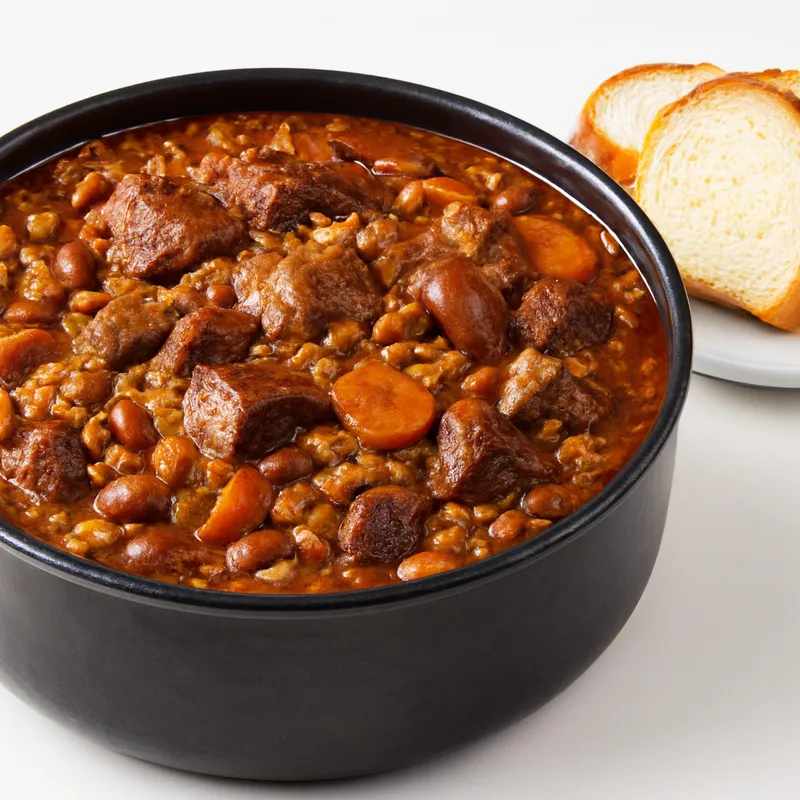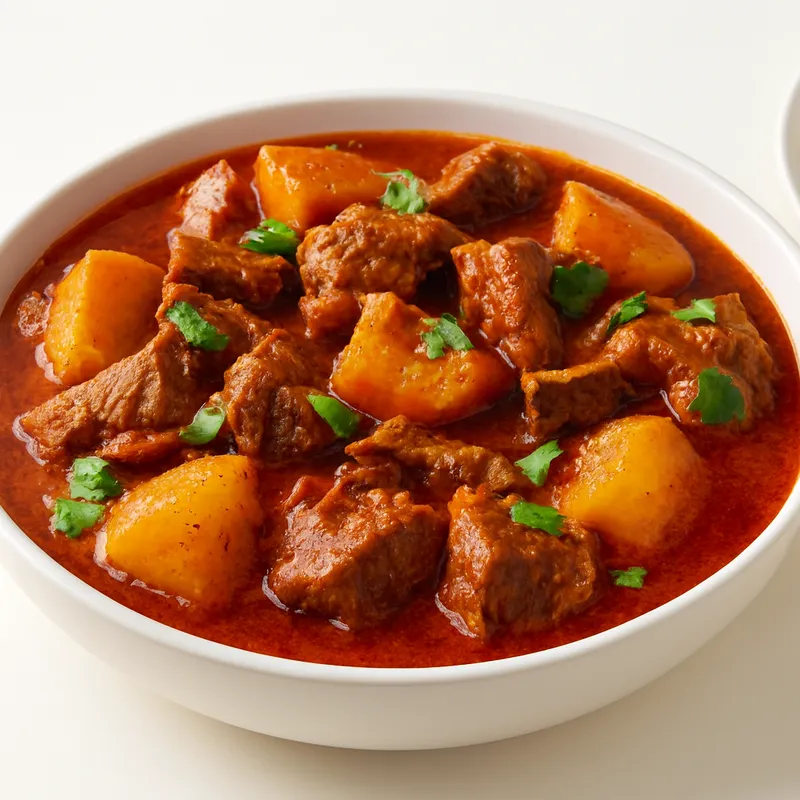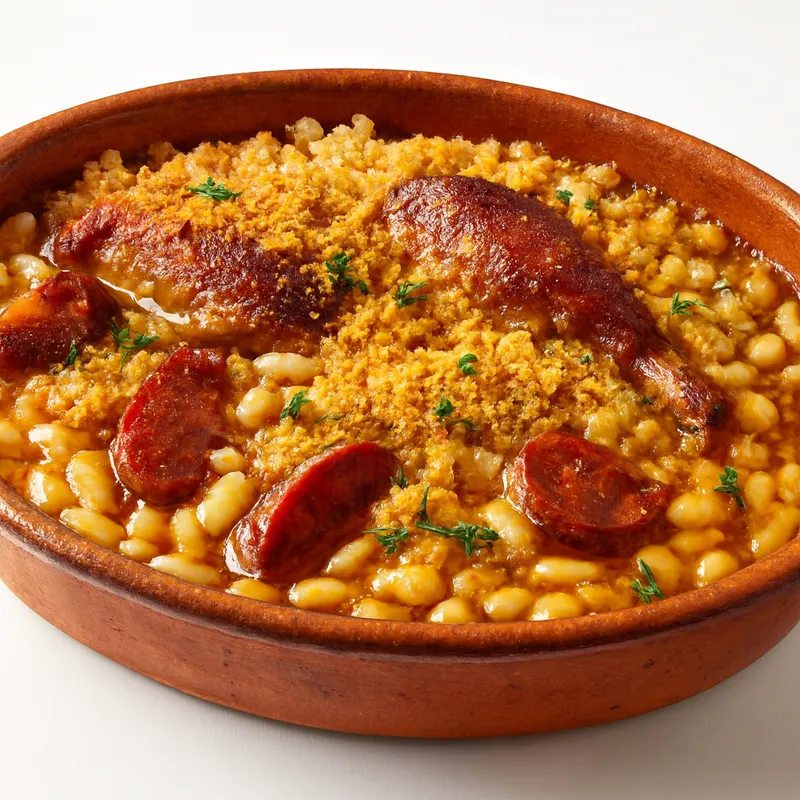


Afrikaner camp cooking, 17th–19th century. Dutch settlers brought the cast-iron pot tradition (potjie comes from Dutch potje, «little pot»); the layered no-stir technique developed during the Great Trek when wagons crossed terrain and cooks couldn't tend a pot all day. The pot rides on the wagon, gets hung over coals at camp, and looks after itself.
Afrikaner camp cooking, 17th–19th century. The cast-iron three-leg pot is from Dutch potje; the layered no-stir technique developed during the 1830s Great Trek when wagon cooks couldn't tend a pot all day. Lid stays shut for three to six hours.
A stew built in a three-legged cast-iron pot («potjie») over wood coals — meat at the bottom, then root vegetables, then leafy vegetables in distinct unstirred layers. Cooks for three to six hours without lifting the lid or stirring. The result is meat almost gelatinous from long heat, vegetables that kept their shape, and a single dense gravy at the bottom.
Not stirring is structural, not laziness. Stirring would break vegetables and force water out at the wrong stage. Layered cooking lets each ingredient release moisture downward — leafy greens steam onions which steam carrots which braise the meat — building one slow, layered gravy. Lift the lid and you lose the steam loop; the pot has to stay sealed for the layers to talk to each other.
Variations
Lamb-and-rosemary Karoo style; oxtail-and-red-wine fancy braai version; chicken-and-beer for camping crowds; seafood potjie (linefish, prawn, mussel) on Cape Town coastal farms; vegetable-only potjie in modern Stellenbosch wine kitchens.
On the Palate
Where Potjiekos sits in the South African flavor cloud
Do not stir and do not lift the lid — potjiekos cooks in stacked layers where greens steam onions steam carrots braise the meat, and one stir or one peek breaks the sealed steam loop.
Ingredients


How it's made
4 steps · 25 min active + 2 hours waiting
- 15 min
Prepare your potjie by heating a small amount of wood or charcoal until glowing embers form. Place the potjie over the heat, adding a splash of oil to coat the bottom.
- 210 min
Brown the meat in the potjie, searing each side until a deep caramel color develops. This seals in the juices and adds depth to the dish.
Watch outWait for a deep caramel crust on each side before turning — pale meat means no depth in the finished pot.
- 35 min
Layer vegetables such as carrots, potatoes, and cauliflower over the meat. Pour in stock and a splash of beer, then add your chosen spices. Do not stir.
Watch outStack dense roots low against the meat and leafy or soft veg on top, then walk away — this is the last time you touch it.
- 45 min
Cover the potjie with its lid and simmer gently over low heat for several hours, allowing the flavors to meld and the meat to become tender.
Watch outKeep the coals low for a bare simmer; a hard boil forces water out and collapses the layers before they meld.
Archive tool suggestions — not reviewed
These legacy suggestions have not been evidence-reviewed and are not presented as required tools.
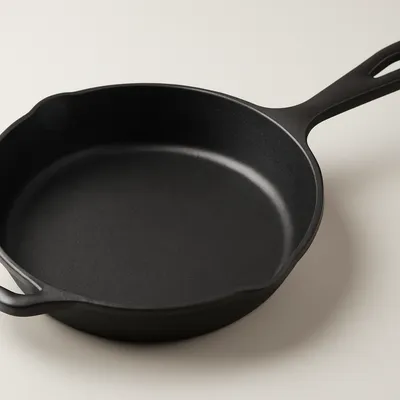
A heavy, single-piece cast iron pan, 25-30 cm across, weighing 1.5-2.5 kg. Once preheated, the thick mass holds 230°C+ even when a cold steak hits the surface — that's the secret to a deep crust. A well-seasoned skillet (multiple thin layers of polymerized oil baked into the iron) is essentially nonstick, gets better with use, and lasts a century. Lodge skillets from Tennessee have been in continuous production since 1896.
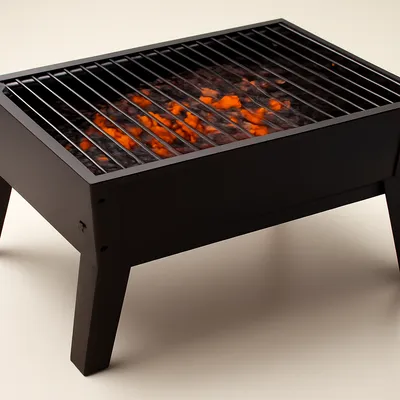
An open or hooded metal frame holding a bed of glowing charcoal embers, with a grate above. Charcoal burns at 700°C+ on the surface and emits short-wave infrared, which cooks proteins faster and with deeper Maillard browning than gas. Hardwood lump charcoal (oak, mesquite, fruitwood) lends its own smoke; cheap briquettes do not. Mastery is mostly heat zoning — direct over coals for searing, indirect off-coals for slow-roasting.

A round, three-legged cast-iron pot with a tight-fitting lid, 20-35 cm across, set directly over wood embers. The tripod legs let the pot stand level on uneven ground without supports; the heavy lid and bottom create a slow oven effect, perfect for the layered no-stir potjiekos stew that simmers for 3-4 hours. South African cooking culture treats the potjie as ritual: the cook never stirs (would mix layers), only adjusts the embers underneath.