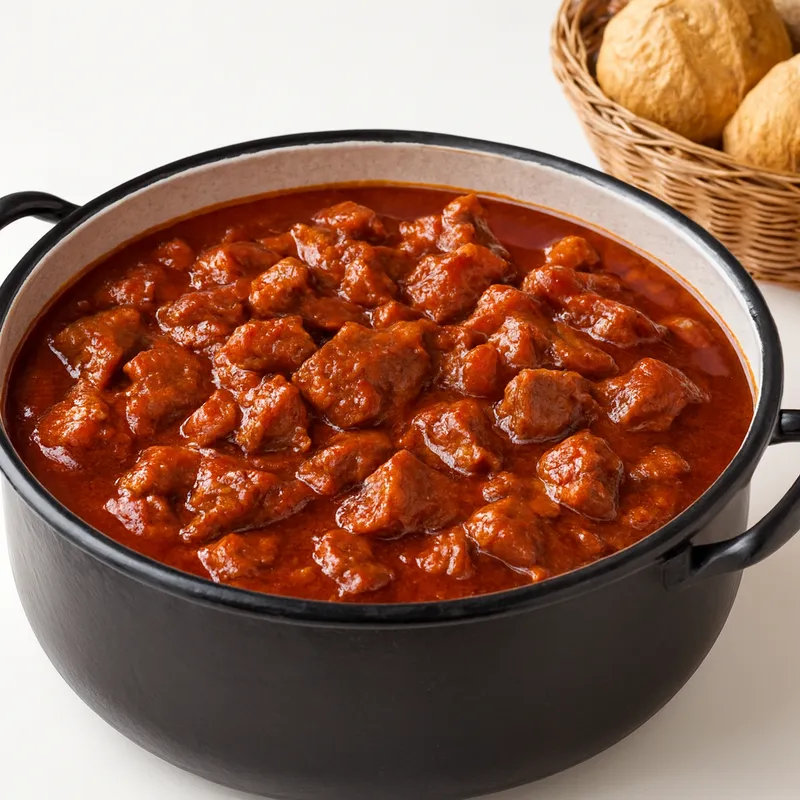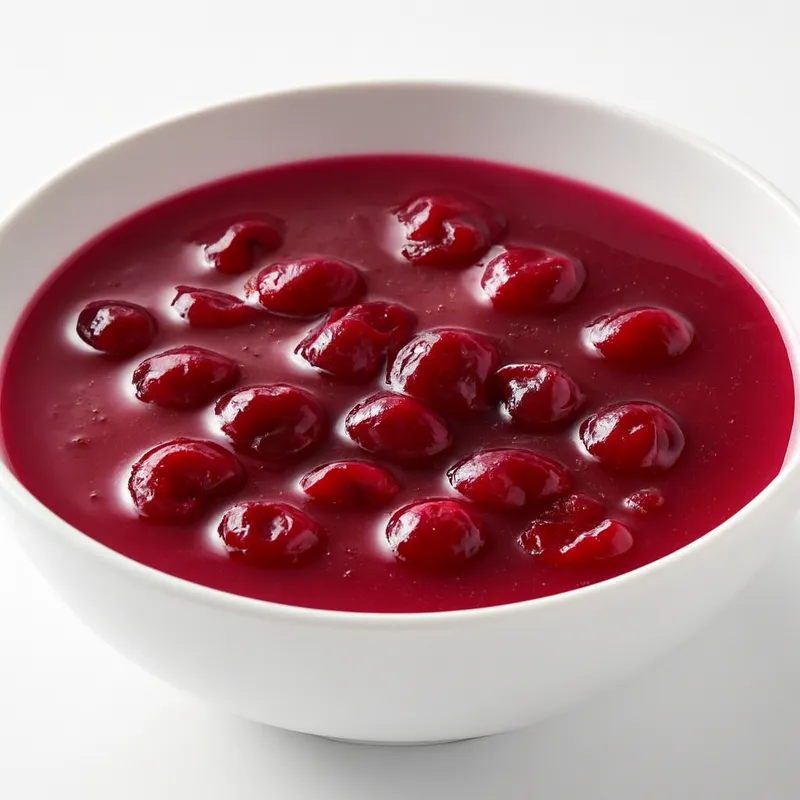




Originated with Hungarian herdsmen (gulyás means "herdsman") on the Great Plain — Magyar shepherds from the 9th century cooked cut beef with onions and pork fat in a bogrács over open fire, and for long cattle drives pre-cooked, dried, and reconstituted the meat with water. The dish began as this thick herdsman's stew, not the refined soup it later became. Capsicum reached Hungary with Ottoman traders in the 16th century, but paprika only entered gulyás widely in the 18th century, when black pepper was scarce and expensive and peasants took up the cheaper "poor man's pepper." By the 19th century gulyás had become a national dish amid Hungarian language and identity revival movements against Habsburg rule.
Started as 9th–10th-century Magyar herdsmen's food on the Great Plain — beef chunks pre-cooked, dried, rehydrated over open fire. Paprika only joined after Ottoman traders brought capsicum in the 16th century. Stir paprika into hot fat off the heat — above ~150°C the carotenoids burn bitter.
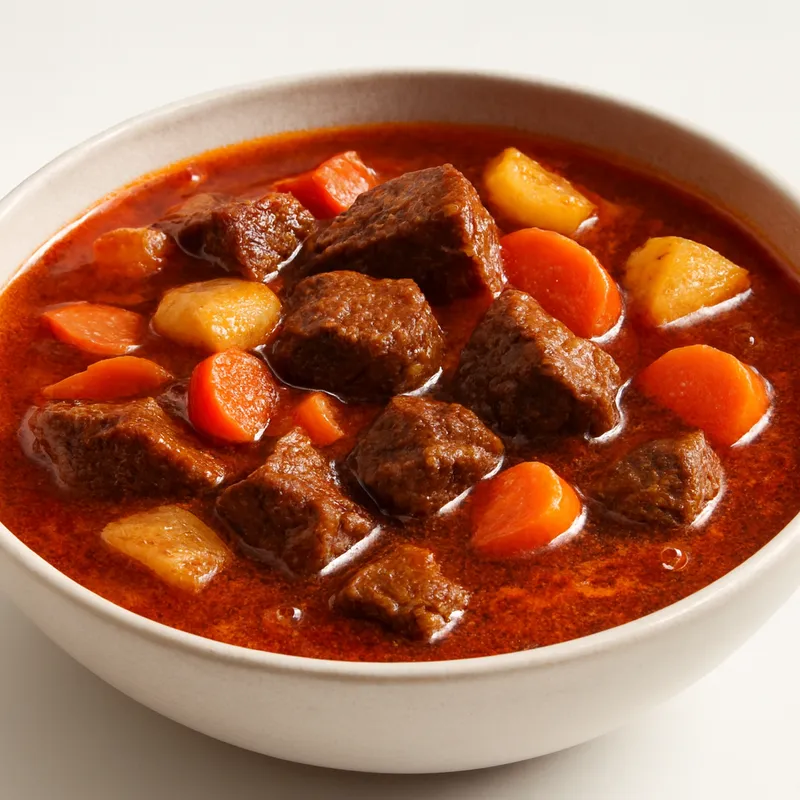
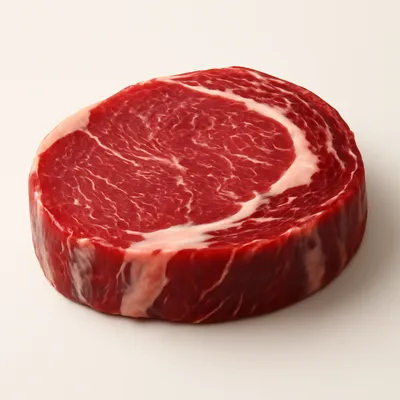
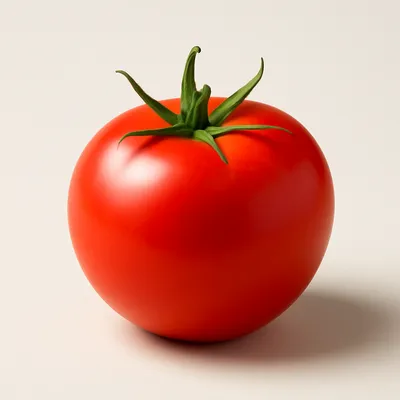
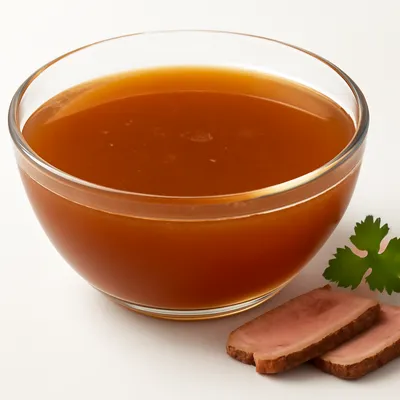
A thin, brick-red broth with chunks of beef shin, potato, carrot, and small pinched dumplings called csipetke floating in it — brothier than the thick herdsman's original. Sweet paprika dominates; black pepper, caraway, and a smashed-tomato tang sit underneath. Eaten from a deep bowl with bread; in winter, often cooked outdoors in a bogrács kettle hung over a fire. The broth should be clear-red, not muddy.
Paprika is added off the heat — capsaicin and the red carotenoids burn fast and turn bitter above ~150°C. The classic move is sauté onions, pull the pot off the burner, stir paprika into the hot fat, then add liquid. The csipetke dumplings are a hydration tell: they're pinched from a stiff egg-flour dough straight into the simmering broth and cooked just three minutes. Stew-thick gulyás is a foreign misreading; in Hungary that thicker version is called pörkölt, a different dish.
Variations
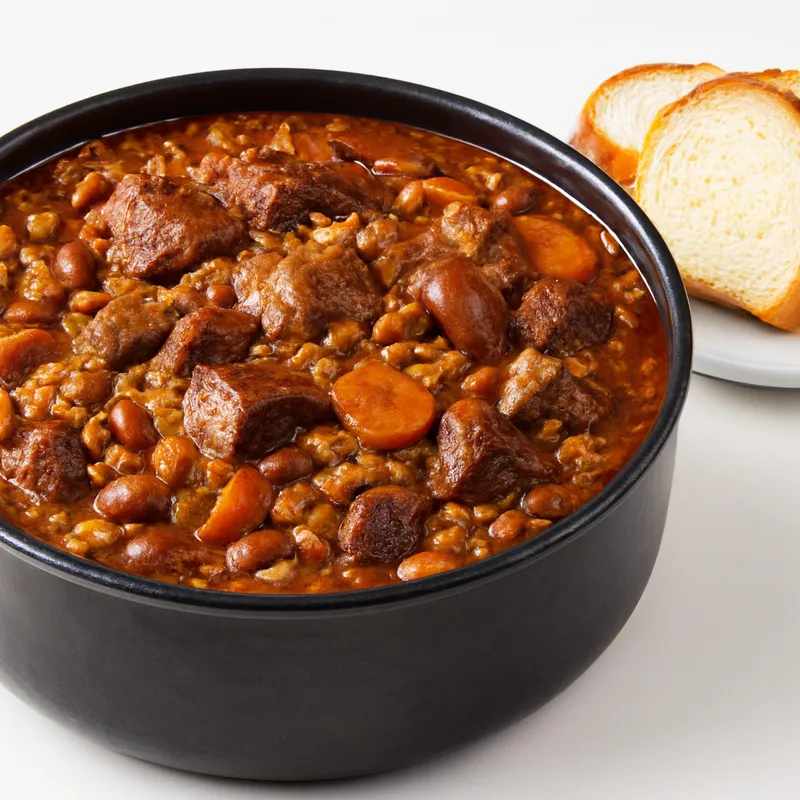
Bográcsgulyás (kettle-cooked outdoors with csipetke); Székelygulyás (with sauerkraut, Transylvanian); Pörkölt is the thicker stew people often confuse for gulyás; Paprikás (with sour cream, no broth); Vienna's Wiener Saftgulasch is the imperial-court adaptation.
On the Palate
Where Gulyás sits in the Hungarian flavor cloud
Ingredients




How it's made
5 steps · 27 min active + 1 hour 30 min waiting
- 110 min
Begin by cutting the beef into bite-sized cubes. In a large pot, sauté chopped onions and garlic in a splash of oil over medium heat until the onions turn translucent and the garlic releases its aroma.
Watch outAvoid browning the onions too much; they should be soft and translucent, not caramelized.
- 210 min
Add the beef cubes to the pot and stir them occasionally until they are browned on all sides. You should hear a gentle sizzle as the meat sears.
Watch outMake sure the beef is browned evenly for the best flavor; avoid overcrowding the pot to ensure proper searing.
- 32 min
Sprinkle in the paprika and caraway seeds, stirring quickly to coat the beef. The spices should bloom in the hot oil, releasing their fragrance.
Watch outThe paprika should bloom and smell sweet and toasty in a couple of seconds; if you catch any acrid or burnt smell, it's already too hot.
- 45 min
Pour in enough water to cover the beef completely, then bring the mixture to a gentle simmer. Add chopped carrots and potatoes, stirring occasionally.
- 590 min
Cover the pot and let it simmer until the beef is tender and the vegetables are cooked through. The broth should be rich and slightly thickened, with a deep red hue from the paprika.
Watch outBroth is ready when it's a deep brick red and just barely thickened by the potatoes, still loose enough to spoon like soup.
Archive tool suggestions — not reviewed
These legacy suggestions have not been evidence-reviewed and are not presented as required tools.