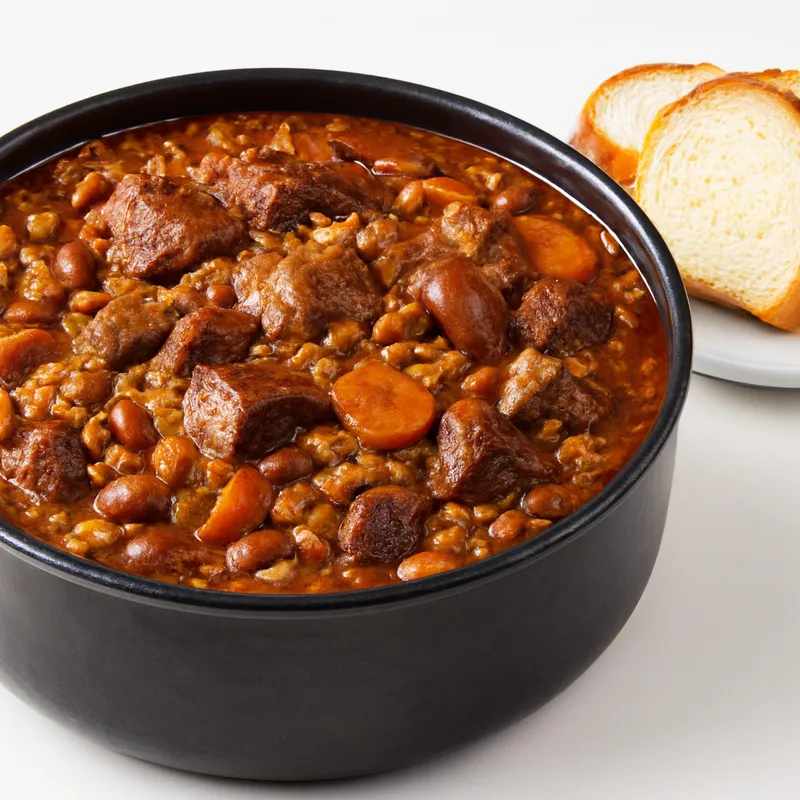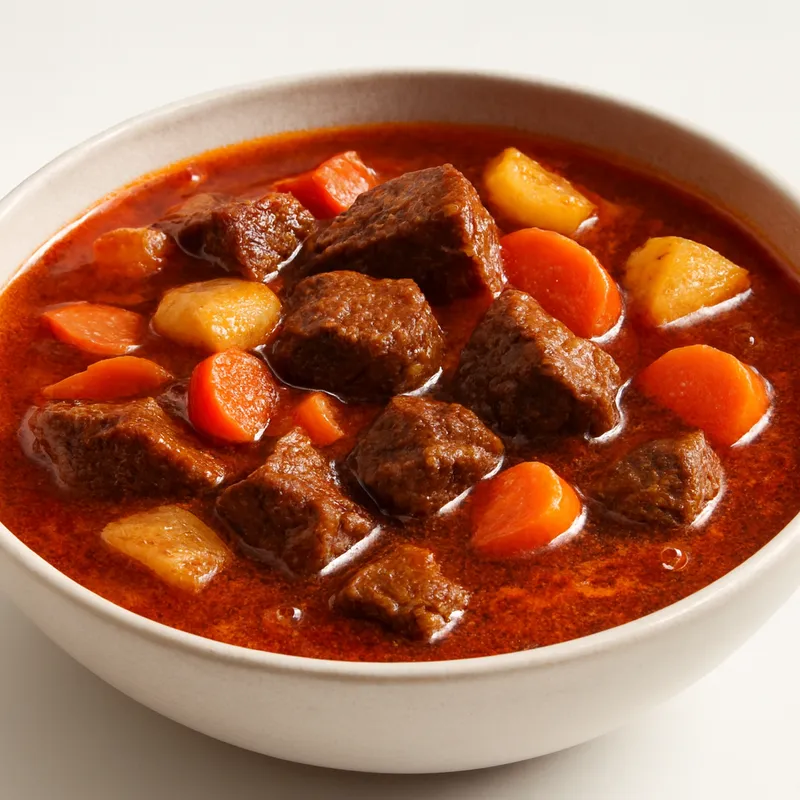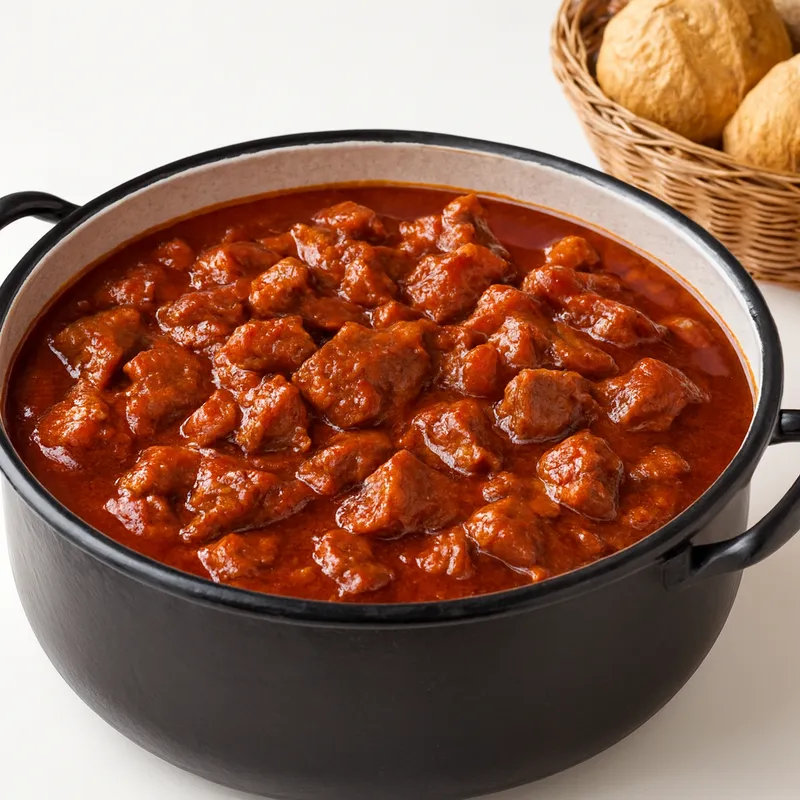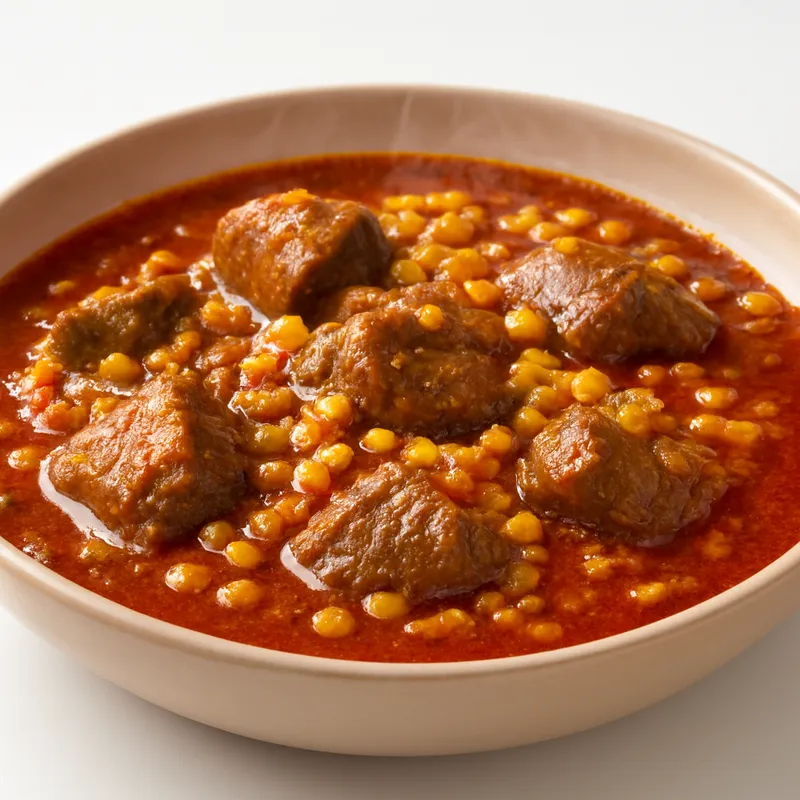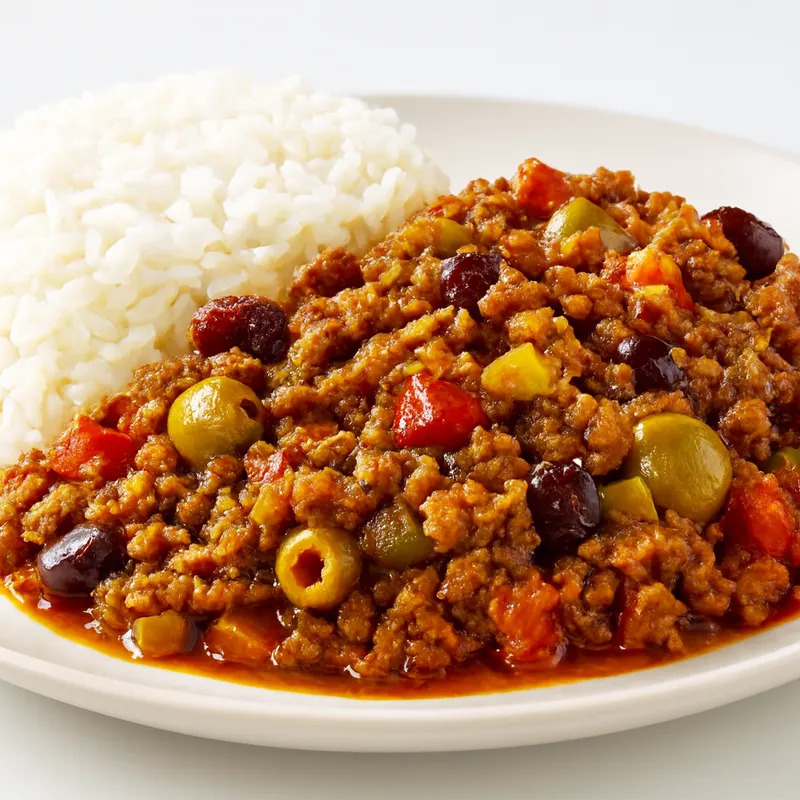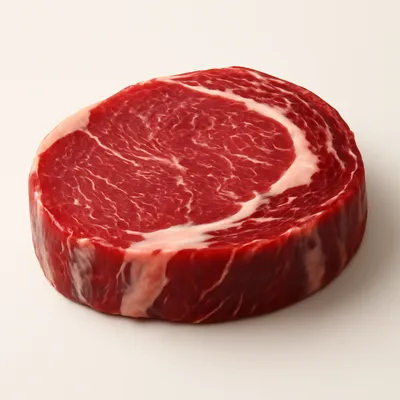



An Egyptian home preparation rather than a restaurant dish, named for its vessel — halla is the round clay pot used across Lower Egypt for slow oven cooking. The technique predates the modern oven: the sealed pot was buried in dying coals overnight, much like the North African tagine but rounder and lidded with dough.
Lower Egyptian home dish named for its vessel — the halla, a round clay pot once buried in dying coals overnight. No water rule: onions are 89% water and steam-braise the beef in their own juice while caramelising against the pot wall. Mastic resin is the giveaway aromatic.
Beef chunks browned hard, then sealed in a clay pot (halla) with sliced onion, garlic, bay, mastic, and a splash of water — no liquid added beyond what the onions release. After two hours in a low oven the meat tears with a spoon and the onions have collapsed into a dark glaze. Served over rice or with baladi bread; broth is concentrated, not soupy.
No water is the rule. Onions are nearly 90% water — sliced thin and packed around the meat, they steam-braise the beef in their own juice while the layer against the pot wall caramelises and darkens. The flavour rests not on a spice rack but on this long, sweet reduction of collapsed onions; that caramelised-onion glaze, not any single aromatic, is the heart of the dish.
Variations
Lower Egyptian classic (beef shin, bay, sometimes a little mastic); Upper Egyptian version uses goat and adds dried lime; Alexandria seaside cooks slip in a bay-leaf-and-tomato base; modern Cairo restaurants finish under the broiler for a dark glaze on top.
On the Palate
Where Kabab Halla sits in the Egyptian flavor cloud
Trust the onions, not water: packed thin around the beef, they must be given enough low, slow time to collapse into a sweet, dark glaze — that reduction, not any spice, carries the whole dish.
Ingredients
How it's made
4 steps · 22 min active + 45 min waiting
- 15 min
Heat oil in a large pot over medium-high heat until shimmering. Add beef chunks and sear until browned on all sides, about 5 minutes. The meat should develop a deep, rich color and release a savory aroma.
Watch outSear the beef until every side is deep brown and it smells nutty — that crust is your only real browning before the onions take over.
- 210 min
Reduce the heat to medium and add sliced onions to the pot. Cook, stirring occasionally, until the onions are softened and golden, about 10 minutes. Their sweetness should balance the savory beef.
Watch outCook the onions past soft to a real golden collapse; when they smell sweet and jammy, not raw, they're ready.
- 32 min
Stir in your choice of spices, allowing them to bloom in the hot oil for 2 minutes. The fragrance of the spices should intensify as they warm.
- 45 min
Return the beef to the pot, add a splash of water, and cover. Simmer gently until the beef is tender and the flavors meld, about 45 minutes. Stir occasionally to prevent sticking.
Watch outIt's done when the meat gives easily to a fork and the onions have melted into a thick, glossy, dark sauce clinging to the beef.
Archive tool suggestions — not reviewed
These legacy suggestions have not been evidence-reviewed and are not presented as required tools.

A two-piece earthenware vessel from North Africa: a flat round base and a tall conical lid. The cone is the engine — steam rises into its narrow apex, condenses against cooler clay, and drips back down onto the meat below. With a tablespoon of water at the start, a tagine slow-braises lamb shoulder for 3-4 hours over low charcoal embers, the meat self-basting in its own evaporated juices.

A round-bellied unglazed clay pot, 1.5-3 liters, with a domed lid and side handles, used for slow-cooking Chinese soups, claypot rice (煲仔饭), and stews. The clay's high porosity diffuses heat slowly so soups never come to a violent boil — flavor develops over 2-3 hours of low simmer. Cantonese claypot rice gets its prized crispy bottom (锅巴) from the same direct-flame stovetop heat that would crack a less robust pot.