In Practice
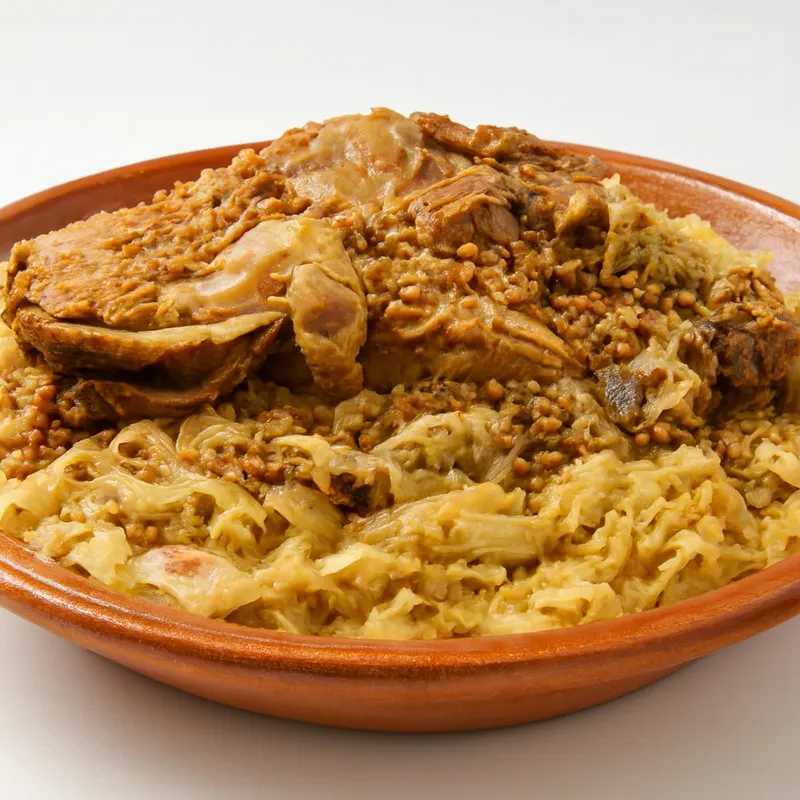
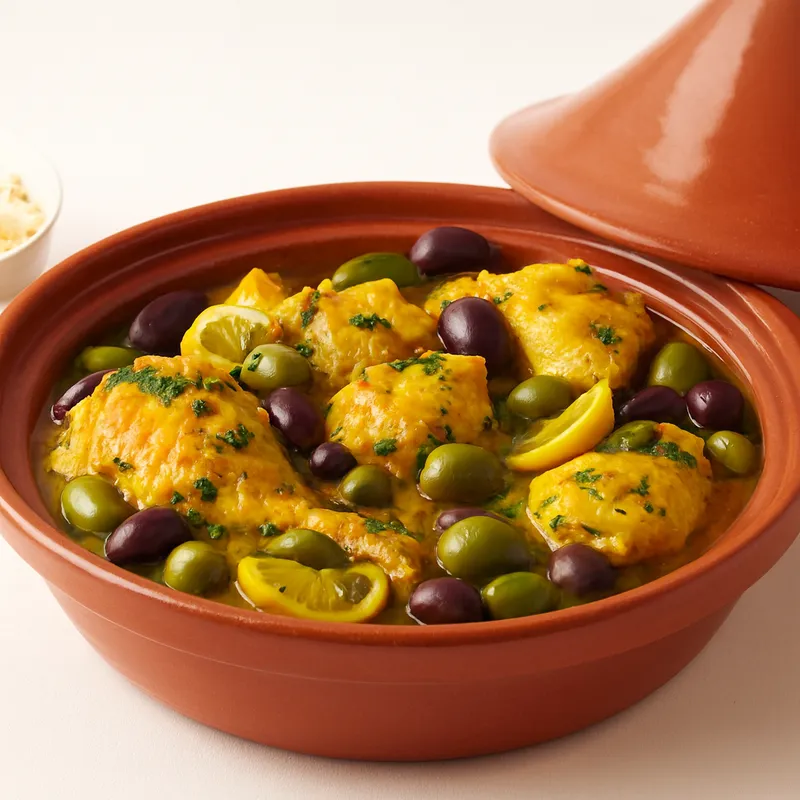
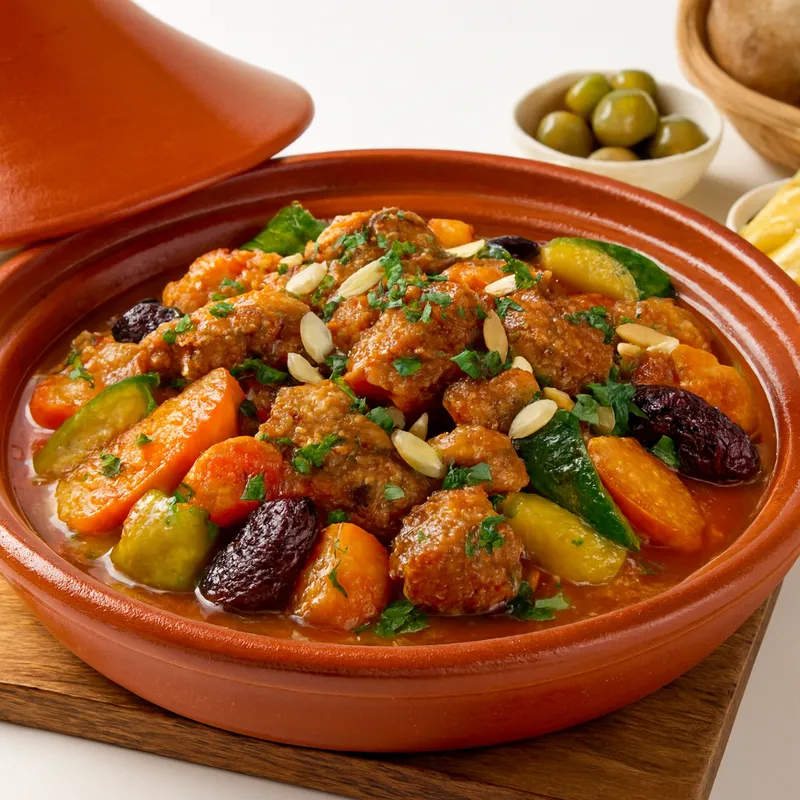
Soak clay tagine 30 min in cold water before first use; never thermal-shock on high gas — diffuser plate mandatory or it cracks. Brown meat in a separate pan (clay can't hit Maillard temp); transfer to tagine with onion-saffron-ginger-cumin base, water/stock only one third up the meat, vegetables tiered by cook time (carrots low, courgette high). Lid stays on 90% of cook (2-3 hr); peek to add preserved lemon and olives at 75% time. Failure modes: dry tagine over direct flame cracks the base; too much liquid floods rather than bastes.
Background
Tagine emerged in the 9th century during the Berber period of Morocco, where the nomadic lifestyle necessitated a portable cooking method. The clay pot, with its distinctive conical lid, was perfect for trapping steam and cooking over an open fire, making it ideal for journeys across the arid landscapes.
As trade routes expanded, tagine adapted to include new spices, like saffron and cumin, brought by Arab merchants. The dish evolved beyond the Berber camps, becoming a staple in Moroccan households and eventually spreading to other parts of North Africa. Each region added its own touch, such as the sweet prunes in Fez or the fiery harissa in Tunisia, but the essence remained unchanged.
How It Works
Conical glazed-earthenware lid sits over a shallow base; steam rises, condenses against the cool peak (20-30°C cooler than the base interior), and rains back down — a closed water cycle that bastes food while concentrating fond at the bottom. Clay's porosity moderates heat shock and releases moisture gradually. Long 90-95°C cook melts collagen; preserved lemon citrate softens muscle fiber while contributing flavor-bound volatiles.




Through Time
Berber nomads of the Atlas mountains and Sahara 9th-13th centuries used the portable clay vessel over portable fire pits; Ibn Razin al-Tujibi's 13th-century *Fadalat al-Khiwan* records prototype recipes. Paula Wolfert's *Couscous and Other Good Food from Morocco* (1973) and *The Food of Morocco* (2011) are the indispensable English-language canon; Mourad Lahlou's *Mourad: New Moroccan* (2011) brings the contemporary technical view.
Related cooking knowledge
Braising is the Western parent class — same low-heat-with-liquid principle in a different vessel. Dum Cooking encloses similar steam in a sealed metal pot. Karahi shares Mughal-Indian curved-vessel logic but uses higher heat and shorter cook. Hong Shao and Kho Braising share the long-simmer-to-glaze final phase.