In Practice
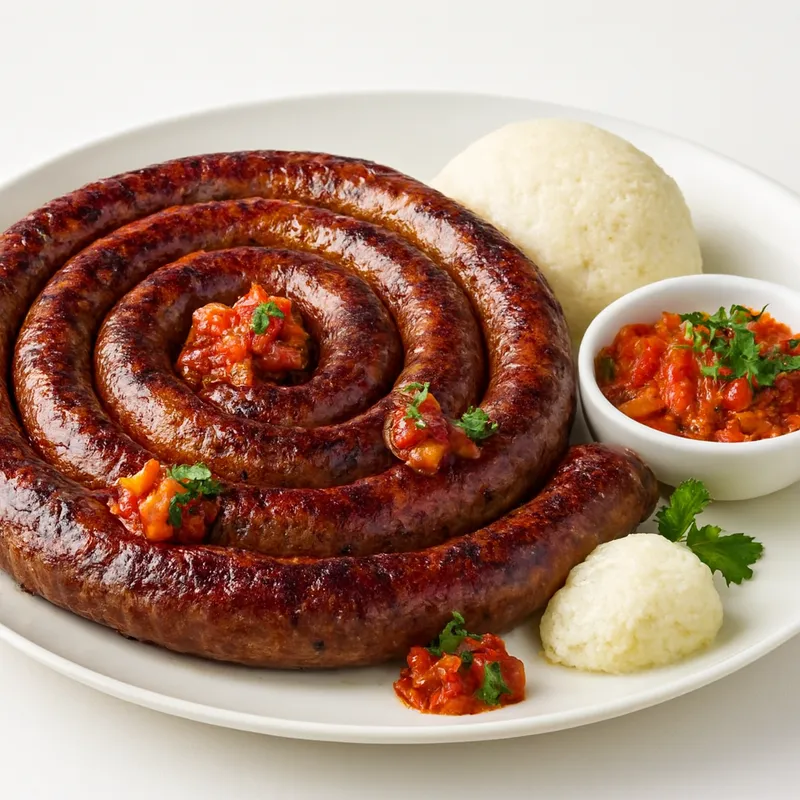
Hardwoods of choice: kameeldoring (camel thorn), rooikrans, sekelbos — long-burning low-tannin coals. Grid sits 15-20 cm above the bed at coal temperature of ~250°C (paper test: 3-4 seconds before scorching). Canonical sequence: boerewors first (sausage at 35-40 mm coil), then sosaties, then chops, then potjie sides. Failure mode: starting on flames rather than coals — sucrose in boerewors caramelizes black while interior stays raw.
Background
Braai emerged in the 17th century with South Africa's early settlers, primarily Dutch and German, who brought grilling traditions to the Cape. The region's abundant wood and open landscapes made it ideal for outdoor cooking, transforming simple grilling into a social event deeply woven into the fabric of South African life.
As communities grew, braai evolved beyond its European roots, absorbing local flavors and techniques. The introduction of indigenous spices and the adoption of traditional African meats diversified the practice. Today, braai is celebrated across Southern Africa, with each region boasting its own variations, yet always returning to the primal allure of fire and the communal joy it inspires.
How It Works
An open-fire architecture in which the *making of coals* is itself the social event — wood burns down for 45-90 minutes before any meat touches the grid. The cultural mechanism is the braaier (host-griller) as ritual axis: nobody eats until they are ready, conversation paces the cook, and the iron grid (rooster) is communal property of the gathering.


Through Time
Indigenous open-fire cooking among Khoisan and Bantu peoples predates colonial naming; the Afrikaans word *braai* (from *braden*, "to roast") entered written record via Voortrekker journals 1830s-1840s. Heritage Day was renamed National Braai Day in 2005 through Jan Scannell's campaign endorsed by Desmond Tutu. Jan Braai's 2009 *Fireworks* canonized the modern household method.
Related cooking knowledge
Asado is the Argentine cousin — same coal-not-flame logic but with parrilla cross-grid and beef dominance instead of sausage. Carne Asada is the Mexican lateral. Pure grilling sits inside braai but doesn't carry the host-ritual layer; smoking takes over once the meat sits longer than 90 minutes.