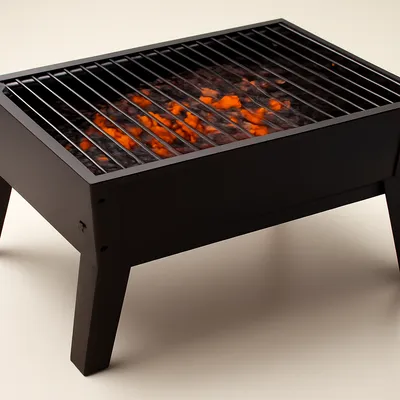

Maize was introduced to southern Africa from the Americas around the 16th century, largely via Portuguese maritime trade; scholars dispute whether it arrived with European settlers or spread earlier through trans-Atlantic contact. Higher-yielding than the indigenous sorghum and millet, it gradually displaced them and by the 19th century had become the staple grain across Bantu-speaking regions. Maize porridge thus crossed cultures: a generational staple of Black South Africans and equally a fixture in Afrikaner kitchens — one of the few shared foundations of the two food traditions. Pairing the pap with meat picked up the trekboer habit of grilling over open coals; together the two settled into the ritual of the weekend braai.
Maize reached southern Africa via 16th-century Portuguese trade and replaced sorghum across Bantu-speaking regions by the 19th. Pap is the indigenous porridge half; vleis is the trekboer over-coals half. The weekend braai pairs them.
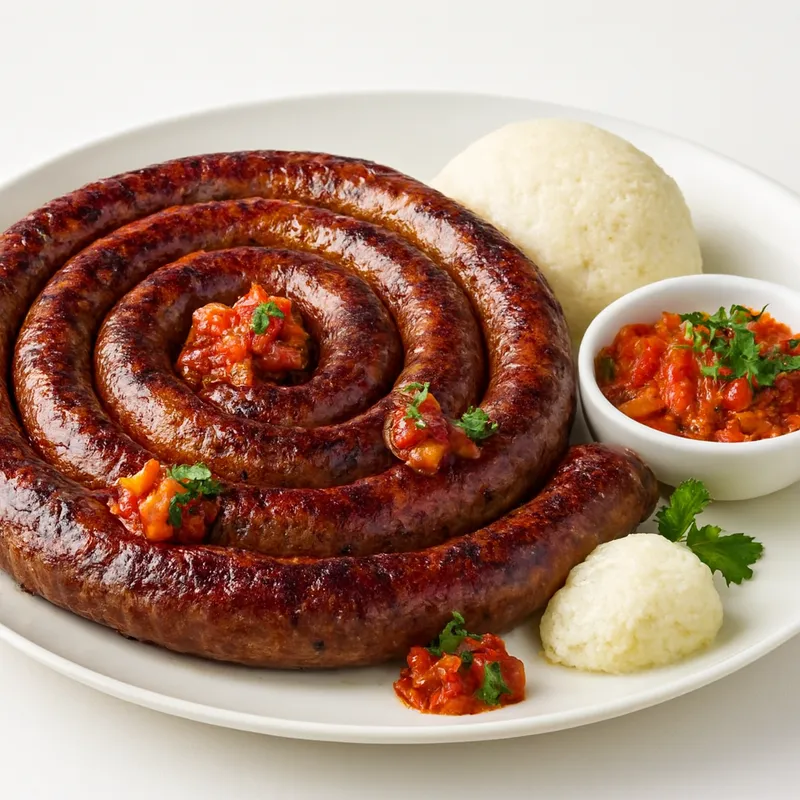
A mound of stiff white maize porridge served next to grilled meat — usually boerewors, lamb chops, or steak hot off the braai. Pap is firm enough to scoop with the fingers, bland on its own, with the texture of dense polenta. Eaten by tearing off a knob of pap, dragging it through meat juices or chakalaka, taking a bite of meat. No cutlery required.
Pap's firmness depends on the water-to-meal ratio and the stirring. Stywepap, the stiff braai partner, runs about 3:1 water to white maize meal, added in two stages — first a thin slurry, then more water to swell it — stirred slowly throughout so it cooks without lumping. The result must stand up on the plate; runny pap gets sent back to the pot. The deliberate blandness is the point: the pap is just a neutral carrier, leaving the flavour work to the salty, smoky meat and to sheba — a tomato-and-onion relish-gravy of tomatoes, onions, vinegar and chilli (a spicier, more vegetable-laden cousin goes by chakalaka).
Variations
From one maize meal, water content and stirring fork out several forms: slap pap is the loose, smooth breakfast porridge, eaten with butter, milk and sugar; stywepap is the stiff, low-water version that stands beside braai meat; krummelpap uses even less water and is raked apart with a fork into dry, crumbly grains, a Highveld staple; the Zulu version, phutu (or putu), is steamed to a coarser crumb. The meat alongside ranges from boerewors to lamb chops to T-bone.
On the Palate
Where Pap en Vleis sits in the South African flavor cloud
Ingredients

How it's made
5 steps · 55 min
- 110 min
Bring a pot of salted water to a boil, then slowly sprinkle in maize meal while stirring steadily to prevent lumps.
Watch outAs you rain the meal into the boiling water, keep stirring in one direction — the second it stops moving, lumps set; a whisk helps break any that form.
- 215 min
Reduce the heat and cover the pot. Let the pap simmer gently, stirring occasionally, until it thickens to a porridge-like consistency.
Watch outIt's done when the spoon leaves clean furrows that hold and the pap pulls away from the pot as you stir — that's stiff enough to stand.
- 320 min
Season the meat with spices and grill over medium heat until it is browned and cooked through, turning occasionally for even cooking.
Watch outGrill the meat over hot coals until the outside chars and crusts and the juices run clear — the smoky crust is what makes it a braai, not just cooked meat.
- 45 min
Prepare the gravy separately, ensuring it is rich and flavorful, then warm it up just before serving.
- 55 min
Serve the cooked pap alongside the grilled meat, drizzling the warm gravy over the top for added flavor.
Archive tool suggestions — not reviewed
These legacy suggestions have not been evidence-reviewed and are not presented as required tools.