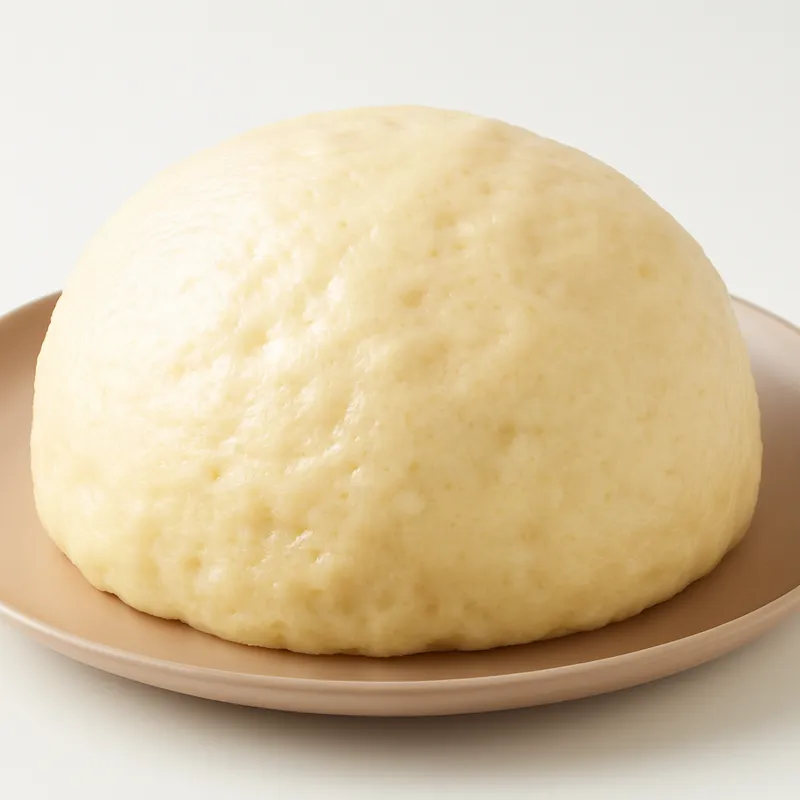
Xhosa crumbly mealie-meal porridge eaten cold with thick sour amasi (fermented milk) — the everyday rural Eastern Cape meal, dry-textured porridge contrasted with cool tangy milk.
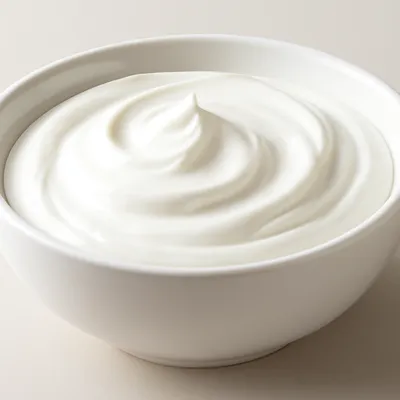


Umphokoqo is the Xhosa name for crumbly cold maize-meal porridge ('phoqo' relates to crumbling). Unlike the smooth, hot pap that Zulu and other Nguni groups make, umphokoqo is intentionally drier and crumbly, then cooled and served doused in amasi — the naturally fermented thick sour milk of Nguni pastoralists, traditionally soured in a smoked calabash (Xhosa: iselwa/igula) over one to five days. The crumbly pap alone is umphokoqo; mixed with amasi it becomes umvubo (also called simply 'amasi'), and is nicknamed 'African salad.' Deeply tied to rural Xhosa identity in the Eastern Cape, it was famously Nelson Mandela's comfort food — a daily staple his family shared from a communal bowl, and a taste of home he returned to throughout his life.
Scoop a spoonful: the porridge is crumbly-cool, almost couscous-textured, with each granule barely sticking to the next. Pour amasi over it — the milk soaks in, the lumps absorb the tang, creating warm-cool, dry-creamy contrast in a single mouthful. Pure Xhosa countryside.
The high water-to-meal ratio (4:1 vs 3:1 for pap) plus the no-stir final cooking creates a steam-dried bottom layer that crumbles when broken with the fork. Cooling for 15 min allows residual starch retrogradation that further dries the texture. Amasi's lactic acid (pH 4.0) contrasts the porridge's blandness — without amasi or another fermented dairy, the dish reads as just dry corn.
Variations
Eastern Cape Xhosa version uses coarse mealie-meal and is the driest; KZN Zulu sometimes uses finer meal and is slightly softer; modern urban versions use store-bought maas (drinkable yogurt) instead of homemade amasi.
On the Palate
Where Umphokoqo sits in the South African flavor cloud
Cook the mealie-meal dry and crumbly, not smooth: use a high 4:1 water ratio, then steam it covered without stirring so the bottom sets into forkable crumbs.
Ingredients
Serves 4How it's made
5 steps · 15 min active + 15 min waiting
- 14 min
Bring 1L water to a boil in a heavy pot with 1 tsp salt.
- 23 min
Sprinkle in 250g coarse white mealie-meal (corn meal) slowly while stirring with a wooden spoon to prevent lumps. Keep heat at medium-high.
- 34 min
Cook 4 min stirring constantly; the meal should absorb the water and start to dry out. Reduce heat to lowest.
Watch outThe meal should have drunk up the water and started drying and pulling from the pot sides before you cover.
- 48 min
Cover and cook 8 min more without stirring — let the bottom layer dry out and become crumbly. Remove from heat.
Watch outDon't peek — after 8 covered minutes the bottom layer should look set and dry, not wet.
- 516 min
Use a fork to crumble the porridge into a textured, dry, lumpy consistency (not smooth). Let cool to room temperature, about 15 min. Serve in bowls with 200ml cold amasi (or thick plain Greek yogurt, or buttermilk) poured generously over each portion.
Watch outFork it into dry, lumpy crumbs, not a smooth mash; you want visible grain.
Archive tool suggestions — not reviewed
These legacy suggestions have not been evidence-reviewed and are not presented as required tools.