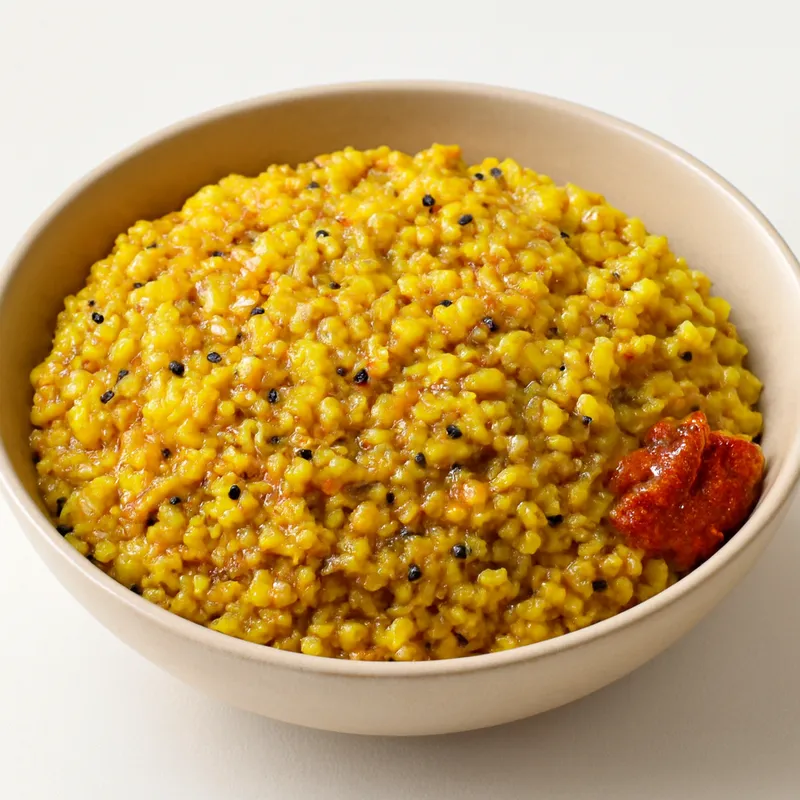
Andhra Pappu is the everyday Telugu lentil dish: split pigeon pea (toor dal) pressure-cooked to a soft mash with a vegetable — most often spinach (palakura), the gourd dosakaya, raw mango or tomato — then finished with a garlic-and-chili tempering. Unlike the South Indian sambar, it carries little powdered spice and no coconut; its character is plain, soft dal lifted by a fierce tadka of whole red chili, garlic, cumin and curry leaf bloomed in hot oil or ghee. It is eaten mashed into steamed rice with a spoon of ghee and is a fixture of the Andhra meals plate.
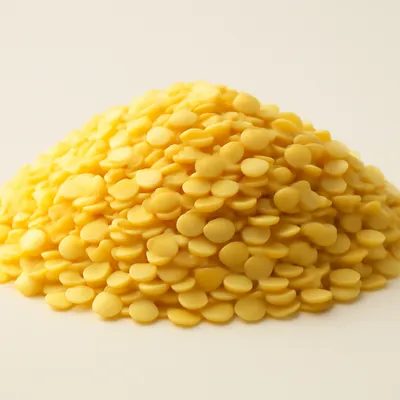
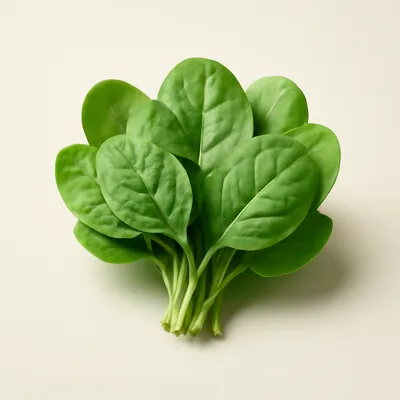


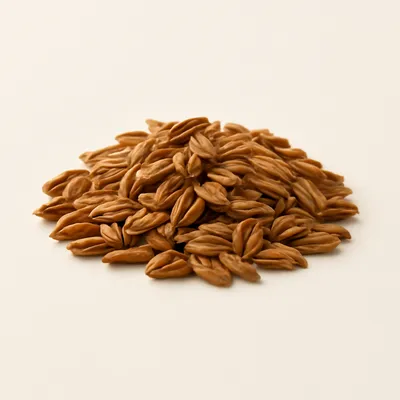

Pappu is simply the Telugu word for cooked dal, and a vegetable-laden pappu is the daily protein of Andhra Pradesh and Telangana households, eaten with rice as the first course of a meal. It is folk home cooking rather than a documented court or restaurant creation, so no inventor or date attaches to it; the dish is defined by what is in season — palakura (spinach), thotakura (amaranth), dosakaya, raw mango (mamidikaya pappu) or tomato. What sets the Andhra style apart from the rest of South India is the absence of sambar powder and coconut and the reliance instead on a sharp garlic-chili tempering, in keeping with a region that is India's leading producer of red chili.
Soft, almost porridge-like dal, pale yellow streaked with the green of cooked-down spinach or the pale flesh of dosakaya. The body is gentle and starchy, faintly nutty from the toor dal, but the garlic-chili tempering cuts a sharp, savory line through it — the cumin and curry leaf aromatic, the chili a clean heat. With a sour vegetable like raw mango or tomato it turns tangy; with spinach it is mellower. Spooned over hot rice with melting ghee, it is comfort food that still bites.
Toor dal is high in protein and starch; pressure-cooking past the point of holding shape lets the cells rupture so the lentils collapse into a smooth, thick mash that coats rice. A sour vegetable is added after the dal has softened, not before — acid slows the breakdown of the lentil, so raw mango or tomato goes in late. The tempering (tadka) is the flavor engine: whole spices and garlic are fried in oil hot enough (around 170-180°C) to bloom their fat-soluble aromatics and to push garlic toward a sweet, browned note without burning, then the sizzling oil is poured over the cooked dal so the aroma sits on top rather than being boiled away. Spinach or other greens are cooked down with the dal so their water and a little oxalic-acid tartness fold in.
Variations
The vegetable names the dish: palakura pappu (spinach), thotakura pappu (amaranth), dosakaya pappu (yellow cucumber), tomato pappu, and the prized mamidikaya pappu made with sour raw mango in season. Telangana cooks often add more tamarind and a coarser tempering; some versions stir in a spoon of gongura (roselle) for sourness. A plain pappu without vegetable, simply tempered, is eaten with a dollop of ghee, raw onion and Andhra avakaya pickle.
On the Palate
Where Andhra Pappu sits in the Indian flavor cloud
Ingredients
Serves 4

How it's made
6 steps · 15 min
- 120 min
Rinse toor dal and pressure-cook with turmeric, a little oil and chopped spinach (or dosakaya / tomato) until very soft, 3-4 whistles.
Watch outPressure-cook the dal past holding its shape, till it collapses smooth — it should mash into a thick purée, not stay in separate grains.
- 25 min
Mash the cooked dal smooth with the back of a ladle; add salt and a little water to loosen to a thick, pourable consistency.
- 35 min
If using a sour vegetable like raw mango, add it now and simmer a few minutes until just tender.
- 43 min
For the tempering, heat oil or ghee and add mustard seeds, cumin, dried red chilies, slit green chili and crushed garlic.
Watch outBloom the tempering in oil around 170–180°C till the garlic goes golden — too cool it stays raw, too hot the garlic and chili scorch bitter.
- 52 min
When the garlic turns golden and the chilies darken, add curry leaves and a pinch of asafoetida and let it sizzle.
- 62 min
Pour the hot tempering over the dal, stir once, and serve hot over steamed rice with a spoon of ghee.
Watch outPour the sizzling tempering over the dal and stir once — off the heat the sizzle carries the aroma straight into the dish.
Archive tool suggestions — not reviewed
These legacy suggestions have not been evidence-reviewed and are not presented as required tools.