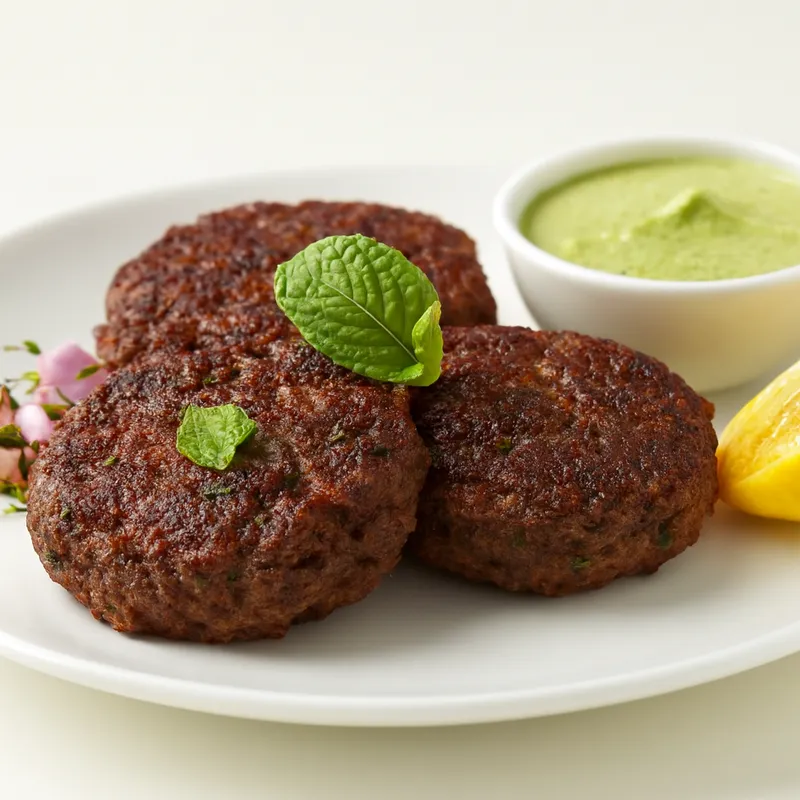
A rectangular deep-fried Hyderabadi pastry with a multi-laminated flaky shell encasing spiced minced mutton keema; the Nizam's court answer to the samosa, distinguished by its boxy shape and subtly sour filling.




Lukhmi takes its name from the Urdu and Arabic shared word for a morsel or single mouthful, which signals its role as a refined, bite-sized banquet snack. It was a fixture on the Asaf Jahi Nizami formal table, served at every significant gathering of the court. Hyderabadi savoury pastry tradition synthesised Persian laminated-dough techniques with Deccan spicing, producing a category of fried snacks distinct from Mughal North Indian fare; the rectangular silhouette is the most visible marker of that separation from the triangular samosa.
Shatteringly crisp and flaky on first bite; the keema filling is warm, subtly tangy from a squeeze of lemon, and fragrant with whole spices—more restrained and savoury than a samosa's characteristic sweetness.
The flaky crust depends on lamination: ghee is folded between rolled sheets of stiff flour dough and the process is repeated several times, creating hundreds of thin alternating fat and dough layers. At 170–180°C frying temperature, water trapped within the fat flashes into steam and forces the layers apart, producing the characteristic puffed, crisp shell. The Maillard reaction colours the surface golden-brown and develops nutty flavour. The keema is fully pre-cooked to eliminate moisture; residual water in an uncooked filling would flash to steam, burst the sealed seams, and collapse the layered shell.
Variations
Vegetarian versions substitute paneer and green peas for the mutton keema. Some Hyderabadi bakeries now produce baked lukhmi as a lighter alternative. Chicken keema fillings are also common at street stalls, with the same rectangular shape retained.
On the Palate
Where Lukhmi sits in the Indian flavor cloud
Ingredients
Serves 4


How it's made
7 steps · 45 min
- 135 min
Make dough: rub 200g plain flour with 1 tsp salt and 3 tbsp ghee until the mixture resembles coarse sand; add cold water gradually and knead into a stiff, smooth dough. Cover and rest 30 minutes.
- 215 min
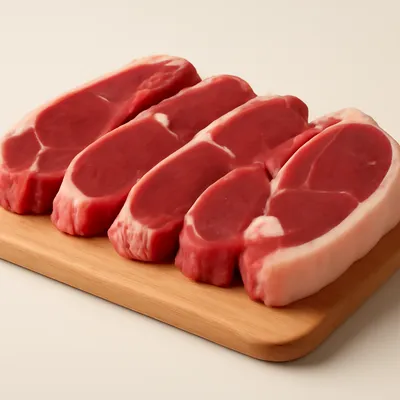
Cook keema: in a heavy pan, fry finely diced onion in 2 tbsp ghee until deep golden; add 1 tbsp ginger-garlic paste, 1 bay leaf, 2 cloves, and 1 black cardamom, then add 250g minced mutton. Stir-fry until all moisture evaporates and keema is dry.
Watch outFry the keema until every drop of moisture is gone and it looks dry — a wet filling flashes to steam in the oil and bursts the sealed seams open.
- 35 min
Season keema with 1 tsp red chilli powder, 1 tsp garam masala, salt, a handful of chopped coriander, and a squeeze of lemon; mix well and cool completely.
- 410 min
Laminate dough: roll to 3 mm thickness, brush surface with melted ghee, fold into thirds, and re-roll; repeat the fold-roll cycle twice more for a total of three lamination passes.
Watch outBrush ghee, fold in thirds, and re-roll three times — each pass builds the thin fat-and-dough layers that puff into the flaky shell.
- 510 min
Cut dough into 8×6 cm rectangles. Place 1 heaped tablespoon of cooled keema on one half of each rectangle; fold over and press edges firmly to seal, crimping with a fork.
- 610 min
Heat neutral oil to 170–180°C. Fry lukhmi in uncrowded batches for 4–5 minutes per side until deep golden and the shell is fully crisp.
Watch outHold the oil at 170–180°C and don't crowd the pan — steam from the fat layers puffs the shell crisp; a cool crowded pan makes it greasy and dense.
- 75 min
Drain on paper towels and serve immediately alongside mint chutney.
Archive tool suggestions — not reviewed
These legacy suggestions have not been evidence-reviewed and are not presented as required tools.